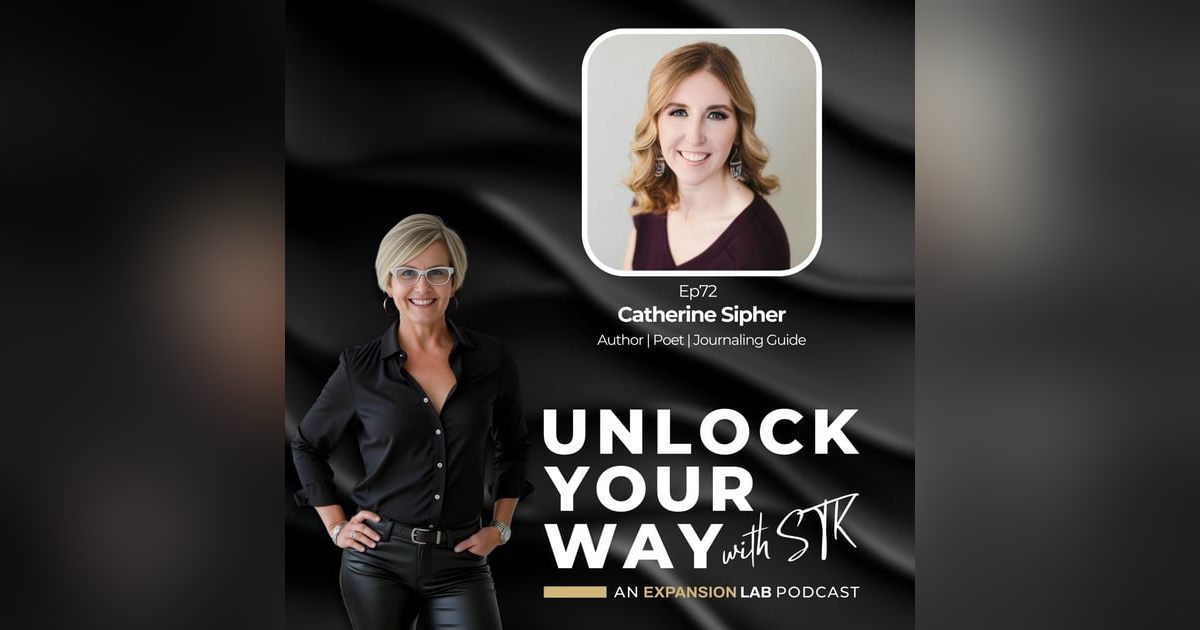
Ep72 Catherine Sipher - From Homeschool Mom to Multi-Business Owner: How Journaling Changed Everything
Ever feel like you're living someone else's life instead of your own?
Catherine Sipher knows that feeling intimately. After her entire world flipped upside down in 2019, she discovered something that changed everything... journaling.
Not the "Dear Diary" kind you had as a teenager.
Real, transformative journaling that helped her:
→ Rebuild her identity from the ground up
→ Launch TWO successful businesses as a single mom
→ Turn her poetry into a published memoir
→ Help other women find their voice through guided journaling circles
In this episode, host Suzanne Taylor-King dives deep with Catherine to explore:
• How to use journaling as a business strategy tool (not just emotional processing)
• The "Morning Pages" technique that silences self-doubt and unlocks clarity
• Why tracking small wins creates unstoppable momentum
• How to build unshakable self-trust when everything feels uncertain
• The exact journaling prompts Catherine uses to connect with her future self
• How to turn inner transformation into outer business success
Suzanne brings her signature strategic lens to this conversation... connecting the dots between Catherine's personal journey and the mindset work every entrepreneur needs to do.
You'll learn how to stop outsourcing your power to others and start trusting yourself enough to take the risks that lead to real growth.
Whether you're rebuilding after a major life change or just ready to finally hear your own voice... this episode will give you practical tools to create space for who you're becoming.
Catherine Sipher 0:00
The more secure we are within ourselves, less fear of rejection we're going to have because you had that unshakable trust in yourself. If we go into every area of life knowing I've got my back, I'm more willing to put myself out there, I'm going to be vulnerable in what I write or what I share or what I create, knowing that it won't be for everybody, and that's okay.
Suzanne Taylor-King 0:21
Hey, hey, welcome to a podcast where dreams meet determination and success is just around the corner. I'm your host, Suzanne Taylor King, and I'm here to help you unlock the full potential of your business and your life. Welcome to unlock your way with STK, let's unlock your path to success together. Good morning. Good morning everyone. It's Suzanne Taylor king here for another live episode of unlock your way with STK, that's me, and today we are here with Catherine cipher. She is a poet, a journaling guide, an incredible conversationalist, I already can tell and we are just going to have coffee together, or whatever she's drinking, and we're going to get to know each other at that deeper level. Catherine, welcome to the show. Thank you so
Catherine Sipher 1:18
much for having me. I'm really excited to talk with you today.
Suzanne Taylor-King 1:21
Oh, I I'm intrigued by your journey because you you have really centered in on your unique genius, and I'd love for you to share a little bit of that journey with the audience?
Catherine Sipher 1:41
Yeah, sure. Thank you so much. I appreciate being seen in that way. I'm trying to figure out where to go back. But basically, 2019 my life got flipped completely upside down. I had been at that point, I was a stay at home, homeschooling mom and wife and I had been married for 19 years, and through a series of events, just realized that none of that was working for me, none of my faith system the marriage. So through the end, tail end of 2019 through the beginning of 2020 and then when covid hit in March, 2020 life was just really turbulent, and there was significant internal transformation happening for me, and then again, with covid coming in, that ended up actually being like an incredible gift for me to be able to use that quiet isolation space As a time of deep cocooning and inner transformation, and ended up walking through separation and divorce during that time period, while also again turning away from faith systems that I had once believed in, and then really coming to begin to fall in love with myself and even know who I was, and begin to hear my inner voice For the first time and really come home to who I was or am and become who I was. So the huge part of that was journaling. I had turned to journaling a couple months into the whole crisis, and really met myself on the page and was able to the for the first time in decades, hear my thoughts, know who I was, began to develop a plan for my life. I knew that how was I going to support my family? Going from a homely wife with no no income, how was I going to support my family? And it was through journaling that got me to the place where I am also a virtual piano teacher. I teach piano lessons online, and also knew, through that journaling process that I wanted to use my voice and my words to help empower women some way, which has then turned into a poetry memoir that I've published, and my role as a journaling guide for people.
Suzanne Taylor-King 3:57
Wow. Well, thank you so much for sharing that, because, you know, when I went through that time in my life, I didn't have children, and it was still, it was very turbulent, very stressful, and it was so much of a coming back home to yourself and figuring out yourself, because you kind of have to during situations like that, whether it's divorce or grief or anything. And how did you understand that journaling was going to kind of be the way to start listening to that inner voice.
Catherine Sipher 4:45
I didn't at first. I really had no idea, like I said, I had a couple of months where everything was just spinning and I couldn't, I couldn't make heads or tails of it, and a friend had suggested journaling, and I remember trying to sit down and journal. I was like this blank. Age, I don't I don't even know where to begin begin. And then I think another friend had suggested looking into The Artist's Way by Julia Cameron, which is all about finding your inner artist. But it's not just for people that think that they're artists. I feel like it is a kind of a self discovery workbook, and she has two main ideas in that book that I really latched on to that got me moving forward. And one was this idea of morning pages, stream of consciousness, journaling. So wake up first thing in the morning. Though, I don't always do it first thing in the morning I do it whenever I can do it. Of just writing things on the page, even like I don't know what to write, I don't know what to write, or you're cataloging conversations that happened, or, I think, a calorie turn into your grocery list, or it might turn into something big, like your future dreams, but the idea is just to write and let the ideas flow. And honestly, that was truly the first time that I allowed myself to have unedited thoughts and to really let it go without me feeling like I needed to get, keep every thought that came in, or shame it, or hide it, or judge it. And that was the first tool to my what I say, re becoming. And then the second idea she had in that book was this idea of artist dates, spending time with yourself. It doesn't mean you have to go out and spend money. It could be that you're just cooking a meal for yourself, and you're actually smelling the flavors while you're cooking, you know, and you're like feeling the sense of cutting an onion or whatever. So really beginning to come home to my senses in various ways, and spending time with myself doing things that were nourishing my soul, which at the time of my divorce, my young oldest was 12 and my youngest was like three months a year, somewhere in there. So the idea of having time to myself, to like, favor a moment, is really foreign concept.
Suzanne Taylor-King 6:57
Yeah, this is so fascinating, because what I hear is a level of self love and trust that you really hadn't had before. And I love that book, by the way. I think it has some excellent insights, and what you said about morning pages, I do them at night sometimes and just dump but the idea of taking yourself on a date, spending time with yourself, I'm an only child, and both my parents are deceased now, and I notice that I have this need. It's kind of built in to be alone. And I think it does go back to the silence that happens when you just tune in to yourself. And if you have negative thoughts about yourself, that's the perfect time to deal with them, right? Is by having awareness of them. How did that serve you during a turbulent time?
Catherine Sipher 8:20
Yeah, I had always outsourced my power and my opinion of myself to others, whether it was ideologies or other people. So learning that I could be safe within myself and that I could become my best friend, and I could advocate for myself, and I could be my own listening ear, that I could provide myself wisdom, all of those things were super powerful and had never been a part of my life before. And so now that they are, and obviously it's a process I did not get right away. It's been, you know, however, many years now, since then, six, you know. And in some ways, like I'm just still now able to say that I can love myself like I feel like I finally hit that point, you know, this summer. So it's definitely a process throughout that that that taking that time and really sitting there. And sometimes that means being willing to sit in the grief. Sometimes that means being willing to let myself cry it out. You know, there was a moment where I remember thinking, oh, gosh, if I actually cry and let myself feel this, I'll never get up again. I'll just completely dissolve. And turns out, don't like the body actually won't let you. You can have a good, hard cry for like five minutes, and then you've actually let those emotions move through you, and you can survive it, and you can keep going. So a lot of it for me has been allowing myself to really feel into whatever is happening and trust that I've got myself on the other side.
Suzanne Taylor-King 9:50
Yeah, I really, I resonate with that because, you know, I'm a very stoic person. I can be. Excited. I can be motivating. I can be inspirational when I'm giving a talk, but when it comes to my own emotions, I notice letting yourself cry or letting yourself feel it, and I'm going to share something that many people don't know about me. My mom passed away in oh four, which is a long time ago, and then my dad passed away in 2010 and between oh four and 10, my dad and I developed a much closer relationship, almost like a friendship, you know, golf and dinners and me visiting him in Florida, and I will say that that only happened because my mom wasn't there. We We developed a closer relationship because it wasn't a relationship through my mom, and I didn't really allow myself to grieve when he passed, because I had a one year old, and, you know, it was a first birthday and all the things, and it didn't allow myself. I don't, I think maybe a tear dripped down my face, but I didn't allow grief. And about three months after my dad passed, and my son's first birthday, and all of that, my soulmate dog. And for those of you who are dog people, you have one dog in your life that was your soul mate, and you might have that dog now, but I had mine at that time he died, and when I tell you that was the permission I needed to take the time to grieve my mother, from 10 years prior to my dad to infertility, to Losing a Baby, to all the things came at one time, and it was only through journaling that I figured out that I had been storing all of that somewhere in my body, and I had physical repercussions of storing all of that, and what did you notice about having small children and your physical repercussions of not letting those emotions out?
Catherine Sipher 12:37
Oh yeah, I was a lot angrier of a person. Oh yeah, wait, I mean, not only was I sleep deprived, you know, and to keep with all their needs, right, all the people, but I had also been through some other traumatic things before. I don't want to get into all the details, but there were, like, several major medical crises that had impacted my children that were significant, that I walked through all those things in a way where I felt like I had to prove to the world that I was handling it. Oh yeah, it was great when reality was that I wasn't really, I wasn't really getting the soul support and care that I needed through all that time, part of it was masking, because I felt like I couldn't be weak, or I felt like I had to show various things. And some of it, sometimes we can't really process the trauma while we're in it, you know, kind of like you did, like
Suzanne Taylor-King 13:32
in times it can't, yeah, you have to do it look you can only connect dots looking back, right? You can't connect dots moving forward. So I think journaling really helps you.
Catherine Sipher 13:44
Yeah, I wasn't in the space to fully process some of those things in the way that I at the time because of some of the beliefs that I held about myself and my role in life, and, you know, all the things. So kind of when this big chasm opened, it provided me the opportunity to look at all of that stuff and how I had moved through it, and who I had been, and how it changed me and impacted me. And there were definitely times when I was crying, not just about the situation I was going through right then, but kind of like all of it. And sometimes it still hits me, you know, I'm like, Oh my gosh. Like, yeah, I had a second trimester miscarriage, and that was very traumatic and hard. And there's still moments where, like, things now, or in my current life, something from 1015, five, seven years ago will hit me, and I'll have to sit and work through it and journal through it and process it, because now it's finally here, and I'm finally in a place where I can look it in the face and I can I can work through it. And that's the gift of journaling again, is that it becomes a place where we can kind of mind up there was something so powerful when I first started the process of journaling, of I didn't have to hold it up here anymore. I didn't feel like I had to keep rethinking it as out of. Fear that I would forget it exited my body through my hands, was on the page, and then I could say, Okay, if I need to go back and see it, revisit it. It's there. It's safe, yeah, but I don't have to carry it inside my physical body anymore, and that allowed me to have more space to not just ruminate on the past or the current situation, but begin to dream and create that future for myself.
Suzanne Taylor-King 15:26
I I'm reminded of Michael singer's book, Untethered Soul, and he talks about those places in your brain and your body where you put those emotions, and they end up creating what he calls samskaras, and they are blocks, areas of pain, injury, whatever, and emotions can't get past them because you've put up this, you know, block. A lot of people say blocks, but I believe that emotion has to go somewhere, right? And when it doesn't come out, it ends up getting stuffed somewhere in your body, head, shoulder. Every person's different, and I noticed when I started doing this work and when I read that book, I was like, Oh, well, that's my shoulder pain, and that's this, and that's that, like I started to make sense of so much of my physical maladies. You know, part of it was menopause, but that's a whole nother podcast. We talk about that crap. What I really started to process where in my body, and becoming more bodily, aware of what I was doing, saying being how has that transformed not only your business, but who you are as a person,
Catherine Sipher 17:23
everything, I mean, yeah, absolutely everything. Because I used to feel or believe that everything within me was evil, all of my thoughts were deceitful. I couldn't trust them. My body was wicked, so I didn't have the tools to even feel when my body was like, Oh, this is wrong. You know that sense of intuition like, this is not what I should do, or this is what I should do, or I feel safe here. I don't feel safe. I didn't have access to any of that. So yoga has also been a huge tool for me, simple breath work in simple meditation. I'm definitely not a meditation expert, but just learning how to even just sit in silence for two minutes, five minutes, with my little yoga video on allowing my body to cry if I was in a yoga pose, and not understanding where it came from, but just trusting, oh, that stored emotion just kind of working its way out. It's changed everything, because now I know if I'm in a situation when I feel safe, and I know if I'm in a situation that feels a little off, and I can't quite put it, but now I can trust myself to say, Okay. I don't have to know fully, but I know what safety feels like, and I know what comfortable safe feels like. And so it's changed everything about how I interact with people, with friends, who I allow into my inner circle, what I share with certain people as a business owner, knowing what feels right, what feels icky, what how I need to move forward with my two businesses that I own, and it's absolutely changed everything. And again, journaling, I think, has helped, because then I could start using language. I could try to find the words, like, Oh, I feel this in my chest, like I feel expansion, or I feel tightness, or I feel it in my belly, or, yeah, I feel it in my jaw, and trying to find the words those labels, those sometimes labels can be really bad things. Sometimes finding the words to describe things can be really freeing, because then it gives that underlying sense or emotion nebulous thing, a definition that then I can move forward with.
Suzanne Taylor-King 19:33
Yeah, I love that, too. And I think emotions, you know, I think I had two or three years ago, two or three emotions, happy, angry or just plain leave me alone like that. Was it that was the range of my descriptive abilities, and someone handed me, gosh, this had to be 20 years ago. Hit. In me, an emotion wheel, and very popular in positive psychology. And I remember looking at the anger category, and there's like 20 different emotions within anger, and I'm like, Oh, I'm not angry. I'm frustrated. Oh, I'm not, you know, sad. I'm lonely, like and it was like this level of understanding that, and I love how you said it, that it's words, having the words to describe how you feel, even within your own head, is so powerful, because then you can do something about if I'm just angry all the time or bitchy all the time to people I can't verbalize. Hey, I really miss you. Can Can we go to dinner sometime soon? Love to catch up with you, right? Instead, I was just angry I hadn't heard from that person, but when I realized it was I miss that person. I'm lonely for the company of that person, it then becomes a whole different conversation in my own head and with them. And I think that's a huge, huge service as an entrepreneur too,
Catherine Sipher 21:34
absolutely, absolutely, when we have the words to know what's going on within us, yeah, then we can find solutions. Not that everything within us is a problem, but if there is, if there's something that we want to solve, like it's there, one of the questions I asked myself in my kind of daily journaling question is I start with, like, today I'm feeling, and then if I'm doing this rapid fire journaling kind of process, the next one down is one thing I can do to embrace shift or enhance this feeling, because I didn't want to always think, well, I have to shift it. No, what if it's like I'm feeling I'm in love right now, or I'm in joy, or I'm in peace, contentment or excitement, like I don't want to shift away from that. So what can I do to embrace that or keep that momentum moving forward? And yeah, sometimes it might be like, I'm really tired, and sometimes, for me tired and loneliness and sadness and sorrow, I will get mixed in, like, I can't tell the difference. Maybe I just did a nap. I'm not really sad, you know, yeah, but yeah, having the words and then figuring out, what do I do with that? Like, oh, like, I remember, I think it was now a couple years ago, the first time. I was like, oh, okay, what's that? Like, I'm feeling something here. And I was like, oh, that's joy. Like, it was so I hadn't felt it in so many years. I, like, I didn't even have the words to describe it. And I was like, Oh, hey, how did we get there, and how did we get more of that? But yeah, having the words and that, using that, that time in the journal to try to find the word, or sometimes, you know, I end up circling around an idea and I can't quite figure out what it is, but spending those pages kind of exploring it to get there is been so worth so we're in the process, in the journey.
Suzanne Taylor-King 23:18
Yeah, I have a format I follow in my journal, there's, there's daily gratitude, typically three things, and then I do physical, emotional and spiritual. And it's, it's just three little paragraphs. Sometimes it's pages. Sometimes one of the categories has more than another, and I'm working on some physical things right now, um, getting back in shape after surgery. And, you know, I just had all these things physically that I was working on. And keeping track of them has been incredible. The surgery was a year and a half ago, and I have a marked track of how my strength is improved, and I track numbers, and I track what I'm capable of doing, and wow, the sense of accomplishment within myself, because I can go back now and remember that just eight months ago, I couldn't button pants because of my core being out of shape, like in just tracking those small achievements in business as well life changing, to actually give yourself credit for something. You know,
Catherine Sipher 24:49
life changing? Yeah, I have a journal that I use just for business. And, I mean, I've got all the journals everywhere. I love traveler journals, because you can have these little inserts that you put in there as of so. Just and so I have one for, like, everything so, like, personal when I've got one though, where I process certain things, and I have one for when I'm writing something that I know is more likely going to be published, or a piece I on substack every week. I for certain subjects matters that I know, like, I just want all of those to kind of live in the same place. And then I've also developed a journal just for musicians, for adults, for that exact purpose. And one of the main things on there is to come into it with intention, to track what you're going to do as you're practicing, but then at the very end, it says, What are you celebrating today? Because I think that's such an important thing to have documented, especially in gaining a skill that takes a long time to learn, whether it's music or recovering from surgery or just these life personal growth things, right? If we can't pause every day and see what we've done in a celebratory way to make it through, why are we going to continue to put the effort in? Because we won't be able to see the changes, because they're so minuscule and on a personal level, one of the things that I've been doing for the past now month or so is, at the end of every day I'm I've been writing myself a love note in my journal, you know, as if I had somebody there to reflect back to me, like my beauty, my strength, like how I went through. It might even be like I saw how you had a rough day today, and you kind of went like this with your emotions, but you pulled it back. Now I'm so proud of you, and so I have a conversation with myself that way through the journal too. And you're right then to have it as a kind of a document where you can go back and reflect and see those wins, those gross those celebrations, to see how far I've traveled in all areas, it's it's really been the biggest gift to have that on pen and paper.
Suzanne Taylor-King 26:47
I think so too. And there's nothing like pen and paper for me. I still use a paper planner, even though I'm aiified and, you know, digital calendar and all the things. But my paper planner is where I share. Not only I keep track of what I eat every day, how much I work out three top things to do every day. And there is a space in my planner that says daily win. And I typically share before I leave my office. I don't know about you, but I used to leave my office at the end of the day and say to myself, you didn't get this done, you didn't get this done, you didn't get that done. Oh, like, put it on the list for tomorrow, and it would be like a sense of, I don't know, going back out to my family and feeling unaccomplished, negative like, oh my god, there was so much I didn't get done, and shifting that sometime last year to, what did I get done today? How did I feel? And I've been sharing those in my daily win. But I love how you worded it, being more loving to myself, rather than factual like I did this and this and this, to actually say I'm proud of you because you had three incredible conversations today, and those people are changed because of that conversation, or you're changed because of that conversation, and just celebrating more of the human side of business, like, how is it advancing me as a person, and I see that with You and what you're doing, that it's actually advancing you as a person, as a mom, as like a human, walking this planet, serving other people, you're advancing yourself. What does that feel like, and how does that inspire what you do for a living?
Catherine Sipher 28:59
I i I don't know if I'm trying to figure out where to enter that cover that come from a roundabout way. My word for the year, I always have a word of the year with intentions. So my word for the year this year was connection. And for 2025 and I think everything that I do is about connection. As a piano teacher, it's about connecting with that individual student to help them feel celebrated and seen, and help meet exactly where they are they can reach their goals, so they can connect with the joy of music and the beauty of music. And you know all of that as a journaling guide, it's all about creating experiences where my clients can connect with themselves and then be able to move forward. And for me to be able to do all of that, I have to be deeply connected with who I am, so that I am grounded and I can show up in a way that helps support people, so that my. Poetry that I write, that I share in my journaling circles, is authentic and real and vulnerable, and so the things I put on sub stack again are are true. I'm not just throwing stuff up there like it's really core work how I relate to my children, the more stable and rooted I am and grounded in who I am, the less shaken I am when I get that phone call from school that says, so and so. Had a tough day. Okay, it's all good. We're all good here. But yeah, it's all about for me, that personal growth and self trust and self love and knowing that no matter what happens, who exits my life, who enters, who you know, the situation opportunities, because they're going to come and go and, you know, things happen, right? That I know that I always have my back. You know, at the end of the day, it's me and my pillow and my brain, and we only see out through our set of eyes. So no matter who else is in my sphere of influence, if I don't have my back. I can't be there for anybody. So I think that answers your question. It's it's all about growth, journaling and really being deeply rooted in who I am, so that I can be unshakable no matter what comes my way.
Suzanne Taylor-King 31:16
Yeah, I say something a little bit more. I use that term, but I call it UNF with able, because when I say that to myself, it's almost like I'm stepping into that badass version of myself, the rock star version of myself, who's unafraid and UN inhibited, as far as talking to people and reaching out to people, or, you know, there was a famous author that I really wanted on my podcast, and for an instant, I thought, I'm never gonna get it. I'm not like, who am I to message him? And then he taught me something. By the way he responded, oh my gosh, thank you so much for sharing how much my book made a difference for you and your business. That's why I do what I do. I would love to be on your show. And he shared, when we finally talked, took a couple months, but when we finally talked, he said, So few people reach out to me because they they see me up here somewhere, and I appreciate you reaching out. And not really. I didn't really care if he responded. It was just about me being honest with how I felt about him and his work and his book. And all of a sudden I had this whole new level of confidence within myself, like it, like you said, internal trust. And I think that's who if I'm going to ask my clients to do stuff like that, that's who I have to be. I only have to be five minutes ahead of my clients, but I have to be willing to do whatever I'm recommending. And I see you, you know, standing in this place for other people, and I think that's the epitome of entrepreneurship in a way, like doing what you do for other people, then all of a sudden the responsibility isn't Suzanne doing this or Catherine doing this, it's I'm doing this for you, and I think it's really beautiful. Thank you.
Catherine Sipher 33:58
Yeah, I think that the more secure we are within ourselves, the less less fear of rejection we're going to have. You know, if your whole life had been dependent on whether this author had responded to you and if they had said no or ignored you, how could that have shaken you? You know, you could have been like, oh my gosh, Mike, you hear back from them checking the email constantly. You know, whereas knowing, like, okay, it is what it is. This is not going to ruin me if I don't hear back from him, if he doesn't join because you had that unshakable trust in yourself, right? And so like, if we go into every area of life knowing I've got my back, I'm more willing to take the risks, I'm more willing to put myself out there. I'm more willing as to say, Yeah, I'm going to be vulnerable and what I write or what I share or what I create, knowing that it won't be for everybody, and that's okay, but the rank people are going to be attracted to me and my energy so not show up fully as myself, and we'll just see what happens as a result.
Suzanne Taylor-King 34:56
Yeah, I immediately thought. Of 16 year old me, who really liked a boy in high school and he didn't like me back, and the promise I made to myself back then was fine. He doesn't like me back. I'm never going to like anybody like that again, right? So you put this. Entrepreneurs do it all the time. Okay? I'm going to do this. Even my first event I hosted, nobody showed up. 30 people said they were coming. Nobody showed up. It was devastating, but I had to realize that was not about me. And, you know, journaling helped with that, but also just getting back on the horse and doing it again, right? Obviously, I liked other boys after that, and but I did have to let my guard down and be willing to, like, actually fall in love with somebody again, or actually host another event. And now I do them all the time, and they're wildly successful. So if I could go back and tell that younger version of myself something, you can do that when you're writing. How has that helped you?
Catherine Sipher 36:25
It's been super powerful for me to do some of that inner work, that inner child work, that shadow work. I've definitely written letters to my younger self and given myself the words that I wished I had heard from somebody at that point. And then it's been able to kind of travel through the timeline, forward in my life, and kind of heal those other little bits. Like, if that younger girl had had those words back when she was six, 813, how would she have interacted with the world later? And it's been incredible to see that work. I also write letters to my future self. I think that's kind of a fun tool to like, look, you've made it. Your dreams have come true. You're hosting all these journaling circles with 1000s of people. You know, by like, really seeing it, visualizing it, feeling it as if it's already happened, that continues to give me more confidence to move forward and what I'm doing. I've also allowed my future self to write to my current self, kind of put that way too. You know, if I'm standing in my future power, how can I allow that to inform what I'm doing and how I'm operating now? So writing from those timeline perspectives has been a really fun tool as well to use. I mean, there's really no way to get journaling wrong, right? You can do it any way. It can just be lists. It can be these kinds of letters to your future past self. It can be like you said, this dream of consciousness, or can be like, I can really say, Okay, what do I really need to hear from my highest self right now? What is the wisdom that I need the universe to download? And it's amazing. You're like, you sit there and you think, I don't know what to do what right now. And then you ask that simple question. You give yourself time and a journal and a pen, and all of a sudden you've got, like, pages of answers. You're like, oh, it was already there. It was already there within me.
Suzanne Taylor-King 38:11
I I love that so much. Is that what you're up to in the world, that's what you're you know, besides the piano lessons, do you do you host journaling circles and events.
Catherine Sipher 38:23
I do. I host journaling circles. I have a membership program where, right now I have host two journaling circles a month. We actually just had one this morning, where we come in, we have a little bit of a breath work meditation. I give us a little bit of a like a journaling warm up prompt, just to kind of get the juices flowing, and then share a piece of my own poetry as a jumping off point, and then prompts based on that poem. And you can take it or leave it, but usually it resonates with with my members there. And then we write in silence for like 2025, minutes again, and at the very tail end, we'll just talk about now what we wrote, because that's so very private and personal, but just about the journaling experience itself, yeah, and it's super powerful, and I'm collaborating with other people to bring, like, how to journal workshops into their coaching programs and those kinds of things, just to help so many people say, journal, journal, journal. But most people are probably like me. They're like, okay, it's blank. Where do I start? So getting people promotion and a kind of a framework to start in a way that's also very loose and open ended, so you can go where you need to go. It's not prescriptive. Is kind of my niche market there. That's, that's what I feel like. I really like to know
Suzanne Taylor-King 39:40
I love it, and I would love to invite you to do something like that for my membership and my list and my people. I think that would be super fun one month to do that. I also host a group of coaches that could be really fun to do that. And now I find out you're on. Substack, which I have a little bit of a sub stack problem. Maybe we could recommend each other. I will look for you there, and I will definitely share all of your links in the chat here. And thank you so much for today. This has been amazing. Yeah.
Catherine Sipher 40:20
Thank you so much. I love obviously, talking about this stuff. It's my bread and butter. It gets me so excited.
Suzanne Taylor-King 40:26
Yeah, yeah, I can feel that. And you know, I feel that in your content, and you know, just in you as a person. And part of what journaling has done for me over the years is make me more in tune with other people and what they're doing. And, you know, really getting a sense intuitively about who you are and what you're putting out there into the world. And I absolutely love it, and I love that more. So I love that trust within me, and I see it in you, and it's amazing. So thank you.
Catherine Sipher 41:06
Thank you so much. Yes, you're welcome. I'd love to collaborate in all the ways. Yeah, love it without you know that the answers are really here if we allow ourselves to have the time and space to connect,
Suzanne Taylor-King 41:20
yeah, and if that resonates with anyone listening to this live stream or the replay, please, please give us a comment. Reach out to Catherine. I will have all of her links available and look forward to a journaling, entrepreneurial journaling workshop coming real soon. Thank you, Catherine, thank you so much. Thank you for tuning in to another empowering episode of unlock your way. I hope you found today's discussion inspiring and you're ready to take your business and personal growth to that next level. If you're feeling as fired up as I am and eager to unlock that full potential, I'm here to help you on your journey and provide that personalized guidance tailored to your unique goals and challenges. Simply book a one on one coaching call with me, and we'll dive deep into your business aspirations and see how we could co create a road map for your success, and whether you're striving to scale an enterprise or just getting started. I'm here to support you every step of the way. To schedule your coaching call, simply visit the website at unlock your way with stk.com click on the book a call button, and we'll turn your dreams into that reality. Subscribe and review on your favorite podcast platform and on YouTube, plus, you can join over 800 entrepreneurs in the IDEA Lab Facebook group. Let's make success as an entrepreneur happen together until next time I'm SDK, keep dreaming big. Stay focused and most of all, have fun while you're doing it.
Speaker 1 43:18
This show is powered by media leads to get your next great podcast produced. Go to media leads co.com
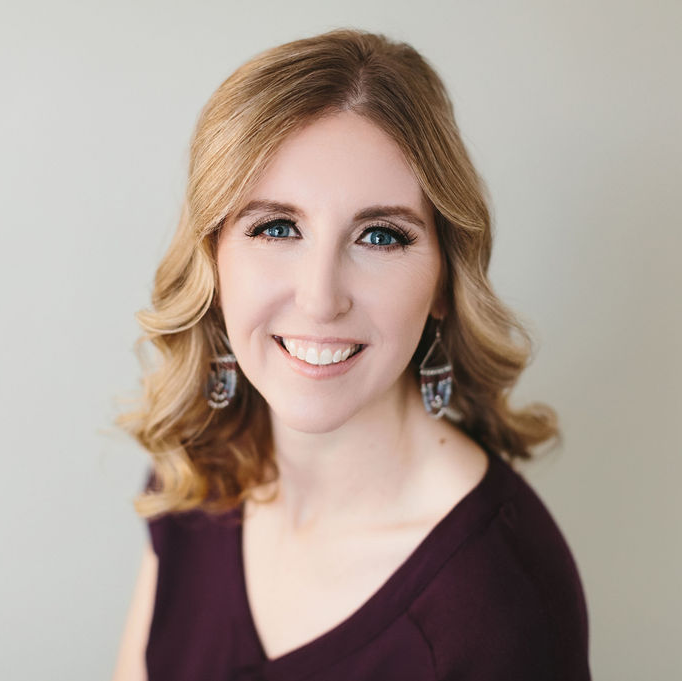
Author/Poet/Journaling Guide
Catherine Sipher is a Boston-based poet, author, and journaling guide who helps women return to themselves through the power of the written word. Her debut poetry memoir, Barely a Whisper—a #1 New Release in Religious and Spiritual Poetry—is a tender invitation to listen inward and rediscover the strength, clarity, and courage that live within. After years of silencing her own voice, Catherine found her way back to herself one page at a time—and now she holds space for others to do the same. Through intimate journaling circles, reflective workshops, and soulful storytelling, she invites women to lay down what no longer fits and pick up the pen as a path back home.