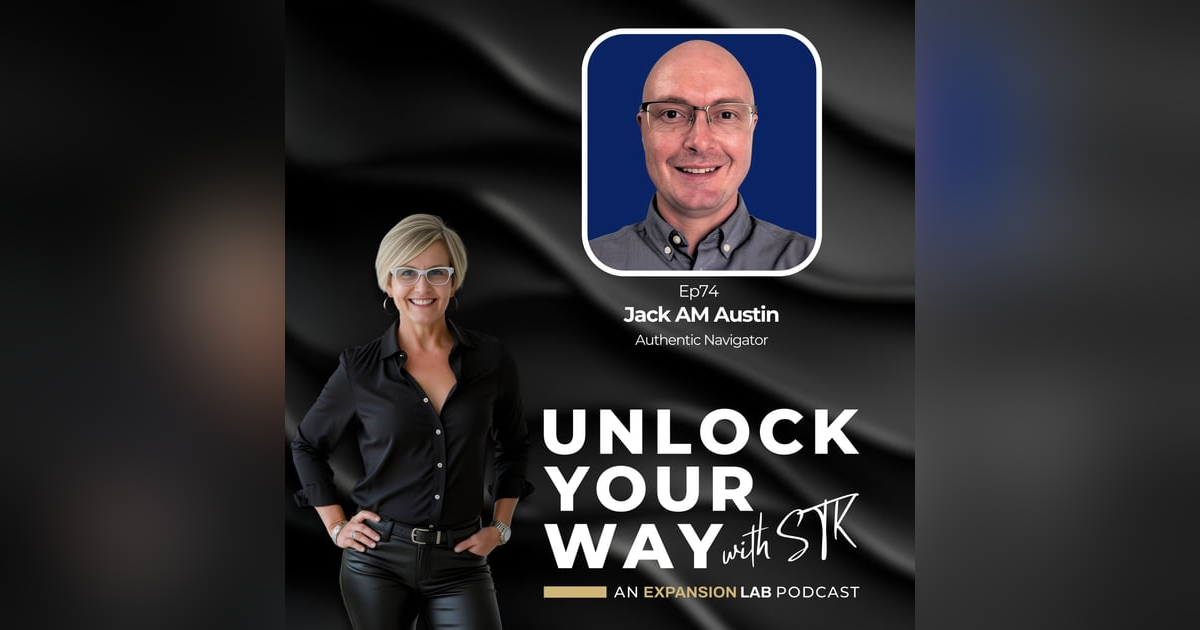
Ep74 Jack AM Austin - How to Turn LinkedIn Into Your Most Powerful Client Acquisition System Without Feeling Sleazy
Ever feel like LinkedIn outreach is just... icky? Like you're one step away from being that annoying person who pitch slaps strangers?
Suzanne sits down with Jack AM Austin, founder of the Authentic LinkedIn Navigators, to completely flip the script on how you think about LinkedIn.
Jack went from losing his content marketing agency (thanks, AI and algorithm updates) to building a LinkedIn system that gets 50% connection acceptance rates and 53% reply rates. And no... that's not a typo.
In this conversation, you'll discover:
- Why treating LinkedIn like a numbers game is killing your conversion rates
- The difference between "following up" and actually staying in touch (hint: one feels desperate, one builds relationships)
- How to use AI as your guide without turning into a robot
- The compound interest effect of daily LinkedIn habits
- Why measuring outputs instead of inputs keeps you stuck in feast or famine
- Jack's "Sherpa" system that helps you have authentic conversations at scale
- The truth about why most LinkedIn automation fails miserably
Suzanne and Jack also dive deep into the messy middle of entrepreneurship... those moments when your bank account is low and you start getting desperate. They share how consistency in the unsexy basics is what actually keeps your pipeline full.
If you've been treating LinkedIn like a necessary evil instead of a relationship-building goldmine, this episode will change everything.
Jack AM Austin 0:00
Where I get 50% of any connection request I ever send accepted. Out of that, I get 53% reply rate to my initial asset. I'm not saying that all of those people end up on calls and are my clients, right? Otherwise, I sat here with 500 clients, and it'd be impossible to serve all of them, but even for the ones that don't want to buy from you now, I can still reach out to them again in the future.
Suzanne Taylor-King 0:26
Hey, hey, welcome to a podcast where dreams meet determination and success is just around the corner. I'm your host, Suzanne Taylor King, and I'm here to help you unlock the full potential of your business and your life. Welcome to unlock your way with STK. Let's unlock your path to success together. Good morning. Good morning. Everyone. Suzanne Taylor King, here for another Friday live edition of unlock your way with STK, and today, do I have a treat for you? We're here with Captain Jack. Jack, am Austin of the authentic LinkedIn navigators. Welcome Jack.
Jack AM Austin 1:14
It's great to be here. I've been looking forward to this. I like the week. Yeah, me too. It's been a while. It's been a while in the making, but we're here now, so it's good,
Suzanne Taylor-King 1:22
yeah, yeah. And I just want to say it's, it's really, really rare. And I gave you this compliment when I explored your school community and all that you do, helping people navigate LinkedIn and actually making more sales. And you know, it's so authentic, and the way you connect with people is so real and genuine. And then I explored the value that you provide in your school community, which, of course, I'm going to have a link for below this video, but I want to dive into why you created this, and also the value in your base camp course is just off the charts. So what? What got you started with LinkedIn in the first place?
Jack AM Austin 2:16
Yeah. So if we go back sort of two and a half years ago, I was at the third year of running a content marketing agency. I had a classic SEO content agency, and we were responsible for writing content, mostly for restricted niche industries. Sounds really like X Files, like what's a restricted niche industry? It's basically anything that can't run ads, right? So we're talking like cannabis, seeds, mushrooms, like all of these kind of things and and I was in that mostly because the old company that I worked for did a similar thing. When I stopped working for them, I started my own agency, anyway, long story short, AI came out, and a lot of my clients also got hit by an algorithm update that was going on with Google. So basically, orders for content went from around 25,000 US dollars a month to about $3,000 a month in the space of six weeks. Wow. Yeah. So that left me with a bit of a problem. I had, like a team of 4e content writers, editors, project managers, you name it. Luckily, a lot of them were based on contracts, but not luckily for anybody needing to make a living. And I was sat thinking, Okay, what do I do now? How do I get more people through? And I'd always really relied on referrals and word of mouth. I'd never tried to build my own pipeline. I'd never done any outreach, because it always made me feel a little bit sick the thought of like sending messages to people I don't know, and all of this kind of stuff. So I didn't really have a process for fixing it, basically, and unfortunately, that business didn't survive. I learned a lot from it, and what I mainly learned was complacency. Got me to a place where I thought that, you know, all of this word of mouth was always going to keep going, and I didn't need a pipeline. I didn't need any way of bringing other clients through, because I'd always get recommended somewhere else, right? Yeah. So. So after that, I went on a journey of, okay, how do I start a new business? And I started out being an AI consultant for a while. I went through a couple of programs for that, and I jumped around niche to niche, platform to platform, trying a million different things to try and find an easy way to get clients the way I used to get them, and I didn't find one that there wasn't an easy way to do it. So that got me realizing that three years before, someone was telling me about LinkedIn outreach, when I had my content agency, and I tried it for a little bit, and like I said, it felt icky and I didn't enjoy it, and it was like I was spamming people. So I used the skills. I got from AI, and I started reaching out to people and opening genuine conversations and being curious and networking. I don't like to call it cold outreach, and I started being quite successful with it, so that in in with a sales process that I developed, I learned it from somewhere, men that I could start closing high ticket clients that I'd never met before through LinkedIn. And I really enjoyed it, like I kind of just got a buzz off the platform, and I about 12 months ago, I was like, You know what? I'm gonna fully go out now, and instead of being an AI consultant, I'm gonna use the AI that I've learned to become a LinkedIn coach and teach other coaches how to how to get clients through LinkedIn without feeling like they're spamming and doing icky stuff they don't want to do. And I felt at the time, you know, there was a real place for it, because coaches and coaches I get on with professional coaches, mostly so mindset, performance, like exec leadership, speakers, these kinds of people, a lot of them come from the same world that I came from in corporate, and they decided to do their own thing. They went into training or whatever, and they love what they do. They're great at it. But when it comes to getting clients in a regular way, digitally, they really, really struggle so much to the point that some people consider going back to jobs or having part time or whatever else. So so that, to me, was like drawing me towards helping that particular, yeah, that particular niche and and I knew I had a system that worked, because it's the same system that I use to get clients. Yeah?
Suzanne Taylor-King 6:38
Well, there's so much unpack there. Number one, I love that so much of the learning came from the mistakes. I talk about the messy middle and the failures all the time with entrepreneurship, and I think so much of that is about being willing to fail and start over, or pivot, or whatever that looks like for you. So I want to celebrate that part of your journey. I know it sucks when it's happening, but afterwards, it's like this clarity comes, you know, oh, I won't do that again. You know, you learn from those mistakes, which is so, so good and juicy, but also doing a system that worked for you. How did you kind of figure out this AI application? What did that look like for you to figure that out? Sure?
Jack AM Austin 7:41
Yeah, it's a great question. And if I, if I go back to those beginning stages, it's because of what was already out there. So if you look at traditionally, outreach methods and what people do to speak to prospects, it's a series of templates that they send, and you'll see it all the time in your inbox, right? You get a message, you know, you know exactly, yes, they're the same. There might be a pitch slap or whatever, or they'll say, if you say, Well, I don't think I'm your target market. Someone today was like, Oh, well, I'm not even trying to sell you yet. I'm just connecting at this stage. It's like, Yeah, I've seen these all of the time. So there was a load of those, and I decided that I was going to do it a little bit differently. So I was manually writing messages about, like, you know, what's the part of your job that lights you up? You know, what's one thing that people always get wrong about what you do? Like, these kinds of questions. And I was doing a lot of it manually, and it was taking me a long time to do, yeah. And so from just trialing that and seeing what was working, I started to discover that there was some some patterns, some message types that work, some things that people like to talk about, news flash, Everybody's favorite subject is themselves, right? So get them talking about themselves, and they're likely to to reply. And then yeah, because I'd learned all this stuff, like I was on the world's first AI consulting program, and I consider myself in the top, like 5% of prompt engineers in the world, really. And that's not, you know, I'm blowing my own trumpet big time there, but I am very good at that stuff. So I moved those two things together and I built comprehensive systems based on my experimentation, but the reason that I call them Sherpas is because they're guides, right? It's not automation like I don't believe in automation in conversation, because it just it takes away all of that human element, which, for coaches and for people like us is really, really important. So, so, yeah, that was the journey. It was like testing things manually and then figuring out how to use AI to do that process. A little bit easier, really,
Suzanne Taylor-King 9:52
yeah, and I am still going through your process, but it's been absolutely incredible. So far, and I will say that my own process of staying more in touch with people has just improved so much over the last, I'd say, year, because of my willingness to see how AI could help me do certain things, but do those certain things like I would do it, or actually just be an arm of my business, not an automation. So I love that you feel the same way, and that totally comes across in not only your content, you do a great job with your storytelling part inside of your content, but it comes across in your business messaging as well. So you know somebody who's looking to automate their LinkedIn and be hands off and just wait for sales to roll in. Really isn't your target market, and I'm curious about your thoughts on the amount the difference, because when you message people cold, and I don't know if a lot of people know this, but if you're cold emailing or cold DMing, it takes 1000s upon 1000s of messages to get one paying client.
Jack AM Austin 11:41
Yeah, yeah, yeah, you're talking about you.
Suzanne Taylor-King 11:45
You piss a lot of people off. So it's like
Jack AM Austin 11:50
you do, yeah. So they're both really, really good points, because you're basically burning the list as you add people. And it's, it's a waste, it's a total waste of time. You're lucky if you get a 1% response rate from doing mass cold outreach, and then from that 1% people have already got their guard up. They know there's a sale coming. And then you're going to have a very difficult time, unless you're selling something that's like super low ticket or an absolute no brainer to say yes to, it's very unlikely that it's going to go anywhere. And then all the people you've added on LinkedIn, you can't message them ever again, because you've already put them into that zone, right? Whereas, well, so I don't personally believe automation works in that sense, like I think anyone telling you that it does, you should run 100 in the other direction, to be frank, but it's for what I do. I get roughly, well, I get 45 to 50% of any connection request I ever send accepted, and out of that, I get 53% reply rates in my initial message. So it's a ridiculous difference. Now I'm not saying that all of those people end up on calls and are my clients, right. Otherwise, I'd be sat here with 500 clients, and it'd be impossible to serve all of them, but even for the ones that don't come through and don't want to buy from me, now I can still reach out to them again in the future, like when in one campaign I'm running at the moment is going back and asking people to get them to fill in a questionnaire about their experiences on LinkedIn. And I can go and do that with people that I've not messaged for, like, six months or a year or were interested, and they don't tell me where to go, because they remember that I was respectful and that we had a proper conversation, and as soon as they said they didn't need help or it, whatever, died off. I backed off from that, you know, and I'm not, I'm not saying I don't follow up, because I do, of course, I follow up with people, but I don't treat it as like, let's just spam as many people as we possibly can, because I honestly don't think it works.
Suzanne Taylor-King 13:59
Yeah, and I want to say that, you know, I used to believe that follow up was annoying. I used to think that once you connected with someone, if they were going to become a client or a referral partner, I used to leave it up to them to reach out to me, and I don't know why, maybe that came from fear or not being sure what to say, but I did learn from a sales coach that follow up didn't have To be Hey, just checking in. Where do we stand? Want to buy my stuff? See, in my mind, I thought follow up was that pitch slap? Was that, you know, hey, you know, we talked three months ago. You know, do you want to join my program? And. What I learned was that let's not call it follow up. Let's call it stay in touch. Let's call it providing value to other people. Or, you know, commenting on somebody's post can be a form of staying in touch with someone. So I really love this idea that expanding your network can lead to sales, can lead to inbound inquiries when it's done the right way,
Jack AM Austin 15:37
totally Yeah, and the follow up way you're saying just checking in, or just circling back, or whatever else. I mean, even if you've had a sales conversation with somebody that makes you want to throw up in your mouth, you know, like, you know full well why the person's circling back and why they want to ask something else and and as much as whatever, even if you need the solution and you've got the problem, you're not going to buy anything from anyone when you put your guards up straight away. So you're absolutely right following up with somebody and offering them some value, or saying you saw something that they posted and it resonated with you, or whatever it might be. And as long as you're not doing it as a tactic, it's like, you know, they pop up. You see them, of course, track these things. I'm not saying you have to remember like 4000 people and what their birthday is and the name of their dog or whatever. But, you know, have a system for it and go and do it genuinely based on what the intention is for building your business.
Suzanne Taylor-King 16:33
Yeah, yeah. I like that. And so I have a little question for me. I tend to and think about certain people, remember certain people, and if I haven't connected with a person in a long time, but I see a post or they pop into my mind, I use that as an opportunity for that authentic connection or invitation, or, Hey, I saw your post about XYZ. It was so great to see you in my feed. Made me think of you. How have you been How's the family? If I know, right, it has to be real. And I think that's that's the key, at least for me, if, if we're connecting on a genuine point, whether it's snowboarding, surfing business, AI, you know, if it's something genuine, it's easier for me to do it if I start getting into Oh, tactic, how do I get that person as a client? It it doesn't work. It never has. And I, I want to know how you change people's thinking on that type of spammy outreach, or that type of tactic to go in feeling like that, what does that look like to change somebody's thinking on math?
Jack AM Austin 18:08
Yeah, it's a really good question. And I mean, for most people, the reason they feel like it's icky and it's a tactic is because it's new, because they've not done it enough, and everything is about reps and trying to do stuff and figuring it out as you kind of go along. So for me, is getting people into going and sending messages and following up with people and finding out what feels good and what doesn't feel good for them, because everybody's different. You know, like, some people will go in and they'll do like, the same tactic or whatever, and it feels fine, and others, it won't be. But I think really changing someone's opinion if they feel like they want to use tactics and spam and stuff, there's not really much you can do. And I usually try and repel them from wanting to come and talk to me and work with me by my content and the things that I post. You know, I think, unfortunately, we live in a society now where everything's an instant gratification, whether it's like scrolling through stuff on your phone or, like whatever, like all of these things and market as a guilty of this as well. Because we'll, you know, people will say, Oh, do this? Buy this $1,000 course, apply it. You're going to get all of these crazy results, and they deliberately shy away from the hard work and the the effort and the intention that's that's behind all of that. And I think what happens then is we end up with a lot of people that very rarely get results, like people on sales calls and stuff, yeah, and then when they do get people on sales calls, they're so desperate to close that they'll sit and read every tactic and try and follow every tactic that they've ever learned to kind of do it, you know, to get themselves through the door. And that never works, because humans can smell desperation, so it's and I get why that's tricky and desperate for people, because you want your business to succeed, and you're like, I need, I need to close this. I need to get. The sale, but then that ends up putting people off, you know,
Suzanne Taylor-King 20:03
well, it's such a cycle that I see over and over and over again that, you know, when the bank account is low, you stop doing the things that worked prior, and you get into that desperate mode, oh, I have to close somebody or Oh, I really need a client. And I would argue that that cycle for entrepreneurs doesn't matter if you're a coach, a consultant service provider, doesn't really matter if you're in the online space. You go through that cycle. And I'm curious about, you know, other people's process for staying out of that cycle of feast or famine. For me, it's about just being consistent with the conversations, the events, the emails and the consistency actually keeps the sales consistent. I'm wondering what that looks like for you.
Jack AM Austin 21:15
Totally it. The problem is that people measure the outputs instead of the inputs, yeah, right, yeah. So it's like anybody that masters anything, right? If you look at the sports person or the pianist or the musician or whatever, if you go and actually watch one of those people, they do the basics over and over and over again, right? So for us as business owners, the basics are sending those 25 connection requests every day, posting the content every day, following up with the people who liked your stuff, looking at who looked at your profile on LinkedIn. Like all of these things that are not sexy in any way, shape or form, are the things that lead to the results later. And like everything in life, I'm sure you know, like compound interest, right? It's that graph where you see, if you if you have $10 today, in 20 years, it might be $20 and in 40 years it might be 50. And then by the end, it's like 10 grand, or whatever. It's because the graph goes like this for so long, and then eventually you get to this end, and it shoots up. And there's like a natural law about that is, is 8020 right? Everything in the world is 8020 you know? So this last 20% is where things start to get really, really good. And unfortunately, most people give up before they get to that very last stage. And it's because they're measuring the outputs and not the inputs, because they're putting this effort in, and they're seeing some stuff going on, but it's not what they think it should be. This is compounded by the fact that we all have really, really short memories. So like, if I actually what you had for lunch last week on Wednesday, you know, you probably don't know, right? And if you go and say, Oh, who was, you know, your kid's third grade teacher? Again, you probably don't remember. And it's the same in business, you take an action like sending 25 daily connection requests, and you do it for two months or whatever, and then suddenly you get a client. You forget that, that was the reason why. And by then, you might start tweaking stuff and moving things around, and not doing the basics, and then suddenly you don't have any calls coming through or any clients coming through. Yeah. So for me, I always focus on, am I doing those basic inputs? And as long as I'm doing them every day, I don't really care about the result there and then on that particular day, because I know it, I know it will come inevitably at some point. You know,
Suzanne Taylor-King 23:44
yeah, it's really the habit of, you know, whatever that looks like for you, being in the habit of doing it every day, whether you got three sales yesterday or not. And I think that's the hardest part to wrap your head around, that if you had a good week, you still next week, do the same things. And I notice, and I've worked with a lot of realtors, a lot of coaches, and I notice that when times are good, they slack off on the connections, the leads, the networking events, and then three months after the slack off, they have less money coming in less clients. So I started to see this pattern that, you know, when times were good, you forget the habits that got you there. And I think it's so important to stress do habits that are doable. People, attach them to other habits, right? If you open social media every day, do your habits first? You know, make those connection requests, manage your list, because the human brain can only remember 100 people and well, my job in the online space is to have 1000 10,000 100,000 people know who I am. And if I do a good job and do the things that you teach and talk about I will have more and more people know me, so I don't have to remember them totally. I want to be one of one of everybody's 100 right? So all of my connections, if I make that kind of valuable impression on them. They remember Suzanne. And I'm not saying that I don't remember people, but my brain only has the capacity to remember 100 without technology helping me, and now we have technology to help us. So tell us a little bit about your guides that help do this. Sure.
Jack AM Austin 26:31
Yeah, and what you said, there's a really, really good point I just want to add to that quickly. It's like AI is here to help us do more, not less, you know, or more, not the same. It's about, how can you compound more of the things you do? So in my system, it's called the LinkedIn base camp, which you get full access to inside the school community. The way I developed that actually was, it was my high ticket program. So I used to charge $6,000 to help people install this over a period of time, and I decided that because of the way AI is and the way things are moving, you need to get people results faster than ever before. People don't want to wait 12 weeks to start booking calls and getting clients. It's not and there's also, there's so many people out there that say they can do stuff and they can't that everybody's been burnt at some point, spending 1000s of dollars on things that really worked. Yeah, so you have to be in a place where you can build that trust up front. And that's what made me decide to do the LinkedIn base camp and the community. Because I'd done this with 50 plus coaches already, I knew it worked really, really well, and I found a way to make it so that I could customize it by showing people over video how to customize it, basically. So, yeah, so then the LinkedIn base camp was born, and inside there we have content Sherpas, as I call them, as guides. We've got one that helps you write content for LinkedIn. It's called the content writing Sherpa. There's a punchy content Sherpa, which is not like punching you in the face or anything, but it's shorter, more impactful content. There's another one in there that helps you with commenting on people's profiles. And it's not the kind of comments where you see, oh, that's powerful, or that's wonderful. They're genuinely insightful content using, like, high status communication principles and other things that just make it so that people think is a human rather than an AI, and they are actually good comments. Yeah. And then there's the main bot. Is the conversation bot, so I call it the authentic conversation Sherpa, and that helps you guide a whole conversation through the DMS using the framework that I've built to take someone from initial contact right the way through to booking them on a on a call with you. And then there's a follow up bot as well. And I've recently just added a topic Sherpa, which helps you, yeah, the topic Sherpa is really cool because it helps you take a really niche subject and make it so that it not only resonates with your target audience, but with like the broader business world. Because, and I did a post about this earlier that I've not put out there yet, but in the past, people used to say, write for your niche. Okay, now writing for your niche in 2018 or 2021 even made sense, because there wasn't that much content out there, right? No one, yeah, not many people knew how to write it very well, or not many people could afford to pay someone to write it for them. So the competition on LinkedIn for posts was much, much less so back then, it made sense. If you served like exec coaches. You just write content for exec coaches right now. If you do that, the algorithm is not ever going to pick you up, basically, so you're going to stay at a low level. The clever thing to do now is to write things that are broad and get like millions of people seeing your stuff, but then you can niche down with the. Offers that you create. So the topic Sherpa helps you do that you go in with your niche, yeah, yeah. And then it will basically spit out and say, Hey, these are 10 ideas that you know are a bit broad and the same psychological principles of why that post works for your specific niche. So wow, it's awesome, and I'm adding more to it all the time. Like, I also do a monthly workshop in there as well, and they get added for members and stuff. So that base camp course is an end to end LinkedIn system. And it's of the three things that I do. It's like, it's like a pyramid, basically. So if you just need client acquisition system for LinkedIn, that's at the top, and then in the middle, there's a layer that's all around positioning. So when I help people with positioning on my longer programs, it's, you know, what's what's your niche? Because a lot of people struggle badly with choosing their niche. What's the problem that you solve? Right? The specific problem? How well have you researched that problem? Etc, etc. What's the solution? Because generally people start with solution and work back to problem instead of the other way around. And then results and and obviously the offer, and then the level at the bottom, behind that is an AI process, which is not, I've not released yet, but it's coming soon, called the Pathfinder process. And yeah, so the Pathfinder finder process takes you through like, what are you supposed to be doing? What's your purpose? What's your identity? Why are you doing the business that you're you chose to do? And an example story of that, I had a client who came to work with me, and he was a jay Shetty coach for tech professionals. When we first started, I piloted him through this process that I've built, and now he helped Muslim professionals be more confident at work and spread understanding and knowledge of the Islam faith. So he went from this thing thinking I should do this right the way over to something totally different. So it's a it's a big old thing,
Suzanne Taylor-King 32:06
so there's so much value. But I want to go back to what you said that it that the base camp used to be your higher ticket program, something we have in common. You know, I did my school community with the idea that I was going to take my high ticket course that I had taken, I don't know how many cohorts of people through. And instead of having it be $1,000 a month group coaching program, I was going to include it with my membership, and that really kind of fueled the growth of not only the community, my networking events just massive amounts of value that you do you understand that in order to have more impact, you have to be more accessible, and that that really drove me in a way that is so satisfying to see now, when you when you do this, you don't have everybody that joins Do everything you say, but you typically notice some rock stars in your community who are doing it and are sharing it and promoting you in the process becoming super fans, because you've actually taught them Something so so valuable. Now, how does that feel from, you know, the perspective of the bigger impact, what does that look like for you? What's the big, hairy goal with impact for you?
Jack AM Austin 33:55
Sure, it's a good question. And again, it's something that was quite difficult for me to deal with initially, because people do come in, and not everyone does what you put out there. And sometimes you can be like, Wait, so how can I improve this and optimize this? And yeah, it works, because you've taken people for paying high value and now it's cheaper. Some people don't do it. So there is that. For me, it's that I believe the world is going to change massively, like where we're at right now, with AI and everything else coming through. I think traditional work and workplaces are going to be a thing of the past. I think that even smaller businesses that rely on a players are going to struggle, because these A players are going to realize they can do all their own marketing, all their own stuff, and charge a hell of a lot more for it. So I feel like we're going to move towards a project based economy, and for that, it means that we need to have people that are skilled in in all the things that that we do, right? So marketing, outreach and all of that stuff. So I want to give a. There's many people as possible, the opportunity to do that easily, without having to go and pay like 6k 10k to even get started. So that's my mission for for the LinkedIn base camp. And I that the reason that I call it authentic navigators. And you know, my weekly meetings are called the Map Room, and I'm Captain Jack. Right of the authentic navigatorship is, for me, I see it as you're almost cutting through a forest of business. And there's all these courses and growls in the woods of do this, and you should do that. And I've kind of cut that path over five years of trial and error and failure, and I want to help people through that first bit of the jungle as quickly and as easily as possible. But then I want to equip them to go and sharpen their own their own machete, and go off in whatever direction they want to go off in, yeah, because I think, you know, the nine to five working structure, it's, it suppresses a lot of people that have got amazing gifts and values to bring to the world. And it doesn't have to, you know. And have to, you know. So that's my, my big, big goal is to get, you know, 10,000 people into the position where they can go and do their own thing.
Suzanne Taylor-King 36:13
Well, I love that so much because it's part of my why. Maybe that's why I'm attracted to what you do and the value you provide one of part of my why, because I've been in online space for so long, and an entrepreneur for 40 years, I feel as though it's my responsibility to cut through the Bs of the online space for people. So I absolutely love your program. I'm doing your program. I'm a member of your community. I invite people to join your community, not, not because of any other reason except the amount of massive value, the smart the intelligence of it. And there's so many things in the online space, shiny objects, courses, coaching programs that don't actually teach anything. And I'm bold enough to say that now It didn't used to be because I've realized it's part of my why. So it's to challenge the status quo and call other people up to their greatness, to their full potential. Yes, all day long, and I feel like you're a kindred spirit in that department. And I knew it right away when Justin introduced me to you, I just knew that there was something magical about what you're doing, and so however, I can support that, encourage that, and just call you up to keep doing what you're doing, because it truly is magical.
Jack AM Austin 38:10
Now I appreciate that so much. And again, I feel exactly the same when we first met and we hit it off. I think we had a good hour call, and there's another one a week or so after that. And you know, I can tell you've got the same vision about what's important in in the world right now. And I'm sure you, in 40 years in business, have spent quite a bit more than me, but I've spent $30,000 on courses and whatever else. And you know, some of them have been good, some of them have not been, and I think a lot of it preys on people's needs to feel like they're doing something.
Suzanne Taylor-King 38:42
Yeah, I am not going to say the number that I've spent, because I wouldn't want my husband to find out how much this business of mine has spent on coaching consulting. Now he knows, but I feel as though the the amount that I've spent on nonsense is is truly, I could probably buy a vacation home with it. And I think if I can be that filter for people, I love being that filter for people and all of my clients, friends, connections, know that if you're thinking about buying anything and it's over $100 Ask me. Ask me, yeah, because I might have already have it. I might have studied it. I might know a book about that topic, because I read a ridiculous amount. And I think when we truly look at the lens, entrepreneurs are feeling like they need everything as soon as they come in the online space, I need a website. I need funnels, I need emails. I need a community. I need a podcast. I need sales pages. And I, you know, they get so caught up in the weeds of all the things they need to be doing on the computer. I need to build this. I need to have this. And they miss the human connection piece,
Jack AM Austin 40:24
totally, totally you could. I couldn't. Yeah, I couldn't add anything to that at all, because it's exactly on point. It's again, most of it is understanding your your audience, your customer. It's like really digging into, what do they think? What do they feel like, what are they scared of? All of these things. And, you know, again, is the double edged sword of AI that a lot of people think now, that going and creating an avatar is to just go into chat GPT and say, Hey, this is my target customer. Create me an avatar. And that that's the problem, right? So, you know, until you, until you've done i that, so I even, and I'm doing it again at the moment, I created a new Google Chrome profile, okay? And I've created a an alter ego, which is an executive coach, which is, like, one of my main target clients, how professional coaches, and I'm going, and I'm signing up to like Facebook and like, I'm going and joining groups on Reddit, and I'm reading podcasts, and not reading podcasts that would be weird, but going and doing podcasts and like, all of this stuff so I can absorb the information as a member of my niche. I'm going undercover, like, I feel like I'm an undercover cop in there, yeah, and after 14 days, you start getting marketed to the same way as your IP, yeah. You start doing all of this stuff, and you end up with a document of pages and pages and pages. And you know the way, the way to look at it is, if you were going to write an email to your husband to sell him something, you would know exactly what to put in that email. Yes, right? Because you know everything about him. That's how people need to be with their target market. So really, why even bother with a website until you've got at least some understanding?
Suzanne Taylor-King 42:12
Absolutely I say work with 100 clients. Help 100 people and figure out who you like to work with. Do I like, you know, 20 year olds, or do I prefer 60 year olds? Do I like, you know, working with a certain demographic psychographic, like, learn you first, I love that I have an alter ego. And you know, she writes My AI newsletter for me, and she does all the research, new tools, new platforms, new releases. She researches all of that for me and tells me about it in a weekly report, and then I choose what I'm going to have her report on based on my ideal client. So there's, there's some human interaction there that's imperative, and I think that's why she lands with so many people. She's a 50s housewife, and, you know, she has martinis before she reports on AI. So she's super funny. And I think why it's landing is the human interaction. If I allowed her to just write on what she finds and reports back to me. You know, could be 100 things a week because of how fast AI is moving. It wouldn't resonate with my ideal client as much. But because I pick the stories, oh, let's write about this and this and this, because of how it applies to entrepreneurs and coaches and service providers, all of a sudden it's landing with my ideal client so much better, right? It's, it's absolutely incredible to think about AI that way. And I love that you're doing the same,
Jack AM Austin 44:18
yeah, as the you know the avatar in mind and knowing that it just allows you to do much more stuff. It's, yeah, it's an interesting one. I've had things in the past with projects where, you know, you see people join projects where they maybe end up getting paid a lot more than they used to get paid. And what they will do is they'll just work, say they got paid three times as much. They'll just work a third as much. And that's the thing we should not do with AI, right? Just because now AI's come along and it's like, oh, you know, you can do all this. You don't go, Okay, I'm just gonna, I'm gonna put 10% because everyone, everyone can tell and I think it's one of the things I'm really passionate about, is like, being against what I call AI. Slop, because people don't realize how damaging it is for their brand to be posting stuff without doing what you do and going through and checking, knowing what's going to work and what isn't. So, yeah, it's a really, really great point. Well, I
Suzanne Taylor-King 45:14
think you know LinkedIn content in particular, I'm using a tool right now that analyzes my content and then tells me what, what is working, what's landing, what's not landing, besides LinkedIn numbers, it's more emotional. It's telling me, oh, that hook worked. Your people like numbers. They like your stories, and it's really helping me see what's working. But the cool part it also is showing me other people's content, who talk about things like I do, who are getting 10 times the interaction, 100 times the interaction. That's fascinating to me. There was, there was a post it sent me and said, This post is like you. You know, it talks about similar things, but it got 900 times the reach as yours, 900 times. Let me see why, and it didn't. It wasn't because the person had more followers than me or more connections than me. It was the hook, and it was also a couple of the hashtags that were used like it was a whole combination of things, and the post was from nine years ago, and I thought to myself, this post is Still getting attention. Why? Why? Because of where it's been shared in a blog, in an article on Forbes, the link to that post is so many different places that it's still getting attention, and all of a sudden that just, you know, gave me so many ideas about having that flywheel effect happen when you post.
Jack AM Austin 47:31
Yeah, that's so cool. And that's like, you know, the old world of SEO in action, right there, yeah, yeah. Amazing. What can happen if you get enough guest posts on the same thing.
Suzanne Taylor-King 47:41
So, right, right, yeah. Now, what about AI search? What's happening
Jack AM Austin 47:52
that's, that's crazy. So something I'm working with at the moment with a good friend of mine, Martin, because he's properly into all of this stuff, yeah, and it's, it's making sure you're talking about the same topics on the same platforms that and the most like and on the most important platforms. So Reddit is a huge one for it. LinkedIn is another YouTube, like all of these things, but it's making sure that strategy then aligns back to your blog on your website, which we said, you know, this is not like, for anyone listening. This is not like. I've just started my business and I have 50 clients. I need to do AI search, by the way. Leave this until you've got, like, a good client base, but, yeah, it's crazy. It's it's gonna change everything for sure.
Suzanne Taylor-King 48:37
Yeah, I read that post where you tagged your friend about it. It was really good. I'll make sure I put that in the comments of today's video as well. Well, I could talk to you forever, but how can our listeners get in touch with you? I already put the link to your school group on Facebook. I'll add it on LinkedIn. I love being a member. Thank you for coaching me through this and being such a good Sherpa and Captain.
Jack AM Austin 49:09
I appreciate it. Suzanne, thank you. Yeah, and the best way to get in touch with me is through LinkedIn. So I'm on there, Jack Austin, as you can see below. And yeah, just wanted to thank you for having me. And you know, hopefully we can do it again at some point in the future, because the way things move right, we can, you know, there's plenty more, I'm sure.
Suzanne Taylor-King 49:28
Oh yeah, we'll have, you'll have more Sherpas, and I'll have my CEO dashboard ready to go, and all kinds of fun things
Jack AM Austin 49:38
we can talk about. I love it. That sounds great. All right. Well, have
Suzanne Taylor-King 49:42
a great day everyone. Thanks again, Jack for joining me, and we'll talk soon. Thank you for tuning in to another empowering episode of unlock your way. I hope you found today's discussion inspiring and you're ready to take your business and personal growth to that. Next level. If you're feeling as fired up as I am and eager to unlock that full potential, I'm here to help you on your journey and provide that personalized guidance tailored to your unique goals and challenges. Simply book a one on one coaching call with me, and we'll dive deep into your business aspirations and see how we could co create a roadmap for your success, and whether you're striving to scale an enterprise or just getting started. I'm here to support you every step of the way. To schedule your coaching call, simply visit the website at unlock your way with stk.com click on the book a call button, and we'll turn your dreams into that reality. Subscribe and review on your favorite podcast platform and on YouTube, plus, you can join over 800 entrepreneurs in the IDEA Lab Facebook group. Let's make success as an entrepreneur happen together until next time I'm SDK, keep dreaming big. Stay focused, and most of all, have fun while you're doing it.
Speaker 1 51:19
This show is powered by media leads to get your next great podcast produced. Go to media leads co.com

Authentic Navigator
𝐈 𝐛𝐮𝐢𝐥𝐭 𝐚 𝐭𝐡𝐫𝐢𝐯𝐢𝐧𝐠 5-𝐟𝐢𝐠𝐮𝐫𝐞 𝐚 𝐦𝐨𝐧𝐭𝐡 𝐜𝐨𝐧𝐭𝐞𝐧𝐭 𝐚𝐠𝐞𝐧𝐜𝐲. 𝐒𝐨𝐥𝐢𝐝 𝐭𝐞𝐬𝐭𝐢𝐦𝐨𝐧𝐢𝐚𝐥𝐬. 𝐆𝐨𝐨𝐝 𝐦𝐨𝐧𝐞𝐲.
And I was dying inside.
Every "professional" conversation felt like wearing someone else's skin. Every strategy session required a performance. Every client call meant putting on the mask.
When the referrals that built my business dried up, I spent a year trying everything else - new platforms, new strategies, new tactics. Never staying with anything long enough for it to work.
I had a choice. Learn to perform better or finally drop the act.
𝐘𝐨𝐮'𝐫𝐞 𝐝𝐨𝐧𝐞 𝐟𝐨𝐥𝐥𝐨𝐰𝐢𝐧𝐠 𝐬𝐨𝐦𝐞𝐨𝐧𝐞 𝐞𝐥𝐬𝐞'𝐬 𝐦𝐚𝐩.
Started showing up daily. Real conversations instead of performances. No scripts. Just me, exhausted from pretending but doing it anyway.
The weird part? When you stop performing, conversations become effortless. People respond to the real you in ways they never did to the polished version.
You already know how to make money. That's not your problem.
Your problem is the mask is getting heavier. The performance is exhausting. You're successful but feel like a fraud because the "you" making money isn't actually you.
𝐓𝐡𝐞 𝐬𝐲𝐬𝐭𝐞𝐦 𝐢𝐬 𝐬𝐢𝐦𝐩𝐥𝐞. 𝐘𝐨𝐮𝐫 𝐯𝐨𝐢𝐜𝐞 𝐢𝐬 𝐰𝐡𝐚𝐭 𝐦𝐚𝐤𝐞𝐬 𝐢𝐭 𝐰𝐨𝐫𝐤.
I teach the same mechanics everyone uses - daily outreach, consistent presence, genuine engagement.
But really? I help you reconnect with what makes you genuinely different and OWN it. Your natural way of connecting becomes your edge.
That happens when you stop performing and start connecting.…Read More