
Ep78 Scott Perry—How to Build a Loyal Audience and Hit Your Annual Income Goal Without Social Media or Funnels

What would happen to your business if you deleted every social media account tomorrow?
Scott Perry did exactly that. His email open rate climbed back above 50%, his annual income goal was done by June, and he runs his entire business in under two hours a day.
Suzanne sits down with Scott, author of Intrepid: Dare to Make a Difference and founder of Creative on Purpose on Substack, to explore what a purpose-driven business looks like when you stop chasing every platform and start building something that actually holds.
In this conversation, you'll discover:
- Why solopreneurs and entrepreneurs aren't working from the same resource pool, and how mixing them up leads to burnout
- How Scott grew from one to three new Substack subscribers per day by focusing on direct, personal, relevant connection instead of paid ads or content calendars
- The way he uses Substack Notes as a raw idea-testing pad rather than a growth tool, and why that distinction changes what you get from it
- What Seth Godin's The Dip taught him about the difference between strategic quitting and giving up
- Why human connection and belonging are what AI can't replicate, and what that means for how you build your business
Scott Perry 0:00
The best time to decide whether you're in it to win it or that it's just not worth playing is at the beginning. If you want to accomplish anything that's worth doing, there will be a dip. It will be much harder and take much longer than you anticipate, and you have to decide at the beginning. I am going to persist until I get to the other side, or I'm not going
Suzanne Taylor-King 0:25
to do it.
Suzanne Taylor-King 0:25
Hey, hey, welcome to a podcast where dreams meet determination, and success is just around the corner. I'm your host, Suzanne Taylor King, and I'm here to help you unlock the full potential of your business and your life. Welcome to Unlock Your Way with STK, let's unlock your path to success together. Good morning, good morning everyone. It's Suzanne Taylor King here for another Friday live episode of Unlock Your Way with STK, and we are here today with a Substack friend who I met through someone else who I am just thrilled to have this conversation with today, Scott Perry, creative on purpose over on Substack, author of the new book Intrepid, which I've gotten to read, and la love it. Let's get into it, my friend.
Scott Perry 1:21
Yeah, I really appreciate the opportunity. It's always great to spend time with you. Period. But I really appreciate the chance to talk about the book and all the always stuff that you and I love to talk about.
Suzanne Taylor-King 1:32
Yeah, well, I'm, I'm really intrigued before we get into the book about your writing and what brought you to Substack? I love paths to things, and before I hit live, we talked a little bit about, you know, the path and thinking that gets you somewhere. I'd love to hear what brought you to Substack and providing such immense value to your people there,
Scott Perry 2:03
that is a great question. So, the origin story of me and Substack is that I learned about Substack in the very, very early days. I was intrigued, but it arrived in my horizon when I was at a point where I'm just, I'm so tired of just launching on another platform for the sake of watching on another platform. This looks interesting. I'm gonna ignore it for now. And then I am part of a community with that's led by Nick Peterson, and I saw Nick experimenting with Substack, and through kind of reverse engineering what I thought he was doing, I realized that Substack provides a really unique opportunity. Number one, yes, it's with the with the launch and evolution of notes, it has its own kind of social media component, but it's almost like social media like it used to be when we all first joined, whether Facebook or Instagram, before the buyout, or Twitter before the enshrtification of Twitter, like it was actually, and but the, the primary thing was as a, as a tool, it is actually a platform that's a collection of tools, I can host my podcast there, I can host my newsletter there, I can, I can talk to my email list, there. I could go live there. I can do a little bit of social media, and but the thing that Substack does continues to do so well, and has since I joined, I guess almost three years ago, is it taps into the network effect. So, for me, as someone who has always really struggled, especially using legacy social media to get the word out and to build an audience, I went from one, two, or three new subscribers a month using social media and the standard website, you know, opt-in lead magnet to one to three new subscribers a day
Suzanne Taylor-King 4:25
on
Scott Perry 4:28
deer. Yeah, so that was that was the big one for me. The fact that there's no ads is was a big one, you know. I respect the complaints by the OGs about, like, oh, we don't want video, or, oh, we don't want notes, you know, and it's like, yeah, I totally respect that. And if you don't want to do notes, and if you don't want to go live, and if you know, and you don't want to do video, just don't, like, you could still use it, really is. It really is designed in a way that allows everybody to match up the tools that they want to use with their personality and preferences. It allows people to really play their game on their terms, and I've never been happier with both the quality of the connections, you know, and let's face it, Substack attracts readers, and readers, you know, are definitely more engaged and smarter than people that are doom scrolling on Twitter, or whatever it's called now, or you know, looking to just get distracted on Facebook, or promote themselves on LinkedIn, or Instagram. So I'm, I'm really happy with what's going on for me on Substack, and the community that you know I'm building, and I see you doing much, much the same. I mean, your Substack is phenomenal, and the quality of engagement on your Substack is really fantastic,
Suzanne Taylor-King 5:55
and I, and I think exactly what you said, I was so discouraged from years of effort on Facebook, and what did that look like for me? Well, 15 years ago, maybe even up to 10 years ago, I was very, very successful on Facebook, Facebook groups, coaching programs, things that I would do in groups, and I remember, you know, getting my positive psychology degree, and I just started a positivity Facebook group, and this was probably in 2010 1112-ish, Immediately, I had 6000 members. Immediately, I sold 60 spots in a coaching program, and it was effortless, and I was like, "Wow, this is going to be so great. Well, those days ended, and it took me a long time to stop the habit of the Facebook group, and the, and the posting, and hoping, and the, and all the things I used to do that weren't really planned, and weren't really strategic, just because it was so abundant, and the way it worked, and I see so many reluctant to try something else, and I feel like you're one of those people who try things to see if it's going to work, and because Substack has so many different options, we have that ability to try, you know, this series or that series, or maybe offer a paid workshop on there, you do collaborations, and you had me on live one time, which exposed you to my people genius idea, by the way. My people get exposed to good content, and so do yours. That's why I do this podcast, right. And then I thought, well, how do I bring what I'm already doing to Substack? So, can you talk a little bit about how that changed for you? And, well, one to three new subscribers a day is just wonderful in my book, because I know what that takes to get that from social media.
Scott Perry 8:26
Well, I think the, you know, for folks like you and I, and probably a lot of the folks that follow our work, we think of ourselves as independent business owners, or solopreneurs, or independent creatives, freelancers, whatever it is, and when you are figuring out the business end of things, it looks like you have to act like an entrepreneur, and entrepreneurship is very different than solopreneurship. Entrepreneurs are playing with somebody else's money, they have a lot more financial resources, they have venture capital, they have staffs, they have, you know, people that are specifically trained in media and advertising and marketing and on product design and fulfillment, and all the things. Yeah, as a solopreneur, you have to remember that, like, you, you are playing with very finite resources. Like, an entrepreneur is tapped into the municipal water system, they can water the weeds all day long, and they'll still grow enough fruit to survive and thrive as a solopreneur, where we're our hose is very old, very kinky, it's got a lot of holes, and it's screwed into a rain barrel, and you know, even when you turn it on full blast, very little is dripping out the other end and a. Of it, and you're, you're watering the weeds, and, and you're choking, so you know, choking the fruit that you're, you're trying, trying to bring forth. So, what I have found is that by returning to first principles, like, what does it take? So my background is I, for 25 years, I was a full-time guitar player, like I was a full-time musician, had guitar on the side for a number of years, so I could spend more time at home with my family, but you know everything that I made, you know, I paid my mortgage and made my car payments, and put my kids through college on a musician salary, which is not easy to do, and I did it without any social media, I did it without any mailing list, I did it with, you know, just old school earning goodwill, word of mouth making promises venues into audiences that I could keep, and so when I thought about moving my business kind of onto Substack as its primary marketing platform, I just, you know, like I have to create an offer that is irresistible enough for an audience that is interested and engaged enough to in what I'm offering, and I have to have a means of putting that offer in front of that audience, and when I say offer, I don't just mean all of my paid programs or my paid sub stack, for that matter, I mean any level of engagement, whether you know your people are getting exposed to my free content or getting a little bit of proximity and access to a paid membership or enrolling in a program, you have to like have this daily discipline of just making and keeping small promises, and so by focusing on all of those things, like before I had 1000 subscribers, and before I had even 10 paid subscribers, I was earning my annual income goal within six months, the first six months of the year, and so you know that's and and and along the way I shut down my face or I deactivated Facebook, I deactivated Instagram, I deactivated, I've completely left what used to be Twitter, and I'm just doing it exclusively through direct personal relevant connection with my audience. You know, we talked about our mutual friend Seth Godin, permission marketing. The first things I ever read by him, I still remember. All you have to do to make a living is talk to people, deliver messages that are anticipated, personal, and relevant, and by doing that every single day, whether it's in my weekly articles or my daily notes or my occasion broadcasts, that's, you know, that's that's how I am spending all of my time in my business, which is only a couple hours a day, doing my thing and letting people watch, and just trusting that the right people will continue to ask for greater proximity and access to me, and I don't spend any time on digital marketing stupidity, no funnel, no marketing or content creation campaign or calendar, no social media other than Substack Notes, and so that's, you know, that's for me the promise that I want people that that I'm talking to, to see, like if you are a purpose-driven difference maker that wants to, all you're asking is that you can earn just enough today that you can do it again tomorrow.
Suzanne Taylor-King 14:07
Yes,
Scott Perry 14:08
you don't have to, like you should. You are entitled to just do the work that you are meant to do. You are entitled to make the difference that you can make. You do not have to learn how to become a digital marketer in order to, just, you know, for to be entitled to do the work that you want to do. Do your thing out loud in public, let them watch. Your people will find you. Ignore all the digital marketing bs, all the roadmaps, the blueprints, the checklists, and everything else that's being peddled. You don't need to growth hack, make, make, and keep small promises to the people that are already listening to you, and through that demonstration, through keeping those promises, through the goodwill equity that you build day after day, over time, you will have more than enough people asking, How do I get that extra level of access to you? How do I pay you so that you can catalyze the process that we've already begun together?
Suzanne Taylor-King 15:07
Yeah, well, thank you for sharing that, because it's spot on how I feel and how I am not quite brave enough yet to delete the Instagram and delete the Facebook, they, they sit there for what purpose, I'm not sure,
AI VO 15:29
but
Suzanne Taylor-King 15:30
I love the bravery and the all-in commitment, and I want to acknowledge that, because coming from that world where likes and follows meant money, it's hard to say, "Oh, I'm just going to delete that and I'll need it anymore, but when I really look at what most people are doing, myself included. There is no income. Well, every once in a while Facebook gives me three cents, for you know, or good post, so you know I'm still waiting for that first check, because they only send out $100 at a time, so it's going to be a while, I think. The break bravery required is so authentically you, because being an entrepreneur truly making a living playing guitar or teaching business skills or helping people grow their business, right, is is a work of love, and I think the, the bravery number one to go all in on what you know to be true, love it, the I idea that it's a self-contained ecosystem, even more powerful, right, because that's that's how social media used to be, that's that's what Facebook used to be for me, or you know, Instagram, and so I see you doing such an incredible job at the relationship piece. Where did that come from for you? I mean, has that always been your MO? Like, is that just who Scott is as a person.
Suzanne Taylor-King 17:43
Yeah,
Scott Perry 17:46
well, I appreciate everything that you said. I do want to speak to the bravery of quitting social media and all the all the things that we're told to that we have to do. I think of it, I mean, I love the old, you know, there is this ancient saying, I can't remember who, who, where the quote initially comes from, but that idea that fortune favors the bold, I'm a big fan of earned confidence, and it sometimes it looks like bravery because you don't see all the things that lead up to the moment, but like when I, my decision to leave social media came, so I was on Substack for a year and I realized, oh, I'm getting really great traction and experiencing real growth here that I've not experienced ever before. I was at the time still on social media and using the tools on Substack to promote on social media, and I took my 50% conversion - my open rate was above 50% - edit, and by sharing on LinkedIn, Twitter, and Facebook, it went down to 30% and so I, and you know, thinking like paying attention to the data was like, well, I'm getting a fair amount of traffic from LinkedIn and Facebook, why is my, why is my open rate on my emails going down? And it was, you know, again, I realized, like, the people that are finding me through Substack are readers who the people that are finding me on Facebook are looking for distraction, and the people that are finding me on LinkedIn are looking for ways they can promote themselves, so it's no wonder that they'll sign up for the Substack, and then just never open an email,
AI VO 19:46
right?
Scott Perry 19:46
So then I started to think about, well, can I just get off? Like, what happens if I.. so I first I just stopped posting on social media, and my open rates began to decline. I was like, okay, well, that's validation. And I had this assertion, I've proven it. Then, in October, on october 1 of last year, I deactivated all my accounts for three months. I just let's check it out for 90 days. What happens if I don't even have a visible LinkedIn or Facebook or Twitter account number one. Even though I was spending almost no time on those platforms, now that I wasn't spending any time, I got a little bit of time back, but my sense of peace of mind, prosperity was like through the roof. So I continued for the last, you know, for the first three months of this year, I'm getting ready on april 1 to actually delete those accounts, even though nobody's seen me for six months now. I really just plain don't need them in my, because I've had that same sneaking suspicion that you've had, right? Like this right now, but I'll just keep it in my hip pocket, just in case I need it, but now I've realized, like, no, I don't, like, I don't need it, so it's, it looks like bravery, but it's actually just small steps, testing, experimenting, validating, and then, and then making a strategic decision to quit something that no longer serves me, and if that's bravery, great, but you know, for me it's just, well, it's really,
Suzanne Taylor-King 21:29
it's really cool, bravery, it's really cool how you explained that. Um, I mean, it still looks like bravery, but knowing your numbers, being willing to look at reality, right. When I, when I closed my Facebook group, it was me asking myself, well, where are clients actually coming from? Right, where are people who pay me and benefit from working with me. Where are they coming from? And every single time after analyzing four years of data, they were either coming to an event, which might have gotten promoted on social media, but when I looked further into that, all coming from my email list. Okay, then my one on one clients, 98% of them came from an introduction or a referral, and I just thought, okay, if that's if I'm not willing to look at real data over four years and trust it. Well, that's really what made me go all in while doing things a different way, trusting the data. So, yeah, I agree with you. If it looks like bravery, it's probably just data, but let's talk a little bit about the notes system, because they can't be scheduled ahead of time, and I'm fascinated by how often you do it, and the traction that you're getting because of it.
Scott Perry 23:21
Oh, well, that's yeah, that's a great question. So, again, notes is basically Substack's version of social media. It's social media without the ads, but it doesn't mean that there's still not an algorithm, because there is. There are a lot of growth hackers and digital market on Substack that will, that are making a good living selling notes, masterminds, growth hacking groups, online courses, and so forth, all around how to hack the system. My, you know, everything that I do, I try to do, and I'll use my friend Lucas Fisher's language for this. He has this tool called the Clarity Hierarchy. The Clarity Hierarchy begins with philosophy. This is what I believe. Then principles. Here's what I know to be true strategy is the the link between your, your core and your values, and and then moving up to tactics and tools. Notes is a tool we love. Tools, this is why digital marketers make so much money, because they all they have to do is put a new tool out there, because we love new things, we love shiny new things, we love collecting our program to just grab more and more and more, like I must be missing something, I just need this tool, so but. If we go back to what I was saying earlier, about the only three things you need are an irresistible offer, an audience that's eager and interested, and a means to connect those two things. System reliability says if I just do a good enough job with those three things, I will automatically be raising the floor and improving that system and getting closer to what I want, and and getting there with greater ease and velocity. The more things you add to any system, meaning the more tools that you add to your your attraction system, the more steps that are involved in your funnel, the more offers that you create. You are driving down the overall efficiency of your system, and so when I think, you know, when I was looking at notes, I was like, okay, well, you know, I'll, and some of the people that are offering these, you know, growth hacking tricks and hacks are friends of mine, and I get it, but like the last thing I want to be is a hack, right? So why I try to like the last thing I want to do is trick people, so why would I chase tricks and hacks? I could probably, you know, I'm not the brightest bulb on the Christmas tree, but I'm not an idiot either. Like, I could probably figure out how to create notes that go viral, but you know, think about the things that have gone viral on social media, like how many people are still, you know, looking for the next, what is it, Gangnam Style video, like you know, he had one big humongous hit, yeah, I hope he, I hope he cleaned up on that, because he hasn't, I haven't seen anything from him since, so instead of trying to growth hack go viral, you know, create scroll stopping headlines, and, and all that. I use notes as my notepad. I have 200 probably 2000 random bots a day, and if I remember a random insight that hit me while I was on primary run, when I get back home in front of my computer, I throw it up on notes, and if I get a couple of people to like it and comment on it, I'll think, huh, there's maybe a there there that's worth even further exploration, and so my notes are just it's my notepad, I'm just spitting out like here's all the random shit that's in Scott's brain. Are you interested? And yeah, 90% of it people are like no thank you, but 10, whatever, 20% of it people are like that is an interesting way of looking at this, and when I get enough of that, I'll create the article. I'll have a conversation on a Monday or Friday with my paid subscriber community, and you know, these things become content for the book, content for a series, content for a white paper, or whatever it is. So that's the way I think about notes. It's just like, you know, Twitter used to be a good tool for that at one point until it got bought and should have five, so like I'm big on, you know, I'm not against tools, I'm just I want to use tools that help me get closer to what I actually want, which is I wanted an idea. Notes allows me to test an idea in a very low impact way on my time, attention, money, and effort, and it gives me enough insight to take the good ones and do something, you know, build them out into something and more helpful to the people that I'm,
Suzanne Taylor-King 29:03
I'm totally doing, I'm totally doing that, because I have a, I have a notebook, you know, old-fashioned paper pen notebook, and I write those random ideas down in that, whether it's ideas for conversations, it's ideas for writing, or maybe just something I think, and I think it's really helped me with my BS detector in the online space, and greatest compliment ever when somebody says, "You taught me how to sniff out bs. Oh, I did. Oh, tell me, how I did that. And immediately I wrote that down. You know that that's a new idea for an article, right? It's an idea for a post or a video, or I get so inspired. Or when there's something contrarian or there's something that most people aren't willing to talk about or say something about, like I love that, and I want to jump to your book, because you really dive into what it's like for you, and talk a little bit about the book, and how you've done this this launch. And thank you for just the privilege of reading it in advance of other people. It's been amazing, and I'm just.. I knew I need to do it too. I know I need to write a book, but I don't want it to feel like I need to, and.. and yours literally doesn't feel like you needed to. It doesn't feel like promotion. it doesn't feel like, oh, I'm doing this to be a thought leader, to, you know, put a book on my cover image, so everybody knows I'm a published author, like, oh, like, anybody can do that, right? Anybody can put a book out there. So, let's get into
Scott Perry 31:20
it. Yeah, well, I really appreciate that, and I appreciate you taking the time to look at it in advance of, you know, releasing it more broadly to the world. I have written several books, and when I call them books, I'm being kind of generous. They are normally, you know, in the neighborhood of 100 pages. I call them handbooks, and I write them very fast, like usually within 30 to 90 days. And people say, How can you write a book in 30 to 90 days? And I always say, I didn't write a book in 30 to 90 days. I've been writing a book for 62 years, I typed it in 30 to 90 days, and so with intrepid, you know, subtitle is Dare to Make a Difference. What I am doing is I'm asking one fundamental question 27 different ways, which is, Do you care enough to commit? I believe in hearing and heeding the call of vocation. I believe every human being is here to make the difference only they can make in the way only they can make it with and for the people that they care most about, and although we have a lot of things that make us, you know, fun. There's a lot about being a human that fundamentally makes us aspirational creatures, social creatures, pro-social creatures, you know. You know a lot of this from your study of positive psychology. You know, we seek meaning, we seek fulfillment, we seek flourishing, institutionalized education and occupation in society in general just kind of beat that out of us at an early age, so for folks that feel like they were born to be and do more and better than what they've been doing so far. These 27 questions will help you understand and embrace your unique abilities, help you find your people, help you show up and do your thing, and commit to the journey of becoming the person that you want to become. When I decided, so I've launched several books on Amazon. I've sometimes used Google ads or Facebook ads. They've all been, you know, Amazon bestsellers. You know, I'm increasingly frustrated with Amazon. You know, I mean, if you haven't, if folks haven't read Corey Doctor's book, End Shittification, I highly recommend it, because we are experiencing it in spades right now when it comes to Amazon and Facebook and Google and all the rest, I decided I have this idea for a book. I really know what I want to say. I know who it's for. I know the promise I want to make, that the people that follow me. I wonder if I could do this without any Amazon nonsense. I wonder if I could do this with any social media nonsense. So, I basically, we part of my backstory is my wife and I are full-time daycare for our grandsons. They are eight months and four years old. Uh, in order to be a full-time grandparent who has takes care of their grandsons nine day or nine hours a day, five days a week, I have to run a super lean business. I work less than two hours a day. I pretty much have earned my entire revenue goal by June of the last three years, so I've, you know, I'm dialed it, and I live in.. we live in southwest Virginia. We had school canceled for two weeks. My daughter-in-law is a school teacher. We didn't have the grandsons. I literally wrote the book in 14 days, and then I started just talking about it with my community, my circle community of paid subscribers. They loved the book. I started, you know, I first just had them look at the introduction and looked at the overview, and then, you know, you, along with other members of the community, the first draft, which was really more or less the final draft, and I just decided I'm going to do this without publishing on Amazon, I'm going to do this exclusively through Substack, and I'm going to leverage the things I've learned from Seth Godin around mission marketing and unleashing the idea virus and purple cow and all of his more current works. In fact, Seth announced his new book, The Knot, like two days after I announced my book, so
Suzanne Taylor-King 36:42
and what's his new book called? The Knot.
Scott Perry 36:45
It's called The Not. It's coming out in September. I was blessed with, you know, getting an advanced copy. It's, you know, if you want to learn how to solve problems and stop being stuck in situations, it's another great book. In fact, a lot of my readers, who also have access to Seth's, have had access to Seth's book, have said that the two work they play really nicely with each other,
Suzanne Taylor-King 37:12
nice.
Scott Perry 37:13
So, yeah, and, and so, in the past on Amazon, I'm pretty, pretty much guaranteed to pre-sell about 100 copies of a book, and then it just sell like over time. I always joke, you know, people say, "Well, how much money did you make for your books? And I say, "I make enough money for my book sales every month to take my wife out to dinner. Sometimes it's McDonald's, and sometimes it's a fancy Italian restaurant, like it shades us from month to month, but it's like,
Suzanne Taylor-King 37:44
okay,
Scott Perry 37:44
I don't look at my book sales as an income, I mean, it is a small income stream, but it's not primarily the way the local bookstore in this little town that I live in has reached out about selling the book and hosting an event, I was just, and they're like, you know, you know, how do we buy books for me? When, so I was like, I don't, I don't need to make a profit, like, if you can help me put this in front of the right people, I don't have to make anything on the book, you can, you can make whatever you want to make on the book, I just want to talk about the book and better get people that want to talk about these things to have the book, so that they could talk about it amongst themselves, and so that's just, you know, the end. You asked a question earlier that I, that I kind of danced around, which is this idea of connection and community, like that's fundamentally what I think it's always you and I have an affected for Stoic philosophy. Stoic philosophy is philosophy of becoming based on the idea that the only thing you need to live a good life is to become a good person, and that we are all inherently comprised of two characteristics, a capacity for reason and a social nature. I would add to that a creative impulse, but in Stoicism, the two primary distinguishing features of humanity are capacity to reason and a social nature. Unfortunately, sometimes we use our capacity for reason to rationalize and justify our bad anti-social behavior, which is unfortunate, but I truly like.. I've been studying Stoicism since I was in the seventh grade, when Marcus Aurelius' meditations was given to me by my Latin teacher, and I am all in on this idea that Marcus Aurelius talks about many times in his journal, we are born for each other.
Suzanne Taylor-King 39:48
Yeah,
Scott Perry 39:48
and I, what I have learned as a musician, as a husband, as a father, as a grandfather, as a friend and neighbor, to, you know, 100. Of people in this little town of mine that I live in that if you want to have a good life, all you have to do is be a good person, not a nice person all the time, because sometimes niceness gets you in more trouble, and that it's worth, but I, I am a kind person, I just talked to a client this morning that said, thank you for never coddling me. Thank you for never just telling me what I want to hear. Thank you for telling me you know I had this fundamental way of being that I just call clear, direct, and respectful. Like, if you want me to just be agreeable and tell you how awesome you are, I will do that if you are truly, if I agree with you, and you're totally awesome, but if you need to hear something that you don't want to be something you don't want to see, you don't want to talk to me unless you're ready for that, because I'm going to shut, so you know that's that's what, and as someone that talks about AI, like we all better get on board with this idea, because AI is going to do all the things that you can write down and do what it won't be able to do, for at least the foreseeable future, is it will not be able to do this, it will not be able to have creative, collaborative, connected conversations, it will not be able to provide, you know, the empathy and the humanity and the compassion and the care and consideration that actually helps people build identity and forge meaning through affiliation and belonging, and so that's my rant on all that.
Suzanne Taylor-King 41:42
Well, I, I love the, the outlook there, and my takeaway from the book really was how strong your commitment is. Commitment is something you know I've been complimented on in the past, like when I say I'm going to do something, I do it, whether it's, oh, I'm going to do a figure competition, or I'm going to lose weight, or, oh, I'm going to, you know, eat healthy, like I haven't had McDonald's in 20 years, because I said I don't eat McDonald's, and I committed to that, right, like, so I don't know where that comes from, whether it's just a deep self trust, but some of your questions about commitments stood out so much to me, and I want to just read a couple, because I had this long talk with my coaching group about I have a small group of coaches who they're working with me to improve their coaching sessions, like how do we really make them more impactful, and I talked about frame, I talked about commitment, I talked about activating your diamond, which you know in Stoic philosophy, that's that inner best version of yourself for those who aren't familiar, but you asked a couple questions about commitment, and I highlighted them. Do you care enough to shun the non believers and serve your people instead. Do you care enough to take responsibility? No blaming, no bypassing. And that to me is that that mirror you're willing to hold up and look at yourself. Do you care enough to accept that this may not work, and you're going to keep going anyway? Do you care enough to persist when it gets really hard, and you want to quit? Yeah, I asked that so often of new entrepreneurs, but here's the most impactful one for me. Do you care enough to ignore sunk costs and sunk cost fallacy to me? I mean, my accountant back in the early days of this business, and and another business has said to me it's time to stop, no, no, so as, as a true entrepreneur, I understand that sunk cost fallacy, like to believe you have to believe that it's going to work, and, and that it's going to work right around the corner, and if you get discouraged, and if you're going to give up every time you don't make money, don't even, don't even start. Being an entrepreneur,
Scott Perry 45:03
yeah. Well, it's really interesting that all of the questions that you quoted are questions that I attribute to Seth Godin in the book. So, aside from my wife and kids, the only other person that is in the acknowledgements is Seth Godin with you before we got on that I actually was talking to him today. It's our 10 year anniversary. I've known and worked with and for Seth Godin for 10 years now, and I am so inspired and informed by so many of the insights,
Suzanne Taylor-King 45:37
yeah,
Scott Perry 45:38
that he has shared, and you just, you just listed, I think all of them that are in the book, sunk costs, and, and strategic quitting is a big one. He wrote a whole book called The Dip, and the fundamental, you know, one of the things about Seth Godin's work is that it's so it always lands as counterintuitive, but it also always lands really hard, and it's really simple, but it's often not easy to understand or amplify.
Suzanne Taylor-King 46:12
Yeah,
Scott Perry 46:13
the dip is one of his books that I really was challenged to truly understand and apply the lesson, the fundamental lesson of the dip, and this idea of, you know, do you care enough to persist and do care enough to quit. There's one chapter on each of those ideas, because you have to just like the best time to decide whether you're in it to win it or that it's just not worth playing is at the beginning. If you want to accomplish anything that's worth doing, there will be a dip. It will be much harder and take much longer than you anticipate, and you have to decide at the beginning. I am going to persist until I get to the other side or I'm not going to do it. Let's get real or let's not play. And once I kind of really learned that lesson from the dip and started to apply it to the, you know, this can apply to your life's journey, can also apply to just your plans for the day, or your the next project, or the series that you're upset, or whatever. It's like, I, you know, when I committed to the book launch, and to writing the book, and launching the book in the way that I'm doing it. Believe me, there have been moments where I thought, you know, what if I just reactivated my Facebook, and put a little money into some ads. I could sell the shit out of this book. Yeah, would I be selling it to the right people? Like, I don't know. Like, I, you know, when you can't pour money onto something to generate sales or attention, but it doesn't necessarily mean you're going to get closer to what you actually like. I want to get the book in front of the right people. The best way to do that is to control what I can control. I get to control how I see things and what I decide to do next, right? The stoic disciplines of perception and action, so when it comes to sunk costs and quitting or persisting,
Speaker 1 48:27
the sooner you
Scott Perry 48:30
acknowledge and embrace the difficulties that are ahead and decide that it's you're going to persist through or set a timetable or a marker for this is if this happens, this is when I need to drop out. This is when I do need to quit. Then you know, because the flip side of sunk cost is opportunity cost. If you keep doing something that's never going to work, or you keep doing something without the thoughtfulness and deliberation it takes to actually make the thing that you're doing work better, so that you can actually make progress, you're losing out on all the other things you could do,
AI VO 49:13
right.
Scott Perry 49:13
So, I'm a big fan of, like, if I commit to writing a book and launching a book, I'm always going to make sure that I validated the idea and the interest amongst my community, but once they've said, yeah, we need this from you, they're gonna get it, and I don't really care if I am going to have to dedicate more time or more money or more attention or effort into it, and and then you know, once it's done, now I'm in a new place, like now I can survey the field and say, well, you know, what are the opportunities that I didn't have before that I have now, thanks to the book, what are the things that I know. Long, like that, I've been through learning through this experience, I don't want to ever do again or want to stop doing right now. It's like the quitting gets a bad rap, like we, we think that you know that old, you know, quitters never prosper, and and so forth. It's like that's bs. I remember when I was a guitar teacher, occasionally a parent, you know, I'd have a student, a young student who wasn't really putting in the effort, didn't really seem to have the interest, tell the parent, listen, what you're paying me for the half hour, is really expensive. Babysitting, this is like, we're not really making any progress here. I don't think this is their thing, or it's not their thing for now. And sometimes parents would, well, I don't want them to learn, I don't want them to quit, I don't want them to learn to become a quitter, and I'd be like, oh, so if your daughter ends up in an abusive relationship, she should stick with it, you know, because you don't want her to quit, and it's like, well, no, of course not, I'd want her, that's like, well, yeah, you know, there's, there's, there are good reasons to quit something, so that you can do something better, and it doesn't like most things that you quit, doesn't mean that you quit them forever,
Suzanne Taylor-King 51:19
yeah,
Scott Perry 51:19
I've had, I had numbers of students that would say just not didn't have the maturity or the interest or the responsibility to do it at age nine, but they came back at age 12, so like I think sunk costs, quitting, shunning the non-believers, all the things that you shared, these are things that it's good to consider before you get, because then you can make strategic decisions about when do you persist and when do you quit, because that is how you will actually cross, like close the gap between where you are and where you want to be,
Suzanne Taylor-King 52:02
love it. Perfect place to wrap up and share. Is it okay to share your sub stack?
Scott Perry 52:08
Of course, of course.
Suzanne Taylor-King 52:10
And I'll share that everywhere, so people can get a copy of your book. And thank you for your insights, and thank you for the connection, and I think there's going to be some deleting of some social media for me. I'm loving your commitment to that, so I'll keep you posted on how that goes.
Scott Perry 52:38
I really appreciate it. Well, it's always a delight to spend time with you, and a privilege, and I really respect and admire all that you're doing, and so it's just so great to spend this time with you. I appreciate it.
Suzanne Taylor-King 52:50
Right back at you, everyone. Make sure you follow Scott, subscribe to Creative on Purpose, and join some of his conversations. Love it. Thank you, Scott. Appreciate you, and we'll talk soon. Have a great day, everyone, and a great weekend. Thank you for tuning in to another empowering episode of Unlock Your Way. I hope you found today's discussion inspiring, and you're ready to take your business and personal growth to that next level. If your feeling as fired up as I am, and eager to unlock that full potential, I'm here to help you on your journey and provide that personalized guidance tailored to your unique goals and challenges. Simply book a one on one coaching call with me, and we'll dive deep into your business aspirations and see how we could co-create a roadmap for your success. And whether you're striving to scale an enterprise or just getting started, I'm here to support you every step of the way. To schedule your coaching call, simply visit the website at Unlock Your Way with stk.com click on the book a call button, and we'll turn your dreams into that reality. Subscribe and review on your favorite podcast platform and on YouTube. Plus, you can join over 800 entrepreneurs in the Idea Lab Facebook group. Let's make success as an entrepreneur happen together. Until next time, I'm SDK. Keep dreaming big, stay focused, and most of all, have fun while you're doing
AI VO 54:38
it. This show is powered by Media Leads. To get your next great podcast produced, go to Media Leads co.com
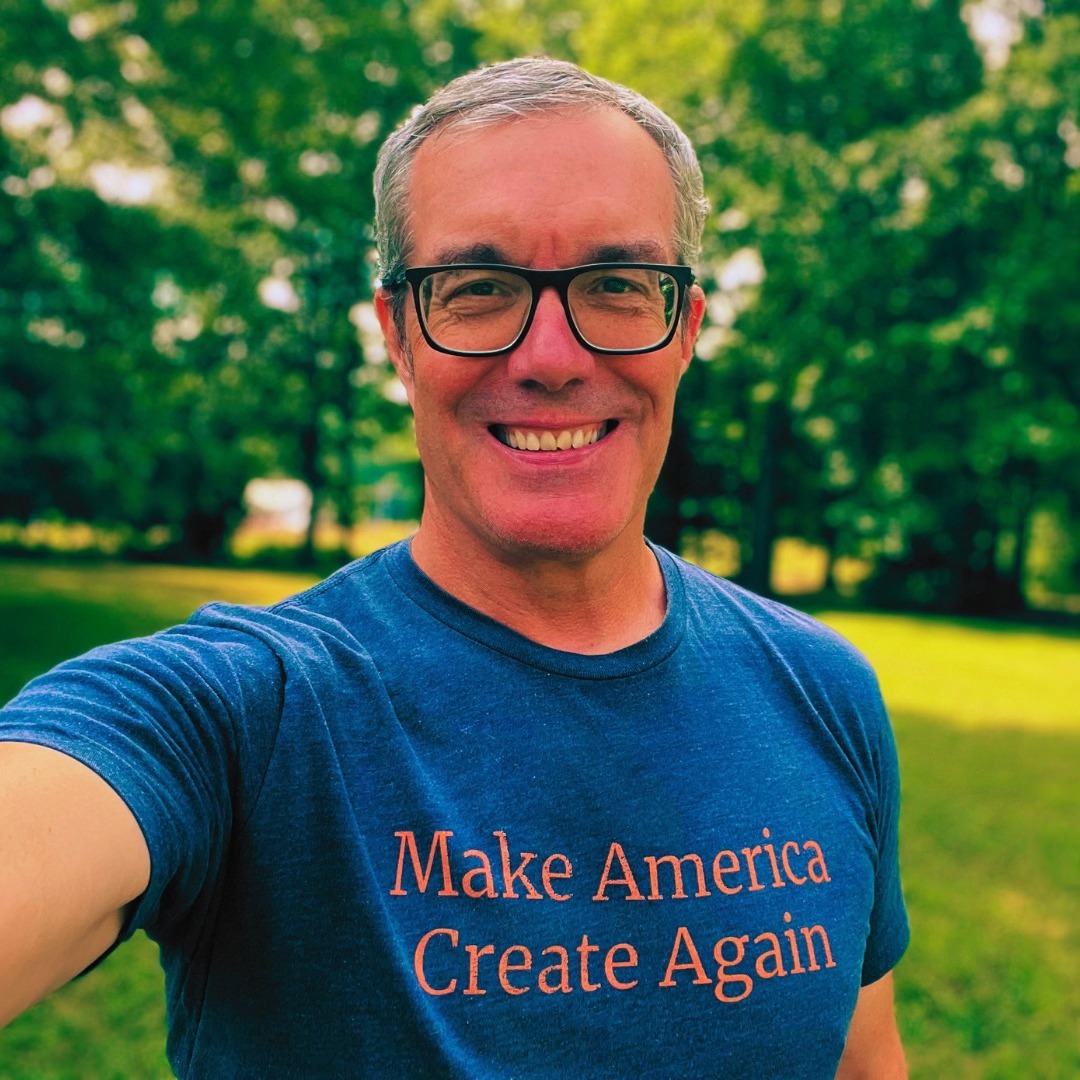
Author
Here's the one from the book:
Scott Perry has spent decades helping people make a difference—and the rest of the time wondering if he's making one himself. He's written several books, hosts the Creative on Purpose podcast, publishes a biweekly Substack blog, and facilitates a community for people who care too much to quit but sometimes want to. He lives in Virginia with his wife Lisa, and still hasn't learned to take his own advice consistently. That's probably why he keeps writing these books.
Here's another for additional context:
What matters most to me is that I am a husband to my best friend of 36 years, a father to two incredible young men, and a full-time grandpa to my two-year-old grandson.
What other people usually find interesting about me is that I leveraged working on various projects with Seth Godin over the last seven years to transition from a fulfilling career as a professional guitarist to building a successful business around my grandson’s nap schedule.
What I do now is help people make a better living and a bigger difference doing work that matters with people they care about by clarifying their priorities, crafting a clear path to achieve them, and collapsing time to target while having fun along the way.