Ep83 Kevin Voisin—How to Get Honest About Where You Are and Build Your Own Path Without Copying Someone Else's Playbook
Ever bought a program because someone else's results made yours look small? Or wondered whether the number on a stranger's screenshot was real?
Suzanne sits down with Kevin Voisin, COO and head coach at Apogee Strong, a mindset coach who holds his clients to a personal standard. Kevin says he has coached more than 50,000 people, and his advice starts in the same place every time: tell the truth about where you are, then pick a destination you want.
Suzanne brings her own tools to the conversation. She shares what she learned from the VIA character strengths assessment (her top three are love of learning, curiosity, and humor), and how a three-sentence email to a member who had never logged in turned into a one-on-one client within three days. Kevin is also about to release a book and an accountability app, and you can find him at itscoachkevin.
In this conversation, you'll discover:
- How to find your core values by looking back over your life instead of inventing them
- Why constraints sharpen your message, and what a $100 red banner taught one holistic health center about plain language
- How to size up income claims and online proof by asking to see the deposit slip
- Why every person is a sample set of one, and what that means when you choose a program or a coach
- How to tell the truth about where you are and where you want to go so the path you set gets you somewhere
- Why accountability takes a mirror, and how a coach or a group helps you see what you can't see yourself
[00:00] Kevin Voisin: I am a force of nature. Like, I'm light in the night, I wake the sleeping giants. It's what I do, it's what I've always done, it's what I was put on this earth here to do. I'm a force of nature. But so are you. And so is every single person listening to this. If you think you're not, it's because you haven't accepted that that is true.
[00:09] Suzanne Taylor-King: You've built something successful, but growth feels harder than it should. You keep solving problems, but the same patterns return. What if the constraint isn't where you've been looking? Welcome to Unlock Your Way with STK. Each week, I sit down with founders, CEOs, and leaders navigating the messy middle of growth to explore the invisible constraints that keep successful businesses stuck, because the problem you're solving may not be the real problem. Let's find out what is. Good morning. Good morning, everyone. Suzanne Taylor King here for another Friday a live episode of Unlock Your Way with STK. And we are here today with a total stranger that I picked up on LinkedIn, Kevin Voisin, correct? I pronounced it.
[01:12] Kevin Voisin: Close enough. It's very hard to, it's Voisin, but even I can't look at it and say it. So I forgive you.
[01:18] Suzanne Taylor-King: Okay. You forgive me. All right. So I'm going to start off introducing a stranger here that I love what he does because what if the most dangerous thing in your life right now isn't a crisis it's how comfortable you've gotten and Kevin is a COO and head coach at, okay, pronounce this.
[01:48] Kevin Voisin: Apogee, yeah.
[01:49] Suzanne Taylor-King: Apogee Strong. I'm the master of hard things to pronounce, I think. Well, you know, I'm a fan of eudaimonology. So you try to say that one and we'll be even.
[02:01] Kevin Voisin: We'll just call it even. I won't try.
[02:03] Suzanne Taylor-King: Yeah. Well, here's why I wanted him on the show today, because he's a mindset coach, but he doesn't sell motivation. He sells a standard. The kind your grandfather lived by, the kind the Stoic philosophers lived by, the kind we've kind of stopped asking ourselves to meet. And that's why I wanted to have this conversation with him, because I think so many people, Kevin, are not living up to personal moral values, standards that really set you apart in in today's marketing AI world. For sure. And I think, I think when you say like, you need to live a standard, I think most people immediately recoil and they're like, well, who's going to tell me what that standard is? Guess what?
[03:00] Kevin Voisin: You, you, you tell you who that standard is. And, and if you don't know what it is, and if you can't tell me, Hey, here's what my core values are. And quickly then, then, I mean, maybe life's working for you. Maybe not. Maybe you're just a reaction to what's happening around here. you know well I I think i notice you know entrepreneurs that i work with founders they struggle with really staying true you know balancing the the values and the making money thing and i think personally that they can go really nicely together if you're willing to stand in those beliefs and values. Well, I think, so here's something too, and I teach core values, right? Your core values are, let me shift the conversation for just a second. I promise I'll come right back, right? Imagine if I said, what are your legs? And that's such a ridiculous thing. I mean, your legs are your legs, and yours are different than mine, thank God for you. And I'm six-fourths, there are different length than someone who's five, three and, and, and, but they're my legs. Right. And so here's just a thought. What if core values are kind of like that? If they truly are your core values, then you'll see them in your whole life backwards and forwards because they're what their core. They're not something you're developing. You're not, they're not something that you want to aspire to. They're, they're just who you are. Right. Like for me, you know, like I, I live powerfully imperfect, like powerfully imperfect is maybe my number one core value. And then we, not me is another thing. Like I'm not a shark. I'm an orca like friends. I like to play. I like to make a lot of noises for no particular reason. You know, like I'm, I'm not going to love this isolated, bad-ass existence off in the cold. I don't want, like, I don't want that. You know, you just don't, I want to play, you know, and, and those are core values to me. They're not the normal integrity or synergy, but remember your core values are who you actually are. And so you're not really trying to create those. You're trying to just kind of uncover those and, you know, they're there. If they're core, you'll see it when you, when you really find the purpose of your life, right. And it's something you choose. And then, you know, so when I say find, I don't mean like it's hidden. And it's just that you kind of have to experience your way to it. You suddenly see, oh, yeah, I've always been doing this. Oh, OK. I see that. OK.
[05:32] Suzanne Taylor-King: Yeah. Yeah. That discovery can be really incredible. One of the assessments I love is the VIA character strengths assessment. And everyone that I've ever had taken it, there's 25 core character strengths. everybody goes right to the bottom of the list to see what they're bad at and okay what what are my what are the things I need to improve typical high achievers right well I challenge people to look at your top three to five and how can you use those every day and I remember when I did it for myself and my number one character strength was love of learning second was curiosity third was humor and I was like wow this is going to be fun like to to really lean in and be able to use those three things every day because they come naturally to me instead of trying to improve something I'm not good at. Yeah.
[06:42] Kevin Voisin: I, you know, I'm reminded of my dad. My dad at one point was trying to buy a new house. And of course this was like an adventure. What house does mom want? And what house does dad want? And in our house is like a holy war. Every decision was a holy war. So, you know, mom's looking for like six acres and dad who's born in LA. Um, he's like, he found this place. It was amazing, huge house. And I think that the yard was like 10 square feet. and I was like what do you like about this place he's like think about how I can cut the grass in two minutes like I never have to touch grass he hated doing what I have inherited this trait side note if you're if you're walking by my house and my wife is outside mowing the lawn she supposedly likes it I've offered to hire someone many many times but she swears she likes doing it I always feel bad I got like I've fallen over in some duty I'm supposed to have I blame my dad I don't like it.
[07:33] Suzanne Taylor-King: But, but here's the thing. Let's just say that that means I'm terrible at lawn. Cool. I don't have to get good at lawn. I can just get good at maybe making money and I'll pay someone else. And then that's a good thing for them.
[07:43] Kevin Voisin: Now they have a job to do. Uh, you know, like I think there are pieces of life. So I kind of view life through five facets, right? So if life is a diamond, the five facets of life to me are fitness, faith, family, finance, and fun, right? And fun being like joy? Like, can you enjoy your life? Cause if you optimize your life so awesomely that you hate it, uh, you didn't optimize it. Like you missed the point. Right. But those things, sure. If something in those things, like the core aspects of life is deficient and you're like, man, I'm bad at, you know, friendship.
[08:17] Suzanne Taylor-King: Okay, cool. Yeah. Definitely try to get better at that, but I'm bad at cooking lasagna. Cool. Just don't cook lasagna. Like you don't, you don't have to do everything.
[08:26] Kevin Voisin: In fact, it's impossible to do everything in life. And so focusing on what you can do well is, is awesome because then other people can benefit from that. And guess what? They're probably good at the things you're bad at surprise, right? Like my wife is really good at budgeting. I'm really good at making money. I'm terrible at budgeting.
[08:44] Suzanne Taylor-King: awesome we make a pretty good set like i go make money she hides it from me on budgets and that and that works fabulous we're the opposite over here um what i think is really cool about this is in the as it relates to the online space and being an entrepreneur and i see all the time people thinking in the online space you have to do everything and the ai's definitely cured that i i know i know um but entrepreneurs who are newer to the online space they think they have to be on every social media platform and executives looking to you know have a presence online They think they have to do it on Instagram, Twitter. Can't get used to calling it X. Sorry. LinkedIn and all.
[09:39] Kevin Voisin: We all tweet on X. I don't know how that works, but it's what we all do, right?
[09:43] Suzanne Taylor-King: I don't understand. And I think one of the magical things about growing yourself and growing a business is the more you take away, the more powerful you become. and the more you say no to, the more you narrow down what you're doing. And sometimes that's a mindset thing, don't you think? Well, sure.
[10:08] Kevin Voisin: I mean, so it's so crazy how AI is kind of having us really reevaluate life all the way through, which is kind of fun to me. But here's what you're going to find with AI and prompts in AI, but guess what? It's true in life. The constraint, the constraints are what create beautiful things, right? So my favorite thing, I played the division one soccer and in college, I think if there was a pro league, I might've even made, I was really good, but soccer wasn't really popular here. I love soccer, but what soccer has very particular constraints. You know, there's a certain size field and you can't use your hands. Basketball has a totally different set of constraints, right? Very similar games, but with opposite constraints, right? You can't kick the ball in basketball. Those constraints make the beauty of the game. That's what makes the game fun. It's like, okay, how can I do this? How can I, and when you look at like branding or marketing or business, it's the same thing. Like, Hey, here's what we do. And here's what we don't do. And I think people think, well, these constraints are going to make me, you know, less, you know, sexy to other people. Well, sure. Yeah. I mean, if you run a chicken shack, people who don't like chicken aren't going to come but people who do like chicken which is a lot of people will come and if they want chicken they'll come directly to you and so I think there are constraints and those constraints actually free you because you can say hey I'm not that and once you start saying that then you get to have time to be what you are yeah that totally resonates because I think that context of who we are is always evolving and I think the more you know who you're not the more other people see truly who you are and if you're trying to sell something if you're trying to you know attract clients or opportunities you have to know that. So, and I'll tell you, I'll give you your listeners. This is my number one favorite after running marketing firms and different things for decades. My favorite advice is if it's the 10 foot red massage sign, right? So I, you'll get people who come in and they, they do these holistic health centers or whatever. And, and essentially what it is, is there's massage or maybe acupuncture or some other things, right? And they'll come in and they have this really great idea of like, we're going to call it the international peace loving holistic health center. And I'm like, okay, but nobody knows what that is. So when they drive by first off, they can't even read that on the drive by. So, you know, if we put that on the sign, that's fine. I mean, it means something to you. That's great. But could we say it in a way that people understand? No, no, no, no. This, we have to educate the world that they need this. Cool. and I remember a client who spent thousands of dollars on the sign and then called me panicked and said, Hey, we've been open for three months. Nobody's coming. I'm like, Hey, why don't you do this? Buy a hundred dollar banner with big letters in red massage, put it over top of that really expensive sign you bought and just see what happens for a week, right? Three to Days later, they're booked out full. Because people are like, oh, I can get a great massage there. Right? And then once they're in for the massage, great. That's a great spot. They eventually moved the cool sign inside. Because that's the right spot for it. It's like, have people see what they want. And then explain to them how what they want fits into a bigger picture. But you got to meet people where they are. And you got to just be what you are. Right? Like, this is, I'm a coach. What's a coach? A coach is a horse-drawn carriage. is something that gets you from one place to another place, right?
[13:51] Suzanne Taylor-King: That's it. Like, that's it.
[13:53] Kevin Voisin: Preferably without getting robbed or, you know, or falling out of the carriage, right? Like, and so that I like that definition of coach because it's what a coach is. I'm someone who just gets you from one place to another, right? Like what's a therapist, a therapist, like looks backwards and heals things.
[14:09] Suzanne Taylor-King: That's cool. It's very important.
[14:11] Kevin Voisin: Like therapy, counseling, coach, all very important, but very different, right? I don't care how you got into the hole. I just want to get you up out of the hole, right? We might talk about how you fell in later. So you don't fall in the next hole, but really you come to me in a, in a hole.
[14:27] Suzanne Taylor-King: Great. I don't, it doesn't matter how you got here. Let's get out. Well, I, I love that, you know, you understand that coaching is not your program. And I can't remember what I read from you, whether it was a post or something on your website, that really made me say, he understands that coaching, and this is one of the things I say all the time, coaching is co-created in conversation with my clients, you know, going from one spot to another. And something of yours I read made me say, he understands that he's not selling his program, he's selling where you want to go and that's such an important distinction today in coaching with ai and marketing and you know you don't know who's dming you is it a bot or is it the real person, you know, and just the idea that coaching is still personal and in conversation with other people. Yeah.
[15:51] Kevin Voisin: And it's, it's you for ultimately, right. I'm a vehicle. I'm someone to help you get where you want to go, but it's gotta be where you want to go. And it's, I can help you, right. Imagine, imagine if you flew, I don't know, to Norway and you wanted to see this really great, you know, place and you get out of the airport and you get into the taxi. He said, Hey, I want to go to Preggie stolen. I'm going to see this really cool Vista. And then the taxi driver says, no, no, no, you need to go to this place. And then he just drives to this other place. You've never heard of that may or may not be cool. Like, what is that? A lot of coaching today is a lot like that. You get in there. No, no. Let me show you the five-step process. And it's like, even if that worked, like even for the things that have a hundred percent worked for me, it's like, you know what? I could tell you how to raise our five children. Right. I could tell you exactly how to raise my oldest kid. You know how much that helped me raise the second one?
[16:40] Suzanne Taylor-King: Not at all.
[16:40] Kevin Voisin: And you know how much those two helped me raise the third one? Not at all. And all the way down to the fifth one, there were some patterns. I maybe was a little better at cleaning up poop and puke and fish, but outside of very basic patterns, they were all someone different. They were all a unique individual.
[16:56] Suzanne Taylor-King: You are a unique individual. One of the problems I think we have with medicine right now and with technology, so medicine of technology is rightfully so. We're super smart and we figured out statistics and we said, wow, when people eat this, a certain percentage of them lose weight. Well, cool. But you, the individual are not a percentage. You are one dot. If you're just one dot, the goal on your life or in coaching is not to say, Hey, this has a 90% chance of working.
[17:25] Kevin Voisin: Go do it. It's which dot are you if you're in the 10 it doesn't work for then this is going to get you nowhere all statistics breaks down in a sample set of one and every person on the earth is a sample set of one so it's about finding like where are you on the graph not well this probably works sure we can say hey this works for most people let's try it out and see but if you're not constantly making it your own you're going to fail you're one one of the greatest lessons i ever had about this is i got a continuous blood glucose monitor. And so did a buddy of mine at the same time. Right. So then we could both watch our, I mean, this is silly, right? But we should, we would eat things and then watch, you know, if we do hang out for the next couple of hours, okay, what happened? Right. So here's, here's a great test. By the way, when you get one of these, it gives you permission to test funny things. So chocolate cake, I was like, oh, cool. We could test chocolate cake potato chips and chocolate cake were my two favorite tests so it's like you don't eat anything for a long time then you eat it and then you watch right so chocolate cake my blood sugar goes up for two three hours and mine because i had insulin insensitivity which is the problem right this is why he and i are doing the same workouts we're eating the same food and i'm getting totally different results from him because his body didn't have this problem he didn't abuse it to the point that it had insulin sensitivity. So he could eat certain grains and not have a problem.
[18:47] Suzanne Taylor-King: I couldn't. So, you know, chocolate cake is like four hours of elevated and then it kind of slowly tails off. All right.
[18:55] Kevin Voisin: That's not good. Right. So then we, we start running out of the fun things. And so we're like, we decided to test a diet Coke. Let's see what happens. Like, Hey, no, do artificial sweeteners hit our bloodstream, whatever.
[19:07] Suzanne Taylor-King: Okay. Diet Coke for me, nothing, but just nothing.
[19:10] Kevin Voisin: Like it was like, nothing happened. And, So of course the next thing is, well, let's try Coke Zero. Like let's, we're playing, right? Let's, let's try. We did Coke, Diet Coke, Coke Zero. Coke Zero spikes my blood sugar almost twice as high as chocolate cake and keeps it there for like eight hours. It now, but for him, nothing, he got a little bump and then it went away. And I remember looking at that and I'm like, what in the, and so I did it again. I was like, oh, something went wrong with the thing. I put a new monitor on. no, like to me, this thing, my blood sugar goes bananas. It didn't happen to him. It's not a normal response. I don't think that's usually what, I don't think most people drinking, uh, you know, Coke zero hurts their blood sugar worse than chocolate cake.
[19:56] Suzanne Taylor-King: But for me it did. And I'm so happy I had that experience because. I was like, oh, wait, I'm not trying to get the whole world thin. I'm trying to get me thin. Honestly, no offense, the rest of the world don't care. I'm working on this one. And I hope that you're working on you, right? And not trying something that like, that works for me because I'm a six foot four, 300 pound guy. If I get in a fight, you know, it's going to be a whole lot of aggression and being strong. you know i have a son who's like five foot three and 120 pounds and we do jiu-jitsu together and he's really good but guess what he doesn't beat me by lifting me over his head me over his head and throwing me he uses nimble he uses different moves he's smaller he can do things i can't do and that's the same in your life like remember that you're building your life and and so many people idolize the the the social media has got us this point where we can see who's the best out of 8 billion people. We were never designed guys to see that many people. Like we, that's crazy. I mean, it's just crazy. Like you just, you, you know, like, Oh, here's the richest guy on the whole earth. No, I mean, it's cool to know. I mean, I like it just like anybody else. The problem is though, it messes with you. It does. And you start saying, Oh, well, I want to be, you know, a billionaire like the people I see on there. Oh, awesome. Cool.
[21:21] Kevin Voisin: Well, I've coached lots of billionaires, many of them suicidal side note, like, like, like several billionaires of coast were suicidal when they came to me because you know what, have you ever owed anyone $500 million? Cause every billionaire I know at some point, at some point in their life was backwards 200, 300, 500. Like you imagine walking home, realizing something went wrong and you now owe thousands. You know what it's like to owe thousands of people $500 million. I mean, that's a level of money. Like we're not even thinking maybe something bad is going to happen. Something horrible is about to happen. You just don't know what. Right. And that's the kind of pressure. So if you want the benefit, you have to own the negative side. And so again, it's just your life for you. If you're idolizing someone, if you love David Goggins, for example, and I love David Goggins. I actually really, initially, I really didn't like him. Then I saw him in person and I realized he wasn't saying what I was hearing him say. What I was hearing him say was this craziness. But then when I was in the room with him, I'm like, oh no, he's not being crazy. He's saying go as far as you can go. He's not saying be me.
[22:31] Suzanne Taylor-King: But if you want to be him, cool. but look at his whole life. Do you want the whole life? Because that's what it takes, right? It takes it all. I think that's where entrepreneurs have a really hard time. Well, kids have a hard time in the online space as well, because you are seeing every extreme, right? You're seeing the most successful person in the world who does what you do or some version of what you do. And it's really, um, done from a comparisonitis, you know, place when you see another coach who's saying they make $600,000 a month and you're like, well, what's wrong with me?
[23:17] Kevin Voisin: First off, having coached tens of thousands of people, if you haven't seen the deposit slip, don't believe it. The number of clients who come to me, because this is the kind of coach I am. So just in case you're wondering, you want ever to coach with me one day, the number of clients who come to me, like Jack, that they did a million dollar deal. I'm like, awesome. Send me the deposit slip.
[23:38] Suzanne Taylor-King: What? Yeah, show me. Like, I want to see.
[23:41] Kevin Voisin: Like, that's so cool that a million bucks came into your account. Like, let's celebrate that. I said, oh, well, not, not, I mean, like they didn't give the whole month. It's like a deposit. Oh, awesome. How big is the deposit? Oh man. And they'll say the number it's usually, you know, hundreds of thousands. Great. Let me see that. And I'll tell you like the million dollar deal very, very often, not always, but I'd say 60% of the time, plus you'll get a deposit slip for about 13,000, 20,000.
[24:06] Suzanne Taylor-King: And it is worth, you know, they're not wrong, but it's just really funny how like all of a sudden, but why not celebrate that? well people are like oh i did a bajillion million dollars online space rewards you know flash and you know extremes and i i remember it was probably 2010 uh i had a very successful health coaching practice in person um really didn't have an online per se business i think i had a facebook profile, but I decided to start a Facebook group and kind of expanding myself into the online space. And I noticed a health coach who was on Facebook claiming, I don't know, there was like a screenshot maybe of PayPal or whatever, claiming this is how you're going to make $50,000 a month as a health coach, blah, blah, blah, buy my program. And I showed it to my husband. Now, this is before my tech savviness. This was before AI, all of it. And my husband looks at me, he goes, you want one of them? I can make it for you. Photoshop, $5 on Piper. Oh, like it hadn't even crossed my naive mind that something somebody said on social media about their business was BS. and it really shifted something in me in the online space of that 98% of what you read and what you see is stretched BS or an out outright lie to get you to buy something persuasion.
[26:06] Kevin Voisin: That last thing that you said, sir, I took like a six year sabbatical from like all socials. I I have this belief, right? That the most valuable commodity in my life is attention because, because attention drives my thoughts. My thoughts drive my beliefs. My beliefs drive my choices and actions. And my life is the sum total of all my choices and actions, right? Combined with the choices and actions of anything or force around me. Right. So, so my attention therefore, so when I pay attention, I'm spending my life. And very early on, um, there's an invisible hand in social media. Right. Right. Because very early on, social media was cool because it was just a feed of everything your friends said in the order they said it. Right. So it's like, hey, it's Monday. Here's what all my friends are saying on Monday. Eventually, though, the algorithm said, oh, if I show him Susie crying, holding her dog and I show him, you know, Kellen running with his dog and then I show him an ad for dog food, he's going to buy dog food. And this is the invisible person in social media is what are we getting you to buy, which is what it's all about at the end of the day. If the service is free, then you're the product. And what is the product? It's your attention. And what is your attention? The building block of your thoughts. That's the building block of your beliefs. That's the building block of your choices and actions, which results in your life. Therefore, your life, we are mining your life to sell products. And so I just got out. And it's crazy. I coached thousands of people because I would align myself with other coaches who are great in the online space. And then I would just run the program. I didn't care if anyone knew me. I just coached a lot of people. And I love that. I still, I still don't care, although I realized that the market is where it is and I want to play. Um, and so, so now I'm, I'm back, but I will tell you that I don't consume the same way that most people do. I mean, I just, any comment people make, it comes to me in a text message and then I have a way to respond to it without getting in there. I don't want my mind to be controlled because I think most people live kind of in this default mode of whatever comes, they react to it I don't want my life to be a reaction to what other people choose I want to choose I want to be an actor I want to be an actor I want to I, what I decide matters. And in order to do that, I have to keep my attention on what matters to me. And I can't just get now, Hey, my wife, she can turn my head anytime. Like she can, she can, well, that's true because she's smoking hot all a, but number two, like she, if she wants to yank, if right now she walked in the door, this would be over and I would go, I would give whatever attention I needed.
[28:43] Suzanne Taylor-King: right? That's fine.
[28:44] Kevin Voisin: There are people who can do that for me, but just the world at large and an algorithm who's hawking 10 million advertisers products that I don't even know what they are. I don't know. I don't want it. You know, I want to be careful with that.
[28:59] Suzanne Taylor-King: Yeah. And I think that's what messes a lot of entrepreneurs up is this constant scrolling or looking or seeking something outside of themselves. It's the thing that's going to save them. Because if you're an entrepreneur, you wake up and you're going to be a billionaire. By noon, you're going to live under a bridge. And if you're lucky, at 4 p.m., you might have five more dollars than you had yesterday. It's kind of almost like a bipolar existence. It is very true. Entrepreneurs don't live in the present. We run off to the future and we see this beautiful thing.
[29:38] Kevin Voisin: And then we come back to the present and we get angry that it's not the future we saw isn't already here. Right. And so I think with entrepreneurs in that state of like, we're constantly trying to create the future, which is awesome, but it's frustrating and it can be sad. It's like, ah, I see it so clearly, but I just can't, you know, make it happen with that though. We just lose sight. Like we, we, we want someone to save us. We're like, Oh, I'll buy that guy's program.
[30:05] Suzanne Taylor-King: Now look, truth. I have bought $15,000 programs on less than 40 minutes of like, I, I have done it and it has done it for me. It helped. It saved my life. It all the things, right.
[30:19] Kevin Voisin: But I am also very aware 90% of that was me saying, if I do this, I can do this. And guess who did it? I did it with their help. And thank God for every coach I've had. I mean, truly, like I always have a coach and I have bad many and I've paid lots of money and little money, but remember, I ultimately create my life. And so if a coach comes into my life, it's because I paid him or her. And if I get results from that, it's because I did the work because trust me, when you've coached over 50,000 people. If you show up to my program and you watch it like Netflix and you never do anything, you're going to be the same person on the, like come into my program for 90 days, do none of the work. You know what you'll have wasted 90 days.
[31:05] Suzanne Taylor-King: I just let someone go. So I have three groups of people that are running different levels and somebody had been in my lowest, it's 97 a month. It's a community and it's a course. And but there's no live time with me. It's kind of a do-it-yourself version, right? And so you would think I wouldn't care if somebody was doing the work or not. And I just noticed that somebody had been paying since September and had never once logged in to my school platform. And I'm like, I've been paying since September. What are you doing? So I sent an email, personal email, you know, thousands of members over the years. But that stands out to me when somebody is paying for something and they're not doing. the work and I just send an email three sentences I notice you've been paying since September and you haven't logged in once what can I do to serve you Suzanne within three days the person became a one-on-one client because they said they never had anybody care whether they participated or not. And I thought, she had a ton of money. Her business was doing incredible. She wanted support. And she felt seen when I noticed that. And I thought to myself, I will always have that amount of attention on my groups. Always. I don't want to scale to the point where I can't be that for people. Nothing worth a damn is scalable.
[33:10] Kevin Voisin: Like, I mean, don't get me wrong. Like, I mean, building cars and stuff. I mean, putting products up. But with human beings, right, it's not like relationships are... scalable. Like, oh, you know, I'm going to optimize my marriage so I can do it a thousand times. I mean, that's silly. Like real true human contact is not scalable except through more humans, right? If you think about it, you know, procreation is not very scalable, but man, there's 8 billion of us. I mean, something's working, right? Like because it's distributed. Yeah. Not scalable for one person to collect all of the benefit. But again, this is where so much of this kind of what I call the bullshittery of, of coaching comes in is because, you know, I come to me, I have all the answers. You come here. Now, look, the truth is a certain number of people just need that permission. If that's what works for you. Awesome. I wouldn't even feel bad about it. Just go for it, but just understand it's, you know, it's, it's masks all the way down. I think this is something I've been realizing recently with clients is like, Oh, I just want to get to the real me. I'm like, there's the real you right now. And then you're going to have another experience tomorrow and you're going to find something like it's masks all the way down. It's who I want to be all the way down. Always. You know, I mean, the word person comes from persona, which comes from the word mask, like the word persona meant mask. It's the actual word for mask. And it's not bad. It's how we're presenting ourselves. It's who we choose to be in any given moment, whether it's like real or bedrock, like you're, I don't know that you're going to get there. You know, like, I guess maybe when you die, you figure it out.
[34:43] Suzanne Taylor-King: Maybe I'm going to have, I want to go back to what you said about nothing valuable is scalable. And I love that so much. In interpersonal relationships and human growth, right? Obviously, Tesla is scalable or Frosted Flakes is valuable and is scalable. Yeah, an online course that requires none of your time that's recorded and that's scalable. Yeah, you could dump money in the top of the funnel and grow the amount of people who have gone through your course. okay but coaching mentorship uh even a consulting business that involves my brain is not scalable in because i only have a certain number of hours i want to work the only choice i have is to become as i become i call it the hairdresser rule when the book of business is full the price goes up for the next person coming right that that is scalable but also scalable too is realizing that people can run their own lives and teaching them to do that and replicating like the decision process not replicating yourself like not that hey i'm not the only person who can do this we can have other people we can you know look at something like alcoholics anonymous this, right?
[36:14] Kevin Voisin: It's amazing. And I don't know, maybe a million, but hundreds of thousands of people have run it. It didn't take one guy. Maybe it was one guy's idea or one group of people's idea, but it quickly grew to, Hey, you can do this. And here's, here's a baseline of how this could work, but you know, see how it works for you. This is when you're consuming coaching, when you're looking for a coach, like, yeah, you want someone who's going to really pay attention to you. If you want that kind of intimate coaching. Or maybe not. Maybe you're like one of these people who just wants the online things so you don't have to interact with people and you can get the growth that way. My experience is, as a human being, you know, if you're in a room of a thousand people, the only person that you can't see in there is you. Every other person you can see, but yourself, our eyes are set out, right? Our emotions are set out. So much of who we are is set outward, which is great because it protects us and helps us orient to our world. But the reason you want to coach is so that you can see in the coach is the coach can see you in that room and saw how, what you, you know, here's what I thought I did, but then he said, well, you thought you did that, but here's what really happened. And I can show you a video, right? Like that, what you thought is not really what happened. And let's, let's talk about why, right. We can reconcile that as a human being, we need a mirror, right. And the problem with like just sterile online things. And I love, look, I have online courses. I have what, what the online courses to me are is they, they get you so you can get activated and really make a difference in your life. And if that's all you need, awesome. Like, I hope that really works, but they also introduce you to, Hey, there's, there's another level. There's another way to do this. Let's go, let's go play. Like, let's go run this together, but you need a mirror. You need someone who can see you.
[37:55] Suzanne Taylor-King: You can't see yourself. You just can't like your eye. like think about it right now, you're looking through the screen, right? And you cannot see your eyeball. You can't, but everything that you're seeing is coming straight through it, but you're completely unaware of it, right?
[38:13] Kevin Voisin: You just can't, it's not possible. And that's okay. That's how it is. And yourself is really the same way. It's, it's through the mirror of other people that we can learn. It's through the mirror of mentors and coaches that we can see more of the path.
[38:27] Suzanne Taylor-King: Yeah. And being willing to really hold that, be willing to receive that reflection of who you are. AI has been helping me get better at sales, at delivery, but I had to be willing to receive where I screwed up, where I maybe didn't frame the call the right way or frame the meeting the right way. And what's been really interesting as I share that with my clients and strangers on the internet, like allowing a transcript of a discovery call to actually be evaluated at the level I programmed it and to really reflect, okay, at minute three, you lost the frame. You didn't ask the question. You didn't offer your services. Like, honestly, seeing where I wasn't doing well and where I wasn't standing confidently in the conversation was so, so powerful, but yet so hard to look at yourself and say, I effed up. I need to do this better. And then being willing to take that next step and learn from someone or, you know, buy a coach, get a coach, do a program, read a book even. What is the biggest hurdle? Is it the admitting that you're not doing well at something? or is it the actual looking at yourself and, and examining where you're not?
[40:36] Kevin Voisin: So this is, this is where you're going to see that I'm all coach and no counselor. This is, here's the hardest thing. The hardest thing is telling the truth. The hardest thing is here's where I really am. And then telling the truth about where you want to go. Cause people have both sides of that are very difficult for them. Telling the truth about where I really am. Like, what is my real weight? What is my real age?
[40:59] Suzanne Taylor-King: What is actually in my account right now? People have trouble with the real weight.
[41:07] Kevin Voisin: Well, I mean, saying what it really is, like just in a, like just getting, getting, getting into your underwear, standing on a scale and having the number up above your head. Like that, you know, a lot of people have a time, a hard time with that. And they, they will play games with themselves. I've had clients who think that eating fruit flavor candies is healthy because it's fruit. And I'm like, whoa, we're not like, we're out of reality, right? Like we've left. Okay. I mean, I see how you got there, but that's not there. That's over here.
[41:34] Suzanne Taylor-King: Like we're, that's game. Wow. Okay. So what I mean is just get real. Where are you? Yeah. Right. And then where do you really want to go? Really? Not like the fake, you know, this, we, we get these high minded ideals of like, Oh, I'm going to do all this great stuff. And really a lot of times we're just really petty. Does it work if you lie to yourself about what the actual number on the scale is? It can't work. And this is why, this is why it can't work. That's why you must be honest. Okay. Because check this out. Where are you right now in the world?
[42:07] Kevin Voisin: I don't know. I'm in Philadelphia, New Jersey. And I'm in Galveston, Texas. Okay. So there is a way I could type into Google right now. Hey, how do I get to Philadelphia? And it'll spit out miraculously. It'll spit out all sorts of options. In fact, it'll probably try to sell me a flight. Right. But it'll tell me how to get there. Now, imagine I'm actually in Galveston Island, but I'm pretending that I'm in California. and then i tell you yeah i'm in california where are you oh i'm in okay cool let me get the map send me the directions okay and you're going to send them to me and if i follow them what's going to happen nothing because i'm not actually in california there's no possible way to make the path if you cannot be honest about where you are and where you want to go there's no way to set a course that'll actually get you anywhere you're just playing pretend and if you're playing pretend guess where you're going to go? Nowhere. You have to be able to tell the truth. I'll tell you, another thing is, if you don't know what you want, and people say this, and I think it's almost always a lie, and I don't mean a malicious lie like you're a horrible toddler who pretended not to eat the cookies. I just mean it's not really true. If you really just get quiet, you know what you want. But if you don't know what you want, you already have it.
[43:20] Suzanne Taylor-King: If you don't know where you're going, you're already there. So look around. Do you like it? Cause that's where you are, right? Like you not like what you have. Like you have people say, I don't know what I want. Well, then you have it look around. Is it making you happy? Is it working? Maybe look, I'm not, not everybody has to change everything all the time.
[43:36] Kevin Voisin: That's a, that's silly, you know, but, but look around, is it working? If it's not, then, then, then if it's not working, we can never build something on not. Well, I don't want to be fat. I don't want to be poor. I don't want to be lonely. I don't. Okay, cool. That's good that you don't want that, but what would you like instead? And then let's go there. We can't just move away from things. You'll never get results moving away. When you see someone who has trouble getting results and you look at their goal or their target, it almost always is moving away from something because it's just so hard because you get one step away and oh i'm away you know people say more i want more money well here's a dollar are you happy because that's more i mean how much more by when right um that that gives us a destination if we won't tell the truth about where we are and where we really want to go really like why do you want to make a hundred thousand i love that so much, Kevin.
[44:32] Suzanne Taylor-King: I really do because I feel like, you know, being an athlete, being a high achiever, I've always just moved towards what I wanted or what I was creating. And I think because of that, all the negative things that have happened over the years, and there's a huge list of negative things like major things they weren't a factor in I mean did they did they delay me slightly with certain things yes of course did they hold me back from doing certain things you know injury recovery illness whatever Yes, of course, but it never affected how I felt about where I was planning on going. And I think one of the things that I notice about people in general is this rumination of the past. Maybe it's regrets or maybe it's, and I don't want to say excuses because there's a lot traumatized people out there from different negative but there there's still excuses there there are valid excuses i mean there just are like there are about things really happen right and so there but there's still excuses right if if i i have excuses you know why i can't do certain things like i'm too tall for certain things that's an excuse but it's also a reality right so it's i don't i don't think all excuses are bad i think it's we've gone kind of too far I mean finding you know I can talk about the negative things that have happened and I give a lot of talks right but I can talk about it in a way that I learned something from it or I found something in that no one talks about post-traumatic growth and there is a lot of post-traumatic post-traumatic growth post-traumatic stress disorder are just their I don't want to say they're completely a choice, but they kind of are like you, you addiction is a choice.
[46:44] Kevin Voisin: The trauma is a choice. Like, I mean, Adler was very famous and it's for saying, Hey, there's no trauma. There's just a decision you have to hang on to something. And I, as, as much as I initially, when I heard that, I thought that's crazy. The older I get, the more I'm like, wow, you know, I see what he's saying is like, okay, an event happened, but I get to pick where I go from. Listen, that does not mean that we're never victims. We are this. I don't want to live in a victim mentality, but for sure you can be victimized. You can be robbed. You can be beat up. Like they not life can knock you on your ass in the most unmerciful ways with no reason. I mean, just completely random. I mean, I saw something the other day where a guy's just walking down the street, somebody shot at someone else and missed and hit him. I mean, he had nothing to do with it, right? He's just a guy walking down the street and now he's dead. So life will take you to your knees. But you then as an individual have the power to choose where you go from there. If life knocks me on my ass and I'm still on my ass six months from now, I don't think that's on my, we, I am a force of nature. Like I'm light in the night. I wake the sleeping giants is what I do is what I've always done is what I was put on this earth here to do. I'm a force of nature, but so are you.
[47:59] Suzanne Taylor-King: And so is every single person listening to this. If you think you're not, it's because you haven't accepted that that is true. I'm not the only force of nature. I'm not necessarily the biggest force of nature. I will be reckoned with anywhere that I am, but guess what? So will you, right? And so if we just start owning that life gets really interesting. I had, I tried out for a soccer team.
[48:20] Kevin Voisin: Um, when I first went to Brigham Young university, I didn't know this, but it was the national championship soccer team that year. So we got there. There's like four spots on the team. There's like 160 guys trying out. Right. And I am from Louisiana. I've never been at altitude. I can't even run a mile the first day of the two days before practice. Cause I'm getting bloody noses. I'm like, what is, I don't know what's happening. I was born six feet below sea level. Right. And now I'm at 10,000 feet trying to play a competitive sport. So I really quickly realized, man, I don't have the lungs for this. I don't know what's going to So, hey, there's two senior goalies. Nobody's trying out for goalie. So I just pivoted. I'm going to play goalie. I'd never played goalie, but hey, I'm going to figure this. I want to get on the team. There's four spots, right? I can't run. This is a reality. Like I'm trying to run and my nose is bleeding. I can't really do it well. Well, you run a lot less at goalie. There's two senior goalies. They need a goalie. No one's trying out for goalie. I'm going to do this. Well, I never played goalie. It's not that easy. It's not like a natural thing to do. and as I was trying to figure it out, one of the goalies came over and he said, listen, let me tell you everything you need to know about playing goalie. I'm like, all right, I'm all ears. He said, the ball is yours. The posts are your best friend and nothing hurts more than the ball hitting the net. He's like, if you just embrace those three things, the posts are your best friends. The ball is yours. You own it. If the other team has the ball, they stole it from you. If your team has the ball, they're borrowing it from you to go score with. And he's like, if you get that and through your head, you'll be a great goalie. That clicked for me, made the team miraculously made the team, right? How? Because I was like, man, that it, that's my ball. That's my ball. And life is the same way.
[50:08] Suzanne Taylor-King: You want something in life? Go take it. Now, listen to what I'm saying. I didn't say steal it. Didn't say the fraud people to get it, but take it. Claim it. You, why not you? Like, why not you? You're not going to be Elon Musk. Why? Because you're not him. But there's a thing you can do that no one else can do at the same scale that he does this crazy thing that's being him that no one else can do. But you got to accept it. You got to believe it.
[50:33] Kevin Voisin: And you have to go. You have to take action. You have to take the next crappy action. You have to do that little tiny thing that you've been putting off for five years that takes 10 minutes, but you just don't want to face it. Go do that. That's the thing. Stop hesitating.
[50:49] Suzanne Taylor-King: I love it. Perfect spot to wrap up. Where can my listeners find you?
[50:55] Kevin Voisin: I am at itscoachkevin pretty much everywhere. Website is itscoachkevin as well. About to release a book and have a really cool app for helping you keep yourself accountable throughout the day. Like I said, we are really bad. No one can keep themselves accountable with no other input, it's not possible because you can't even see what you're doing. Right. Uh, and so accountability takes a group. It takes more than you. Uh, and so I'm real big on that.
[51:21] Suzanne Taylor-King: So I'm real big on creating those types of groups, but man, let me know when the book is ready and I'll add it to my book club list. Thank you so much, Kevin. Great to meet you, get connected today and learn about you. Uh, look forward to more conversations. Have a great weekend, everybody. Thanks for listening to unlock your way with STK. If this conversation surfaced something for you, a question, a pattern, a realization you can't ignore, don't sit with it alone. Reach out. The first step is always a conversation. Book a private call. Visit SuzanneTaylorKing.com because clarity doesn't come from more information. It comes from seeing the constraint you've been missing. you
CEO
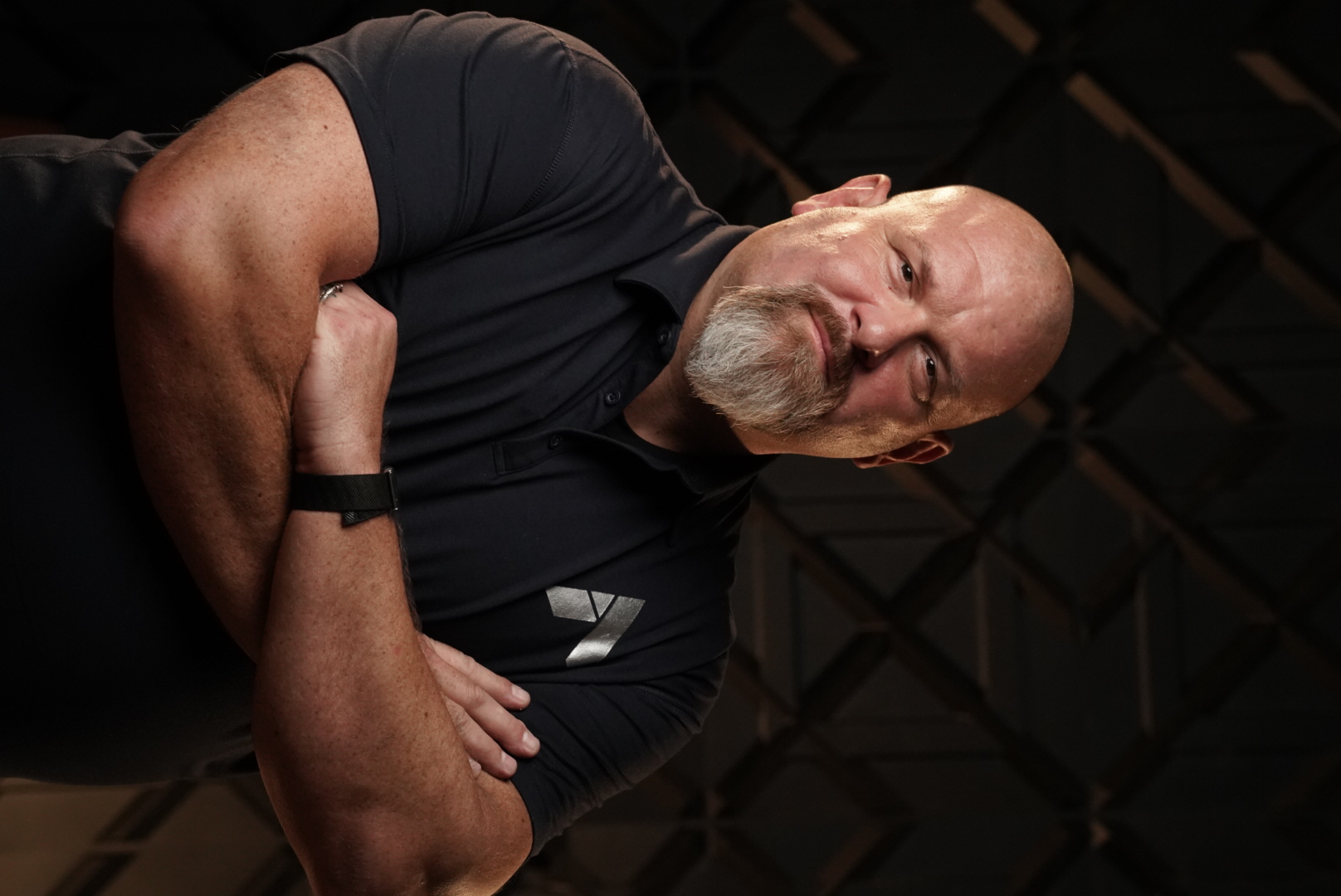
Kevin Voisin is a mindset coach, speaker, and “coach of coaches” who has worked with over 40,000 individuals worldwide. Known for cutting through the noise of shortcuts and surface-level advice, he helps driven entrepreneurs build personalized systems for real, lasting growth. His philosophy is simple: there are no hacks — only truth, ownership, and the courage to live a powerfully imperfect life.