
Ep86 Jeffery Smith MD—How to Trade In a Stubborn Pattern Without Fighting the Part of You That Is Trying to Keep You Safe


Ever read every self-help book on the shelf and still watched the same pattern come right back?
Suzanne sits down with Dr. Jeffery Smith, a psychiatrist who has spent 50 years asking what every kind of therapy is doing underneath. Dr. Smith has a new book that explains how psychotherapy works in plain language, written for coaches and others new to the field, and he writes the How Therapy Works Substack.
Suzanne brings her coaching and positive psychology background to the conversation, asking where coaching ends and psychotherapy begins, why some people spot a habit and change it while others never see it, and whether you need a strong why to make a change stick. Dr. Smith answers with stories from his practice and from the alcohol clinic he ran early in his career.
In this conversation, you'll discover:
- How to tell whether you need coaching or psychotherapy using the one factor Dr. Smith looks at: whether you can change the pattern voluntarily.
- Why Dr. Smith defines psychotherapy as trading in outdated patterns for more satisfactory ones
- What accurate empathy is, and why asking what triggered a feeling and what it feels like gets you further than naming the emotion
- Why the inner mind holds on to survival patterns that no longer serve you, and how it puts up blockades when you try to change them
- How the inner mind steers your choices through thoughts, feelings, and impulses, including impulses to avoid
- Why befriending the part of you behind a stubborn pattern works better than getting angry at it
- How coaches can move between non-directive coaching and offering advice, depending on the client
Jeffery Smith MD 0:00
The way psychotherapy was taught was follow the supervisor, follow a formula, and then wait for the patient to get better, and that was not good enough for me.
Suzanne Taylor-King 0:12
You build something successful, but growth feels harder than it should. You keep solving problems, but the same patterns return. What if the constraint isn't where you've been looking? Welcome to Unlock Your Way with STK. Each week, I sit down with founders, CEOs, and leaders navigating the messy middle of growth to explore the invisible constraints that keep successful businesses stuck. Because the problem you're solving may not be the real problem. Let's find out what is. Good morning, good morning, everyone. It's Suzanne Taylor King here for another live episode of Unlock Your Way with STK, and I couldn't be more excited for this conversation today. And I know you're going to love it. Psychiatrist Dr. Jeffrey Smith has spent 50 years with one question: not which therapy works, but what all of them are doing underneath. And in this conversation, I want to talk to him and have him explain for all of you the patterns that cannot break and that are actually strategies for avoiding feelings. We're going to get into it. We're going to talk about his book launch, his Substack that I recommend on my Substack, and why if you're a coach, a consultant, or any kind of therapist. You need to subscribe. Welcome, Jeffrey, to Unlock Your Way.
Jeffery Smith MD 1:50
Thanks so much, Suzanne. It's really a pleasure to to be here. And you know, the the coaching world. I'm a I'm a client as well as as interested in helping coaches understand what's going on underneath. So, so this is a really, really great opportunity for me. Thank you.
Suzanne Taylor-King 2:07
You're so welcome. I I think that the work that you are doing in the world, I stumbled across you as I do with many of my guests on this show, and immediately became a fan of your thinking, and and to me, with technology and AI and all the things that we deal with on social media, it's the thinking of people that's so so attractive. And before we get into what you're doing now, I want to understand where this thinking of yours came from in your early career.
Jeffery Smith MD 2:51
Well, it it goes back to my earliest memories. Actually, I I remember watching one of the neighbor girls ride her tricycle really, really fast. So I was too young to ride a tricycle at that point. But I was interested in: did the pedals go up and down like this, or were they going like this? And and you know that question was there. And since then, it's always been I've always been drawn to figuring out how things work. And so I decided when I was a freshman at Stanford, I decided that I wanted to be not an academic but part of the real world. And to me, that turned very quickly into I wanted to be a therapist. And then I decided I wanted to go to medical school because I'd really rather learn anatomy than statistics. I learned a little bit about statistics in the end, anyway. But so that started me on a pathway a long, long time back. And interestingly enough, it the the field that I'm in, that psychotherapy, which is my main interest, is it's still absolutely gripping. As I I I said to you earlier, I spent 11 hours in the office yesterday, just back from Europe, and ended that time energized and and happy to to be back in my chair again, helping people to let go of of really troublesome troublesome patterns. So it goes way, way, way back. And as I learned psychotherapy, I was terrible at the beginning. I didn't have any idea what I was doing. So part of my new book is is something that I wish I had at the time. But I wasn't satisfied. the The way psychotherapy was taught was was follow the the the supervisor do do follow a formula, and then wait for the patient to get better, and that was not good enough for me. I wanted to know you know why are words nonverbal communication. And relationship; those are our tools. What are those tools doing that makes a difference? And and and so I just stayed curious about that and interested and and trying to learn. And one of the first things I learned was that there wasn't just one mechanism involved. There were more than one, and that was really eye-opening because nobody talked about there being more than one way that psychotherapy works. Everybody said, "Oh, it does this." You know, psychodynamic therapists said, "Oh, we resolve intrapsychic conflicts." And behaviorists say, "What are intrapsychic conflicts?" I never saw one of those. How do you measure those in the laboratory? And and and they say, well, we we you know we fix irrational thinking. We and and so anyway, I I really wanted to know what was going on underneath, and that that was my focus from quite early in my in my career.
Suzanne Taylor-King 5:58
Well, I want to say that now. I know why I was intrigued by your thinking, because I'm one of those people who wants to know why the things that work work and how they work. And I love puzzles, and I love you know problems and figuring out the solution and then simplifying the solution, and I see so many similarities from what you just described about business. You know, there's hundreds upon hundreds of business models, but there's only one that's going to work for you, and your next door neighbor might be something totally different, and I I think the online space is so fascinating. Just you know, seeing you in the online space, I think is is brave. You know, anytime I see someone over 60, over 70, really taking technology and using it and using it so so well, it's so inspiring. So thank you for bringing your message into the online space. Number one, but the intriguing part of how things work. Do you notice that people, whether it's somebody with PTSD or trauma, there's there's all kinds of different ways they could end up feeling or being better, and how is it that you find the way that works for your individual patients? What does that look like?
Jeffery Smith MD 7:49
To put it in the simplest nutshell, I seek what I call accurate empathy. That comes from Carl Rogers many years ago, and what that means is not just oh I see you're angry, it's well what triggered that anger right now and what does it feel like and and can you imagine anything that would make it go away from and make it calm down and so by continuing to drill down and and ask and and under want to understand in more and more individual detail. That's how that's how one gets it. It makes empathy happen, and empathy is something that it's an automatic thing. It's not something that you you can make an effort for you, but you can help your your client let you in on their inner world, and and that inner world is for is completely individual. One of the things I love about my work is it's never boring because because whoever comes in the door, they're going to be different from anybody I've seen before. Yeah, and that's just to me that's just wonderful and and fascinating, and and energizing. So, so seeking accurate empathy is something you don't get to the bottom of things in one in one time. It takes it takes a long time. Yes,
Jeffery Smith MD 9:15
you know I I I sat with a man yesterday who was in a great deal of anguish, and and I could tell he was really really upset, but I didn't understand exactly why. And what I came to understand was that his his his upbringing felt like the safe refuge, but he knew it was wrong. He knew that his his value system that he got from his parents was wrong, and he didn't agree with it. But that's what felt safe, and so it put him right in the middle of of a terrible dilemma, and it felt too dangerous to jump ship and and let go of the old tried and true truths. But he knew they were wrong. So, so what do you do? But that's the kind of detailed understanding that helps to break through something that's really stuck. Well,
Suzanne Taylor-King 10:12
I I can I can resonate with this idea of you called it applied empathy. How did you describe
Jeffery Smith MD 10:20
accurate empathy?
Suzanne Taylor-King 10:21
Accurate empathy. So it works a little
Jeffery Smith MD 10:24
too technical because it's really a warm-hearted kind of empathy. Because the other thing that empathy does, when you get people to let you in on their world, you automatically like them. You feel attached to them. You know, you care about them, and so, and so it makes lots of good things happen in addition to understanding,
Suzanne Taylor-King 10:43
well, I I I think there's so many similarities to coaching, and I want to dive in between the difference and one of our listeners today, one of my favorite coaches, Gordon Melville, is here, and he asks, "What's the basic difference?" So people understand the difference between psychotherapy and psychology, and let's throw in coaching to that too, because I see from you know my vision of being a coach for the past 17 years, I see so many clients who need a therapist or need psychotherapy, as well as my work, and that comes from understanding where they're at and the empathy and all of that. But I I know there's a profound difference between what I do and what a psychotherapist would do. So, in your mind, what's the standout difference between psychotherapy, psychology, and coaching?
Jeffery Smith MD 11:56
Okay, so let me start with psychology and psychotherapy. So, if psychology is huge. That's how the mind how the mind works. How do people think and and so on? That's huge. And and I've made a practice of not dealing with that. I I'll leave that to Greg Henriquez and some other very smart people to think about psychology as a whole. Okay, I'm just looking at how people get stuck with patterns that that are self-defeating, and how do we how do we change those? And those sometimes they're patterns of things you do. Sometimes it's things you experience, like like intrusive thoughts and things or anxiety. So those patterns, how do we how do we change those? And so by narrowing that focus, it's been possible to be able to say a lot more with a lot more certainty about what is actually going on. That's that's by making use of some 21st century science. So so psychology, we're going to put that aside. That's great, but I'm just going to deal with psychotherapy, which is helping people trade in outdated patterns for more satisfactory patterns. That's simple.
Suzanne Taylor-King 13:14
Okay. I well, I love the simplicity of that. I'm a big fan of Stoic philosophy, and
Jeffery Smith MD 13:24
yes,
Suzanne Taylor-King 13:24
I love I love a lot of the thinking about who who you're being as a person, right? And and I think one of the intriguing things that you bring up here, and I didn't plan these questions in advance; they're coming from you know what you're saying to me, but I see that you know habits in general they either help you or hurt you, and some people that I notice, clients of mine, are stuck in a repeating negative pattern. Do you find that that negative pattern typically comes from people's own self talk and programming? Like, is it is it really helpful to do the positive affirmations into gratitude journal and and you know I have a degree in positive psychology so that's why I'm asking this question because I really feel like you know just think positive or just you know write positive affirmations every day and it'll eventually kick in, and I don't see that working on a whole for the masses.
Jeffery Smith MD 14:50
Okay, so let's dig into the spectrum between coaching and psychotherapy, and it really revolves around a. In my mind, a single factor, and that is, and and that is, how much is the person going to be able voluntarily to change their maladaptive patterns, and and if you can do it, if you can change your posture, change your your your manner of of relating. Change that that that fact that you talk too much at the wrong time or whatever it is. If you can change that voluntarily, then coaching is for you. And and if you have tried and tried and tried, and somehow however many self-help books you read, and however hard you try to to change those patterns, they keep on happening. Then you need psychotherapy, and so it really depends just on that one factor.
Suzanne Taylor-King 15:55
Now,
Jeffery Smith MD 15:56
you know, this is something I don't know where you stand about this, but I think I've I've I've been you know learning some more about about coaching recently, and I think that that coaches move back and forth between classic coaching, which is non-directive, and counseling, which is more directive or consulting, where you give a person some some wisdom and help them learn it. And my thinking is that each client is different. Coaching got started with executives who don't like people to tell them what to do, so the non-directive works with them. But not everybody, and some people really need to be get some wisdom that they don't happen to come come with. So I see coaching as something that moves back and forth on that spectrum.
Suzanne Taylor-King 16:44
Oh, okay. So I I love love love this so much because I I think it's truly the reason why I love coaching is is that it's fluid for me to move between coaching, consulting, and mentorship, and I I have three hats, and I love your explanation of that. Thank you so much. I will definitely be repeating that, and I know Gordon, who's listening, and Laura, who's a coach, who's listening. They will have a whole new understanding of this, and I I think what's really fascinating is just this idea that if you can change your own habits, or if you're willing to change your own habits, you're aware of your own habits, right? There's there's some metacognition involved there, but I think when you're unable to change your habits, or they keep happening over and over, and we could talk about a wide variety of self-destructive habits that, as humans, we we do or have a tendency towards. If you're finding that you can't change those habits on your own, you want to, you know they're there. That's when psychotherapy can be really powerful to help you.
Jeffery Smith MD 18:25
Exactly.
Suzanne Taylor-King 18:27
My my next insight here. What do you think is the difference between somebody who can see a bad habit or maybe a less than ideal habit, maybe not even bad, and say that needs to go so that I can do something else, or be something else, or uplevel myself. Why is it that some people Can immediately acknowledge that about themselves and say, "I want something better. I want something different," and then change it. And others don't even see it. Don't even no awareness about those bad habits. What do you think that difference
Jeffery Smith MD 19:23
is? So, so, so, so, let me talk about about my my end of things about how bad patterns get get really stuck and are and are hard to change. I think I learned the most about this when I got a job. My second job was was running an alcohol clinic, an alcoholism clinic, and and so I I was really curious. So so why on earth do people drink themselves to death sometimes? Why do they keep on doing it? And apparently voluntarily, they they keep doing this thing that does tremendous harm to them. Well, so what did I do? I used my my my best tools, and and I listened. And what I heard from people in early recovery, in other words, they were they had just gotten sober, they'd come back from rehab, or they'd done it through AA or whatever it was. They were no longer drinking and had had gotten dried out, and and and they really, really didn't want to relapse. Absolutely, I don't want to do this. I've been through this. It's been horrible. I've tried emptying umpteen times, and now finally, I've I've got it. I'm sober. And then I would listen to the thoughts that popped into their minds. They'd say, you know, I have this idea this morning that maybe I'm not an alcoholic. After you know, the marriage is banning up, the job is lost. What? And and then there were. I listened and I listened and I heard much more subtle cues like, gee, maybe I ought to go see Joe this morning. You know he was an old friend. We used to drink together, but he understands that I'm sober now. And and and you think, oh my gosh, no, we're in trouble. And but where did that thought come from? And so then I began to really think a lot about how does how does this work, and I knew for a long time that okay, there's an unconscious mind. Fine, that's great, but now I was seeing it in operation how the unconscious mind can influence consciousness to make the decisions that the unconscious mind thinks are good, and so I began to really appreciate that that we have parts of the brain that are mostly not the cortex, mostly underneath the cortex, subcortical. We say those parts of the mind are very similar between humans and other mammals. Your dog, for example. So when you get too close to your dog's bowl and it gives a growl, that something's going on in that survival-oriented part of the brain, which is nonverbal, and and it it works on a basis of of metaphors and images and and information in a whole different format from the kind that we consciously think of, and and that part of the mind evolved for the purpose of of survival, and and that part of the mind for the alcoholic was thinking that drinking alcohol is synonymous with survival. You have to do that, or you're going to die, or something terrible is going to happen, and so, so I watch that inner part of the mind, and I just call it the inner mind a lot of the time. Sometimes I call it the little kid inside if it has more childlike characteristics. But that part of your mind is really your friend. It's trying to save you, but it's it's maladaptive, it's misguided, and why is it misguided? Well, it gets frozen in time, and what I've learned is that those patterns, the inner mind holds on to its survival patterns, its survival solutions, because they're a matter of life, life and death. You know, if you had a a skill that you thought was going to keep you alive, you wouldn't want somebody to come and say, "Oh, I can take that away from you," right? Or wouldn't you like to trade that in on sobriety? What's sobriety? I've never known what that is. People talk about it, but I can't imagine what it might feel like, and it scares the hell out of me. And so, so, so this whole idea of trading in old the old patterns are frozen in time. They're well guarded against change, and that's why change is so hard, because the inner mind puts up blockades if you try to change
Suzanne Taylor-King 23:57
it, and
Jeffery Smith MD 23:57
that's why we have for for addiction we have something called motivational interviewing, which is really just a very, very hands-off, non-directive way of getting people to think about change, and it's quite effective for people who are resistant to change. But why are they resistant to change? Well, it's because the inner mind is is tuned into thinking that whatever pattern it's holding on to, which may not be healthy at all, is a matter of life and death, and I better not let go of it. So that's and that's where psychotherapy comes in: is how do we help people make changes to those processes? And so I can tell you three different mechanisms that are involved in making that happen, and and explain a little bit more about it. But that's what psychotherapy does. Is it says, okay, we have a a an entrenched problem. We have we have a pattern that's that's held on. Too tightly, and how are we going to help our person who wants to change to to make changes in that? Well, one of the ways the inner mind guards against change is by not seeing, not recognizing that such a problem exists. Me? No, I'm perfect the way I am, you know, why would I? Why would I want somebody to tell me there's a different way to live my life? Right. I don't want to do that. I I work with actually I I work often with. I'm sure you you're familiar in in executive circles with that there are some executives who are narcissistic, and they're particularly have difficulty acknowledging shortcomings. Yes. So I work frequently with people who are in a relationship with somebody narcissistic on how to help them be their best self. And the first rule of it is: don't try to explain to them. Don't talk about what's what they're doing wrong. Stay away from it, and instead tell them, "I don't like that." And and you know, spouses, especially women, you know, wives, especially, don't think that their husband cares about what they think because that's what he says. I don't care what you think, but he really does. And and and so anyway, that's a glimpse of of how how one of the ways. But there are so many ways, and that's why accurate empathy is important because each person's problem patterns are really they may resemble somebody else's, but they're really unique in the way they they appeared. I want to say one more thing that one of them of the things that's important in psychotherapy comes from positive psychology. Really, as a physician, I realized my training oriented me much too much towards what's wrong, and not enough towards what should be right or what could be right, and and that and positive psychology really does a good job of of focusing on the fact that that that making a switch a positive switch sometimes you need to learn new skills. Sometimes you need to learn new patterns or adapt old ones that you learned that you already know from a different context. But you have to have something to to put in place. And and I think often the field of psychotherapy misses that. And that's that's a gift that we've that we've been offered by positive psychology.
Suzanne Taylor-King 27:44
Well, I I love that you said that because you know to me, positive psychology was really prospective about the future rather than reviewing my past. Yeah. And if you're you're truly you know, on a personal development journey, I think revisiting the past can be helpful if you're not looking for why did this like from the victim standpoint. You're looking at it, okay, let me analyze the past to find what's good in those situations, and so that's that's why positive psychology really resonated with me. I've had many struggles in my life; traumatic things happen, and you know I can talk about all of them with like a a grain of what I learned, how it benefited me, and it doesn't happen right away, right? My my mom passed away in 2004, very traumatic, and you know the whole story isn't relevant. But basically, turning that story into how that day unfolded for me, rather than against me, transformed how I thought about the whole situation. So I love that you acknowledge that, and then you said something else that I want to pull on the thread. I I read something from I don't know if he was a therapist or not Sid Banks who talked about the three levels of consciousness and he he talked about the mind, the thinking, and then the thoughts. And do you do you think it's required for someone to fully grasp in order in order for psychotherapy or coaching to work? Do do you think the client or the patient must be aware of that they're thinking their thoughts? And there's a difference between those and who they are. Like that, you know. Sometimes I have really like snarky thoughts, you know, about people or things, and it doesn't mean they're true. It's just a thought that came to my mind. Do you think it's important to have some sort of understanding that those thoughts aren't who you are?
Jeffery Smith MD 30:32
Absolutely. I'll go a step further. I think when when people realize that they have a maladaptive pattern that's coming out of that inner mind that's that's trying to keep them alive and well. The first impulse is to be angry. Is is yes, you know, get that kid out of there. I I don't want to do that. And and and then I say to them, well, you know, what happens with real children if you have that kind of an attitude towards their behavior, you're not going to get very far, and you really have to be want to understand them and and love them, and so I tell people you really need to befriend that in yourself that's trying to keep you safe and doing a pretty a pretty good job of it in in its terms, and so maybe we can we can take that little kid by the hand if it's something that comes from early in life, and and show her or him that that there's a better way to do things and it's okay. So so the so I do think it's very important because people tend to kind of want to think of themselves as as one person, and and so they'll they'll make a kind of a they'll rationalize their irrational behavior, or they'll they'll say, oh, you know, that's just me. I do it that way, and and and no, what I want to want to help them understand is no. That's not just you. There's you, the you that that you're conscious of, and that kind of represents your your ideal, your definition of who you want to be. And then there's another part of you that has a different agenda, and that that is very powerful and able to do that. What what I the you know how does the inner mind influence consciousness? There's there are three products. The inner mind can produce thoughts, and we talked a little bit about those thoughts. Like maybe I'm not an alcoholic. It produces feelings, like an uneasy feeling that I just don't feel good in my skin. I got to do something. I I got to do something different, and and it produces impulses. And so the the alcoholics would tell me that I was walking by the liquor store and somehow my feet just turned the corner and I went in. You know, and then there's a kind of impulse that we don't often think of, and those are impulses not to do something, and that's how people miss out on maturity in certain areas of their life by avoiding experience. Because experience is what gives us, you know, skills and maturity. And if you're avoiding something, then you're going to miss out on that. And sometimes it sets you behind. You know, I think that's one of the problems with young adults these days and teenagers, is they they opt out of the mainstream of competition, especially if they have if they have certain drugs that help them do that, and then when they wake up at age 24, and they're nowhere and their peers are way ahead, it feels so shameful and so and so painful, and it's just too long a road, and you wind up with a marginal lifestyle, and that's just tragic. Yes. Yeah. So so impulses to not do things are just as important as impulses to do things. So those three ways are how the inner mind mainly communicates with our conscious mind and gets us to make choices. Some of them good ones, and some of them not so good.
Suzanne Taylor-King 34:08
Do Do you think it's required in order to make changes in anything, whether it's a negative habit or, you know, sometimes I have a lot of clients who are making major business changes, whether it's business model or pricing, or and making those changes feels really scary, or they hesitate unless there's a big enough why or pay off, and do you think that's important for us as humans in general to have a why behind what we're doing and and who we're being? Like, let's pull in like some philosophy here. Like, who are you being, and if it's not who you want to be. That's totally changeable, in my opinion. My husband often says, "Oh, I wish I met you in high school," and I'm like, "No, you don't. No, like because you you love this person that I've been the last 20 years and growing, who I was in high school, you might, you probably would not have liked me, right? Because we grow and we change and we adapt, and I, I think, I don't know if there was a question in there or not, but I, I think in order to really be motivated, like I don't believe in external motivation. I can't give you motivation, but I can show you your why and your purpose. Do you think that's required to make healthy change?
Jeffery Smith MD 36:04
It yes, there's there's a there's a there's a therapy called internal family systems therapy, and they talk about you know inner children and inner managers and firefighters and and things like that, but they also say there's a self with a capital S, and and the self kind of knows the score, knows who you really are, what's really right and wrong, and there's a lot of truth to that that we do tend to have that, but it gets but we lose track of it sometimes, and and I think it's really so it's important when you when when there is a a split between your your true self and and whatever you're doing, then then that certainly needs to be to be narrowed down and and unsplit if as much as possible, which may be something you can do voluntarily and maybe not. I'm I'm an entrepreneur too, in a sense. I've I've I've had a couple of careers with that. I started a business, a clinic many years ago, and then I actually have a a patent on a text input system called Thumbscript or the Deep Workout. Yes. Okay. But but when I realized that therapy was in a sad state and needed to be to be helped, then I picked up a book, something about Are you ready to be a thought leader? And I followed the steps. She said there were five steps or something like that, and I'm on the last step now, which is the hardest, and that is for me anyway. I tend to be kind of a loner, and I I do things on my own, and and it's learning to connect with and depend on other people, and so my I've come a long ways in that. Well,
Suzanne Taylor-King 37:59
well, thank you for trusting me with part of that, because I I really see how that book is very similar to Key Person of Influence, which
Jeffery Smith MD 38:13
yeah
Suzanne Taylor-King 38:13
I I you mentioned
Jeffery Smith MD 38:15
that I looked at yeah
Suzanne Taylor-King 38:16
yeah the last step is the hardest because it involves trust and it involves conversation and collaboration and understanding what other people do in a deeper way that's outside of yourself and it's and it's very I I think entrepreneurs in general when they are in lack or need of money or clients or whatever it is, it's hard to be in that last space of you know what we're doing here today. You know, amplifying your voice to my audience, I think is that's why I do this show.
Speaker 1 39:00
That's why
Suzanne Taylor-King 39:01
this is part of my brand and my mission is unique people doing unique things, and I I love it, and I love how your brain works, and that was the initial attraction for me. And I think there's something deeper in what you said. There there's synergy between some of the things that you're talking about and some of the things I talk about. So, in Stoic philosophy, they call the inner best version of yourself the one that you know is in there, your daimon, and your daimon is the opposite of your demon, and it's it's those two forces that are always at struggle until you meet your daimon, which was probably there before you were seven years old, right? And you meet that. That inner wild version of yourself, and you start listening to
Jeffery Smith MD 40:07
it, right? And that's the one that owns your motivation. Yeah. Yes. Yeah. But I also I really believe in in loving your demons. Yeah. Because yeah, they're there for a good reason. Evolution put them there to keep us on the right track, and they kind of normally there's a there's a partnership between your non-conscious mind and your conscious mind, but sometimes that gets broken, and and the non-conscious part gets split away, and and that becomes a demon. Yeah, yeah, yeah.
Suzanne Taylor-King 40:41
Well, tell us a little bit about your book that's coming out very soon, or it already has.
Jeffery Smith MD 40:48
It's out. It's yes, it's available now on on Amazon or any any major bookseller. And it and so I'm as a as an entrepreneur, I'm always in the position of trying to sell something that's never been done before, and that is a hard sell, I can tell you. And so, in my field, the people who are really influential are satisfied with whatever decisions they've made, whatever therapy they've decided is the one for them, and and they're not very interested in thinking about what's underneath, and and so what I what I realized was the people who are interested, if you can present these things in a simple, understandable way, the people who really like to know are younger people, and the the ones who are new to to psychotherapy and and to being change agents, and so, and so I wrote my book in order to be as useful as possible, as accessible and readable, and useful to people who didn't have a whole big background.
Suzanne Taylor-King 41:52
Yeah,
Jeffery Smith MD 41:52
and to talk about about psychotherapy, about these problem patterns, in in ways that just that just makes sense, and don't require a whole lot of fancy jargon and and and that kind of thing, and and yet that's compatible because the the theories that have already that already exist and there's every therapy has its own theory, its own origin story, and so on, but those theories are inventions, and the place where they're weakest is on how they actually work. And so, and so, I just want to fill in that area. So, what I'm saying is is compatible with every therapy, and it's really it's a help to to existing kinds of therapies to have a clearer idea of exactly what's going on behind the scenes, so that you can shape things a little better to to make it work, and and so so that's why I began to realize that that by writing a book that was accessible to a thoughtful lay person or coach or or anybody, whether they're in the psychotherapy field or not, I could I could write it in normal normal human language so that it could be useful to those people as well and interesting. So so that's how I got to to my book, which is actually it's kind of thin. You know, it's it's not a real fat thick book, and but it's recommended by some very illustrious psychologists and and psychiatrists, and so so I'm I'm thrilled to offer this, and hoping that word of mouth begins to to build, and people realize that this is a useful resource for them.
Suzanne Taylor-King 43:39
Well, I I'm enamored with the resource and and you and thank you and I will share the link to the book in the in the comments of all of our lives because we're we're live everywhere today and I would love to share it this episode on my Substack as well my Substack family has just blossomed in the last two years, and I love the more introspective thinker that's on Substack versus social media. So,
Jeffery Smith MD 44:16
if
Suzanne Taylor-King 44:17
you're not on Substack, please go subscribe to Dr. Jeffrey Smith's Substack and mine too. And yeah, I'll share the link for your book with everyone. And thank you so much for your insights today. Any final words for? Well,
Jeffery Smith MD 44:36
can I?
Suzanne Taylor-King 44:36
I'll
Jeffery Smith MD 44:37
just say that they kind of my my brand is how therapy works, and that's my Substack is howTherapyWorks.substack.com, and you know any anybody is invited to our big book launch party next Wednesday, and and and I'd be happy to to move along and and be more cozy with the coach. Community,
Suzanne Taylor-King 45:01
yeah. Well, coaches have been a passion of mine for at least 10 years. I a lot of my clients are some sort of coach, consultant, entrepreneur, and I I think coaching really for me changed my life in so many ways. So many different incredible coaches that I've worked with. But I will say the person who made the biggest difference for me in my thinking, in in my life, my personal energy, my business. She's a coach, she's a therapist, and an energy medicine creator. So really, a healer at heart, and just that that intersection of modalities was so helpful for me. And so sometimes I think that it's the intersection of modalities that really makes a difference for people. So sometimes you need a coach and a therapist and a healer and a naturopathic doctor and an acupuncturist, and sometimes we have to throw the kitchen sink at ourselves, right? Yes. So I love the collaborative nature of that conversation. So thank you for being here with me today on Unlock Your Way with STK. It's been an absolute pleasure to peek into your thinking.
Jeffery Smith MD 46:41
Well, thank you so much, Suzanne, for having me. This has been a real pleasure for me too.
Suzanne Taylor-King 46:46
You're so welcome. Thanks for listening to Unlock Your Way with STK. If this conversation surfaced something for you, a question, a pattern, a realization you can't ignore, don't sit with it alone. Reach out. The first step is always a conversation. Book a private call. Visit suzannetaylorking.com because clarity doesn't come from more information. It comes from seeing the constraint you've been missing.
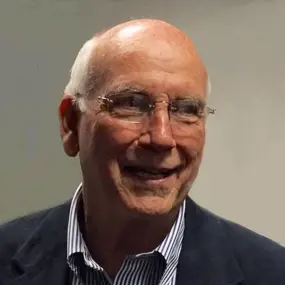
Psychiatrist Psychotherapist
As a freshman at Stanford I decided I wanted to be a therapist. After Medical School at UCLA, that was still my goal, so I embarked on a career that continues to be my passion after 50 years. I always wanted to penetrate the biggest mystery, how psychotherapy actually works. Gradually as I taught residents a framework for making sense of why humans have the troubles therapy treats and how they change began to emerge, based on a combination of clinical observation and new science that was emerging. About 10 years ago, I realized that the field was in trouble with training too long and complicated and little understanding of how it works, so I began to write for therapists in the belief that sharing powerful ideas with more open minded people woud gradually take hold. The idea was that if you understand what's happening, then it is far easier to know what to do. That
s the theme of my new book, How Psychotherapy Works: Navigating the Therapeutic Space with Confidence. It's coming out on 8/20/26.