Ep88 Maggy Sterner—How to Describe What You Do in One Sentence Without Sounding Salesy

Ever sit down to write what you do, then change your niche again because saying one thing out loud feels risky?
Suzanne sits down with Maggy Sterner, a brand messaging strategist whose communications career started in radio and TV news. Maggy teaches people to answer "What do you do?" in one clear sentence, and she shows why the words only land once you have made the decisions behind them.
Maggy explains why AI can hand you the words while the confidence to say them comes from picking your lane. Suzanne adds how looking back at her own journey shaped what she says about her work today. Maggy is also writing a book called Pick a Lane, about designing your business with decisiveness.
In this conversation, you'll discover:
- The three decisions behind every clear message: who you serve, what problem you solve, and what solution you deliver
- How to fill in Maggy's One Sentence Solution: "I help (who) solve (this problem) so that they get (this solution)"
- Why memorizing your pitch falls flat, and how knowing your story and using your body makes it sound alive
- How to text five people and ask for five words that describe you, so you can see what you can't see on your own
- Why imposter syndrome dials down once you have made your choices
- How one of Maggy's clients raised her prices dramatically after a session or two, and her prospect never blinked
- How a porch light helps you be seen without standing in a spotlight
- Why every gift has a shadow, and how owning who you're not for makes your message stronger
Maggy Sterner 0:00
I developed a little AI noodly thing that can give you the words. I always say why people should hire me instead of using AI is because AI can give you the words, but AI can't give you the confidence to say them.
Suzanne Taylor-King 0:15
You build something successful, but growth feels harder than it should. You keep solving problems, but the same patterns return. What if the constraint isn't where you've been looking? Welcome to Unlock Your Way with STK. Each week, I sit down with founders, CEOs, and leaders navigating the messy middle of growth to explore the invisible constraints that keep successful businesses stuck. Because the problem you're solving may not be the real problem. Let's find out what is. Good morning, good morning, everyone. It's Suzanne Taylor King here for another live episode of Unlock Your Way with STK, and I am so excited for today's conversation with Maggie Sterner, brand messaging strategist. And one of the really cool things about Maggie is how I found her on LinkedIn because of one thing she said about messaging and how to talk about what you do with other people. Maggie, welcome to the show.
Maggy Sterner 1:28
Hi, Suzanne. Super excited to be here today, Adi. I love that story too, but I'll let you tell
Suzanne Taylor-King 1:34
it. Well, I I think what is so so important on social media today is how we show up and really talk about what we do in an approachable, conversational, like you know, no corporate jargon. Like, tell me who you are and what you do, and you do that so so well, and you do it for other people. Where did that come from? Tell us a little bit about that.
Maggy Sterner 2:09
How did I come to be doing that, and why that's my thing? I the short version of the story is that I worked in the Broadcasting business for many years. I worked in radio back when I was younger. I was a DJ at an FM rock station in Philadelphia. WMMR, shout out!
Suzanne Taylor-King 2:34
That is so cool. I'm right outside of Philadelphia, and I have that station all the
Maggy Sterner 2:41
MMR was my I was the secretary there, and I wanted to be on the I was the receptionist. I did a lot of things. I was the girl voice on radio, and it was you know we we it was a wild times, and I wanted to be on the air, and I told somebody I wanted to be on the air, and I would come in on the weekends and make demo tapes. And the program director would say, "That's awesome! You know, go work in Donkeyville, Montana, for 10 years, and then come back to MMR because it was a top market. It's one of the top 10 radio markets." And then somebody got sick and couldn't work for several weeks, and he said literally said to me, "He said you're going on the air Monday morning at 2am" And I said, "Okay." And my friend, who was a DJ, came in and got me set up with coffee and made sure I didn't faint, and I just went on the air, and my dream had come true. And the funny part of that story is, and this is played out through every career surprise bonanza that's ever shown up for me. I told somebody what I wanted. I said, "I'd like to do this, and inevitably they would say, "Oh, why didn't you say so?" One, but one guy literally said, "Why didn't you say so?" When I asked to be a TV producer, I worked in TV news in Miami, and so my career is communications. I worked in TV news in Miami as a producer. Worked for CBS News in Manila and Johannesburg as a TV and radio reporter. I worked online. I worked at NPR's website. I wasn't on the air at NPR, but I was at its website back before it was anything, and all the threads, and one can only see these things when we look back. It's hard to see it when you're in it. When I what because I didn't actually know what I did. Like, what am I doing? Why would I take any job? I've been a web developer. I'm, you know, how do these threads connect, and each of them wraps around the pole of clear communication.
Suzanne Taylor-King 5:09
Wow,
Maggy Sterner 5:10
yeah.
Suzanne Taylor-King 5:11
Well, one, I love, I love that because I think so many times your your own journey, your own business journey, your own, you know, the career, the life journey. When we look back, it makes so much sense, you know, who we are today. And I, I love that got your start in a medium that's totally different than the medium you use now, but the principles are the same, right? And you said something on LinkedIn that attracted me, and I wrote it down, and I wrote it down, and I reached out to you. And what stood out to me is not having you don't have a words problem, you have a decision problem, and no tool, coach, or AI can write a clear sentence about a business that has not chosen who it serves and what it does. And whatever that post was from you. I stumbled across it as I do in my research of you know different people for the show and interesting conversations. And what stood out to me, I use AI all the time, but my statements and who I am did not come from a tool or a coach, it came from looking at my own journey. Exactly what you just described, and so many people don't invest the time to look back, document the journey. You know, it could be I've had numerous health challenges, and those health challenges informed how I do business and how I book my calendar. And I loved how you talked about actually knowing yourself and doing that work, so that when someone asks you what what is it that you do, Maggie, it's coming from that earned wisdom place, and
Maggy Sterner 7:34
comes from a place of I I know it, I know it in my bones because it's just the truth. It's just a fact. It's not marketing. It's not sales. When I tell people what I do, and I teach people how to answer the question, "What do you do?" which drives people insane, I go, "If you were just going to tell the truth about what you do, you were just going to state a fact. What would you say? And they look. I don't know. You know, the words have to be right. I want it to be sexy. I'm like, girl, you don't need to be sexy. You just need to be clear. That's all it is. Is saying it in a straightforward declarative sentence. And there's a structure that I use in my work, I call it the one sentence solution. I help who solve this problem so that they get this solution. The end. That's it. But the pieces in there: who, problem, what problem, and what solution. Those are the three decisions that have to be made. If you don't know what those three things are, and if you dance around those, people call it a niche, and I keep changing my niche, and blah blah blah. That part there is a lack of decisiveness. People who I hear like I I track what people say. I capture their worth because once a reporter, always a reporter. I love data, and I like hearing what trends are and what people tell me. Whatever they tell me, they struggle with what they say about their problem, and what they say about the solution they want. That's what I say about what I do, because I want to connect with people who have those words already in their head. I want to repel people who who don't say those words. So it's it's words. Yes, words matter. You could get the words from AI. I developed a little AI noodly thing that can give you the words. What makes me why you people I always say why people should hire me instead of using AI is because AI can give you the words, but AI can't give you the confidence to say. That's what I give you.
Suzanne Taylor-King 10:03
Wow! So there's so much wisdom in that because everyone knows that knows me. I love AI. I love what it can do for me. I love the efficiency. You know my my little my little Grok bot that works for me that finds me speaking opportunities and finds me great startups to connect with, and it's it's like having an amazing assistant, but it's not telling me what to say and how to say it. Now, did it help me research you? Yeah, but it didn't find that you were on MMR. So, does that go to show you nothing takes the place of real conversation and real words with your ideal clients, with your ideal referral partners, and one of the things I want to pull out of you today is this concept of truth, confidence, and and the reality of what people do, if if someone is trying to explain what they do, and it's not coming from an organic, truthful, real place, I believe that's where all this imposter syndrome comes from
Maggy Sterner 11:45
it. Come that has many mothers imposter syndrome. It does. I've actually I've actually done market research with people who struggle with that. It's an audience type that I could choose to work with because I believe our audience is a choice. I choose who I I chose my audience. I didn't hope an audience showed up. I wasn't wishing for the right people. I go here's who I want to attract. So I set my machine, my morgue making machine, to connect with the only with the right people, but I think that it's really important to own the words we say. It's the people go, well, I need to memorize that. I go, dude, memorization is like death on a cracker for speaking. I when I worked as a TV reporter for CBS, I realized I had done radio. I'd worked in the TV business on all kind, doing all kinds of jobs. So I was very familiar with it, and I wasn't afraid of it. I wasn't afraid to be on camera, but I realized there were techniques and ways of showing up on camera that I didn't know because I started out on camera at CBS News. I didn't work my way up through the ranks, so I asked for help, and they flew me to Dallas to work with a coach for one day. Who was she came from the theater, and this has stuck with me my whole life, and I teach. This is how I teach my people. She said, "How do you?" She had me read my. She would listen to all my stories, and how do you read your scripts? I said, "Well, I sit in my chair and I read it like that." And the stand-ups, I was really struggling. The stand-up is the part where the reporter's on camera, and you have to say words because there's no picture to illustrate the thing or whatever. And that part really, I didn't have a handle on how to even do that. I said, she said, "Well, how do you do it now?" I said, "Well, I write down what I'm going to say, and then I memorize it." She said, "Look into the camera. Just know what you're going to say, and look into the camera and say it. You're talking to a person, not a camera. And I went, oh. And to read the scripts, she said, stand up and use your body, because our body, when we use our body as we're speaking, it we put it puts emotion. It doesn't sound flat. It livens it up because we're alive. So the part where the memory, it's not about remembering the words. It's about I know the story I'm telling. I know the story I'm telling, so tell it.
Suzanne Taylor-King 14:43
Yes, I say all the time, especially in this world where we're on Zoom and on camera and on video all the time. Show your hands. Know the box that you're in. You know, be fluid. Be it like I'm sitting. Today, but normally I'm not. I'm I'm standing and I'm more more fluid. And I I think what's so fascinating here is owning what you say. And I'm going to give you an example because when I used to try to explain what I did in someone else's words, it never worked. But doing my own work on myself, my amazing podcast producer Jason Croft, I was coaching him to. He was developing his program and his method because he he really had this really unique way of helping people, and you know it's now named Market Gravity, and he coaches people through that. But I experience I was already doing what he talks about, I didn't have a name for it, but this concept of who I am is actually what I do, and when I thought about that, at its boldest, at its most unapologetic version of me, what would I say? And instead of trying to craft something that would sell or that would, you know, bring people to me, what do I want to say? What what if there was nothing holding me back? What would I say? And that sentence came out of my mouth one time when I was in conversation with someone, and it made the person sit back and say, "Holy crap! I feel like you just punched me in the chest with that." And I went home after that conversation, and I thought, "That's what I need to Say all the time, right? It needs it needs to spark thought, emotion, or something in the other person.
Maggy Sterner 17:33
And here's the catch: I think of it like a play, like an actor on stage. Let's say an onstage actor. They're reading the same words every night. Every night they have to read the same words and say the same words as if they're brand new. It's not acting; it's being. I call it words and music. You could remember exactly what you said. Most people can't. When something really lands, people go, "What did I just say? That was perfect." I'm like, "I don't know, but it was perfect." When we stand in our shoes and we know, like the actor knows who his character is and what the point is of what he's saying or what they're saying, then you could improvise on the spot and still track with what was happening, even if you didn't remember the words. I think of it like words in music. Yes, the words matter. Don't use jargon. Don't talk. Adjectives are not your friend. Stop talking about yourself. It's not about you. But there's also the part I call music is there's a beat, there's a rhythm to the words. We can hear it in stand-up comedy. It has if they tell a little story, and when we introduce ourselves, it's we're setting it up. Then we say something in the middle, and then we wrap it up with the punchline, which I call it the kicker, so that it tracks, it's. I think of it like, you know, art and science come together, and it feels right when it's right, and you can feel it when it's not right. And people come to me and they go, "Yeah, but I've been saying these words and blah blah blah." They're not incorrect words, but they go some. I hear this all the time. Something doesn't feel right, and I go, "Oh, that's right. You said a word unapologetically. That quality of I own this, I know this, I stand for it, and I don't have to waffle or hold back anything." Yeah, but if I say that, then people will think, "Ooh, I can't say that because then I'll turn away somebody who's I'll miss out on." And I'm like, "No, girl, you have to say what so to and own it in the briefest way possible using.". Plain English words that a normal human can understand, so that they go, "Oh, I get it! Great!" They'll either say, "I need you," my friend Katie needs you, or they'll say nothing. In which case, they're not your client.
Suzanne Taylor-King 20:17
Well, yes, and do and do you think that the confidence to do that, the confidence to say that that centered, energetic truth? I I know people can feel energy, positive or negative, when you talk about yourself, so if we know that's true, and we're willing to show up and say those words, we have to be okay with offending some, repelling some, and maybe some can't afford us, or maybe you know we can't help everyone, and and that goes back to that being really clear on who you serve, how you serve, and being okay with not being for everyone.
Maggy Sterner 21:22
That's I'm glad you mentioned that. It's super. That willingness to own to be be with rejection.
Suzanne Taylor-King 21:34
Yeah. Is
Maggy Sterner 21:35
um. Well, I think it's the key to life, happy life. I used when I work. I worked as a photographer, photojournalist, and portrait photographer. And I took a class with Adobe on Photoshop. And this guy told a story of how he would pitch his work as a photographer, rejection, rejection, rejection, rejection, and finally, this one agency that he really wanted to work for called him, and he'd never he dropped off his portfolio and never heard anything. And they said, "Oh, we've had one of your photos on our wall for inspiration." So he made up a story about why this agency didn't had never called him, but they weren't ready at that moment. They didn't exactly need what he precisely brought to the table as a photographer. So there are a lot of you know things in the alchemy of it all that come into play. Is the person ready? Can they can they afford it? That's a big one. And also, when you said the word confidence, I've really analyzed. I'm a wordsmith. I mean, I could give anybody the words and give me 30 seconds, and I'll go. Here's the words to say. But unless that those words, unless that truth, I hate to even say the word truth. I speak of it more of as a fact. That it's a fact that I help people find the words to answer the question "What do you do?" in one sentence, so that they can attract the right clients. That's just a fact. I'm not tooting my own horn. I'm not, you know, promoting myself. I'm not selling anything. I'm just stating a fact. So I try to teach people to perceive that experience in such a way where it stops being. I have to get it right or I'll die, and starts being. Oh, I'm if I'm just stating a fact that I can do that, and over time confidence shows up, but the precursor to the words is actually I've spent on the I practically could get a Ph.D. in this now, and I'm the one who would issue it to me. But when we know when we've done the work to understand who we're talking to and who we're not talking to. Those are decisions. When I know the problem I solve and the problems I don't solve, those are decisions. The solution I deliver is this, not that. When I have gone through the process and made those three decisions. That's where confidence lives. Confidence lives inside choices.
Suzanne Taylor-King 24:30
That is, that's gold for entrepreneurs. You know, my my audience tends to be founders, entrepreneurs, and when I think about the biggest struggles that they have, it is exactly that. It's it's a way of being almost that. It if you're trying to sell, and I. Trying to sell something,
Maggy Sterner 25:04
we we are selling. We're everybody's selling something. Let's just get that out of the way because we because we like money and we want we we sell services for money like dentists, like the hardware store, like everybody sells something for money. So let's just make sure that's like that's okay. It's okay to make money.
Suzanne Taylor-King 25:20
It is okay to make money, and it's okay to, you know, when when you are feeling stuck in your business, and and believe me, I've worked with some huge businesses. I mean, making tons of money. There's all different stuck points, and it always comes down to decisions, always. And being decisive as an entrepreneur is a skill. It is something you can learn, and it's something you can embrace as actually a really exciting step as a founder, as a business owner, and I I want to say and ask how how did you decide that? And listen, we're not pulling any punches. We're both over 50 here. What? Damn, my best clutches curls. So many times, the older entrepreneur is fearful of really taking that stand, no matter what income level, right? It's almost like making a decision to have a line in the sand and really declare who you are. Don't just say who you are and what you do. Declare it. Be it.
Maggy Sterner 27:02
Yeah, it's a flag planting, yeah,
Suzanne Taylor-King 27:05
yeah. And
Maggy Sterner 27:06
that decisiveness is. I'm actually, you've teed me up beautifully here. Thank you. Oh,
Speaker 1 27:14
good.
Maggy Sterner 27:14
Or I'm writing a book because when I had my eureka moment within the last couple years, and I went, oh, people struggle a lot, and it's not the only reason, but they struggle because they haven't made the decisions that inform the message, the marketing. What am I going to say? How do I describe what I do? So I'm writing a book called Pick a Lane: How to design your business with decisiveness? How to find a clear message with decisiveness? Because when we and I mentioned this to somebody recently, she's like, "Where can I buy it?" I'm like, "I haven't written it yet. I'm still working on it." Ah, but it's about how I love to go, like to figure out, like, well, if this is the problem, then what's really going on with this solution? Because if I can give somebody the words, if AI can tell you the words, but you can't stand up there and go, "Here's what's up," and own it, because that's your energetic declaration. It is a declaration. It's a flag planting. If you haven't done that work, it's got nothing to hang on, and it feels it just. And people were all just animals feeling, feeling, feeling safe, not safe, safe, not safe, true, not true. We're listening for that quality of yeah, here's what's up. Here's what's up. It's like this. This is like this, and that doesn't come necessarily from knowing the words. It's coming from knowing what you chose and choosing what you chose. Because if you're waffling, if you keep changing your niche all the time. If you say I can help everybody, good. I wish, like, wow, you have that kind of time. I'm impressed. You know, it's, it's, it has to be. I will take. I have a lot of beliefs about. We all should be known for one thing. When we're known for one thing, then we can get referrals. And I hear the voices of everyone go, "Yeah, but I do so many things, and I'm really good at. But I do. But I care about everybody, and I want to help everybody. I care about them. It hurts. Somebody literally said to me, 'It hurts my heart to not help everybody, and I went well. What what's going on over there? It's and this is where I didn't realize that personal growth and me meeting my shadows was going to be part of my journey as an entrepreneur,
Speaker 2 29:59
but.
Maggy Sterner 30:01
And every gift we have, I have a gift for being direct and clear and firm. And every gift has a shadow. And I, when I can own, I, I always go. Your brand is who you are and who you're not, and we have to to have that energetic integrity and coherence. We have to own the light and the shadow. I have to be okay with who I'm not for somebody. I'm not for.
Suzanne Taylor-King 30:37
I I so resonate with that, but that that part of the journey, I would say that self discovery piece, being able to hold up a mirror and say, take myself outside of myself to look at who I am and what I'm doing, not easy, can't be done with AI, you need a guide. You need a coach, or I mean, there's great books on this topic. But I will say, when I had the moment with a coach friend of mine, and I discovered that I am not a details oriented person. My internal voice was offended. I was like, "What? I'm not. Oh my god!" And you know, I thought that that meant I was less than because I I wasn't getting these certain details done in my business, and when I finally understood the okay, I'm not details oriented. That's what assistants are for. That's what AI is for now for me, but also what does that open up for me? It's big picture thinking, visionary thinking, futurist thinking, but hire
Maggy Sterner 32:15
somebody to sweat the details.
Suzanne Taylor-King 32:17
Correct. So, in actuality, exactly what you said about examining the dark side of me,
Maggy Sterner 32:31
the shadow, the
Suzanne Taylor-King 32:33
shadow, the the not perfect, you know, and I, I never not. It's
Maggy Sterner 32:39
like it's there. There's an is about you, isness, and there's a there's a notness. It's like
Speaker 3 32:45
right
Maggy Sterner 32:46
a cat a cat is never going to bark. This cat will never bark. The cat doesn't worry. The cat doesn't yell at itself because it doesn't bark. It doesn't know it. Like it's just being what it is. And this is, I think, authenticity. I'm feeling like authenticity creeping in here. That and confidence comes from being unapologetic. Not that we don't apologize if we do something wrong. I happily apologize if it it if I if I'm to blame for something. But if we are, um. unapologetic, and when we really are, it's accepting ourselves and the object. I can't know myself from inside myself. It can only come from the reflection of others. It's physics. It's why can't I figure this out alone? I hear a lot of people say that I've been working on trying to get my elevator pitch together for like I've used your worksheet and I can't figure it out alone. I'm like, honey, nobody can. Nobody can. The object cannot observe itself. I can't have the user experience of myself, which is why I track market research. Why I ask people, what was your experience like? What did you see? They'll say, I love your energy. I go, interesting. What do you see? Because I can't see it. I can't see it. I can't know it. So it's just a matter of, and that's why bringing somebody in who's a specialist, and I dare say there's a mat. There's a part where, and I you have this vibe too, which is, you know, we do have to hold people's feet to the fire a little bit, and I don't think AI can do that. And if it does, we can just turn it off. It has.
Suzanne Taylor-King 34:39
Yeah, when it gets uncomfortable, you can turn it off or stop.
Maggy Sterner 34:44
And the this embodied journey with someone who's plugged in, like we're plugged into a zone, and we're having this experiential discovery, and I'm asking. Asking a million questions, and I hear what they're not saying or not answering the question, or they'll drop a word and I'll go, "Wait, what?" I just go, "Whoop!" I feel the heat of that. What's going on over there? They'll say it like it's casual, and I'll go, "No, wait, what was that?" And that turns out to be something that opens up a huge door. It's um, I. think what I want for people is fearlessness, to own who they are and who they're not, so that, and when we can do that and be okay, it's just being okay with it. That's where authenticity lives. That's. It's just it has to be there. Authenticity can only be there if we're okay with what's up and what's not up. I'm never going to be the kumbaya girl. I'll hand you tissues, but I might not even. I sort of barely notice that you're crying. But here's a tissue. But I'm like, you know, I know how to be with when we like we have to just be with how it is in my dreams. When I I tell people what I do, I do my own elevator pitch in my dreams, and I'm so fierce about it, like fire. I'm like, yeah, no, I'm really not a barista. My real job, I'm really I help people, but but I wake up, I go, wow, that is crazy how like it's so integrated. It's just such a fact, you know. Then of course I'd say it, right? And I had this other dream. This is where sometimes I go, oh, I'm a genius. I told somebody in my dream like I really meant it. I said, marketing is just telling people how you can help them solve their problem. I woke up and went, "Wait, is that everything? Is that like the keys to the kingdom?" Because everybody goes, "I don't want to sound salesy," you know, this authenticity. I don't want to be pushy. I don't want to promote myself. I don't want to sound like I'm trying to sell like a used car salesman. If you know what's up, and if you know the facts, and if you are connected with who you are and who you're not, you can only be authentic. You couldn't possibly be devious or salesy in that space. Those two conditions can't live in the same neighborhood together. So I guess you know I always take it back to well, let's start at the beginning, which is not even who are you, but that shows up. It's well, what what design your business to your specifications. What what do you do? Then we'll spend an hour talking about that because that got all muddled up because people think they have to do certain things, and if they don't do that, they something's wrong with them. It's these choices that we make, decisions. Decisiveness is the source of creation. I can't create from I don't know. I can't create from I haven't picked a lane, and so the end.
Suzanne Taylor-King 38:13
Well, yeah, I I want to add when this was happening for me, and it it it's never done, you know. You don't you don't decide as an entrepreneur who you are and what you do, and then 15 years later, it's still the same thing. It evolves and it changes, and that's why refreshing this work is so important. The evolution of it, if you will, and someone asked me, it has to be 15 years ago. Why? So I was a dental hygienist for 20 years, and during that time, started numerous biz. I always had a side project going on, And someone asked me about that career, and I said, "Well, that doesn't have anything to do with who I am as an entrepreneur." Oh, yes, it does. They said, and I said, "Well, I I don't know what you're asking. I don't understand." And they said, "Who were you to your patients? How did you operate?" And I said, "Well, I was safe. I was comforting. I was people were fearful at the dentist, and I made it a pleasurable experience for them. I was able to build rapport quickly, psychological safety, and as I started talking about that previous career, all these light bulbs were going off. About I am still that. That same person to my clients, and that was key in the discovery process. That who I am as an entrepreneur to my clients, mentor, coach, guide, whatever you want to call it, that is still the same person I was when I was a hygienist, the emotion of it. So that was so so helpful to examine who I was, and I could even go back one step further and say who was I to my grammar school and high school friends. I was the idea man. I was the instigator. I was the planner. I was the like, oh, we're doing this on Friday, and it's going to be
Maggy Sterner 40:52
yeah, guys. We're going like, oh, let's do what it did. What are we?
Suzanne Taylor-King 40:57
And when I actually understood that, nothing. changed. That's I am still that same person. So when I thought about that and the things that that opens up for me, I can honestly say it's made me more money. It's given me more clarity. It's given me more followers, more email lists, more everything except hours. I've reduced my hours, which is amazing. There are limitations. Yes, but what what I think is really key here is the self-discovery process. I couldn't say that I can build rapport with somebody in one or two minutes. That I provide psychological safety and comfort and compassion and empathy, but I'm not going to allow you to not be the greatest version of yourself at the same time.
Maggy Sterner 42:10
Not on your watch.
Suzanne Taylor-King 42:12
No, not on my watch. And I think that I couldn't. I couldn't say those things or understand those things fully. If I had not examined who Suzanne is, not just what she does, and that really stood out to me about you in in our very first conversation, I knew that you're that same type of person for your clients, and what does that look like? Like, how do how do your clients find you normally? Referrals, I know, but like, what does that look like when they come to you?
Maggy Sterner 43:00
People find me referrals. I have an email newsletter that I send out. I've got many, many clients. People I didn't even know they were on my list, who suddenly read the one message and went, "Oh my God! I didn't like that." I know. I knew I had to call you today, and I literally didn't know who they were, how they got on my email list, and also from public speaking. When I speak, when I do podcast interviews, when I do workshops or webinars, people have the experience of my energy because we're not just a bag of theoretical thoughts. You know, we're people who care, we have a message, and it's so clear to me, Suzanne, that you care about yours. You couldn't speak about it the way you just did unless you care. I care too, but in the expression of it, you know, it's like a if we there's a modulation that happens in the passion part. People are not so interested in our passion, they're interested in how we can help them. Like I think all roads always point back to that, and how I forgot the question.
Suzanne Taylor-King 44:11
No, that was perfect, perfect. How do your clients come to you? Oh, they
Maggy Sterner 44:15
find me. You know, mostly I think it's by experiencing me somehow, either through my writing, through LinkedIn, as I post on other people's posts, that's how you found me. I like to be in conversation with people. I think there's a quality, and this is true. Maybe we all forget because it's just so like there and in front of us. I was like, oh right, connect with people, be outgoing and connect. Okay, introverts. I hear you going. Yeah, but yeah, but. But it's just a sincere way of engaging. I saw something you wrote, and I sincerely had a. Oh, that's interesting. And I, whatever I said, I responded sincerely. To it wasn't selling anything, wasn't marketing myself. I got into conversation with you, and then you had a oh, and you felt that sincerity because it was already there. I wasn't selling anything, so I think being able to, I know an intro. I keep thinking the hearing the introverts going, but but but I hate people. People exhaust me. It's not about being pushy. I had a client, and we were doing. I was co-facilitating a like a leadership thing with my client at my friend's place with with horses, and she was in the ring with the horse, and she was like really on it at that moment. As she said, "I can't stand being in the spotlight." And I went, "What if I on the because I know people we have to be seen? People have to be able to see us. If if we're invisible, nobody can hire us for anything. And I said, "What if it's a porch light? What if you could you just turn on a porch light? What if it's not a spotlight?" And she went, "Oh," she said, "I could do that." So I think of marketing is like, "Oh, I'm turning on my porch light to let you know that I'm open, and the sign outside is the answer to the question, "What do you do?" It's the shingle on my door so that I know when I come inside because I've seen that you're open. I know that I'll get donuts there and not tires. So there's this level of clarity that tracks all the way through from the answer to the question, "What do you do?" to your ability to do you have the courage to turn on the porch light? Because for I mean, I don't think I don't know if there's a workaround for it. I haven't found it, but that courage to, but I think courage comes from clarity. When I'm clear about something, then I can have a hard conversation with somebody. If I don't, if I'm still jittery about it, it's like I don't know. Like I can't do it at that moment. But clarity about what I do, what I don't do, choosing my audience, the problem and the solution, and then that if I just describe what I just discovered, that's the answer to the question: What do you do? It all just fits together like a neat little package, like it flows. And what happens internally is, it becomes a part of you. It becomes what you know about yourself that you've discovered by making the choices. And honestly, I couldn't be I couldn't be doing my work if I hadn't hired people in the beginning, and thank God, serendipitously found exactly the right people at exactly the right moment to point me sooner rather than later to actually do this work to discover what is the whatness of what Maggie Sterner does. Who who am I being for my people? I have a challenge for your audience who's listening. Whoever's listening, this was so helpful for me. Somebody, I was in a workshop, and somebody said, "Text five people and ask them this question: What five words would you use to describe me?" Ooh, and we didn't say, "Tell me five nice words" or "Give me some feedback." What five words would you use to describe me? So, in the workshop, I texted five people: my kids, friends, clients. What five words? People just responded instantly, and I collected all the words. The usual suspects were there: funny, no bullshit, straight shooter, blah blah blah.
Maggy Sterner 48:55
But what also showed up, and I could not have known this without doing that compassionate, caring, kind. Because I don't, you know, I don't lead with those things. But I went, oh right, now I see that part of myself that I couldn't see on my own, only in reflection from others. So now that I get to actually own it and stand for it, I can be compassionate and straightforward. I can be kind and no bullshit.
Suzanne Taylor-King 49:30
And as one of my mentors says, I can hold your heart and kick your ass. Okay, so isn't that great? There you go. Yeah, and yeah, you know because she did that with me, um, she she really you know cared for me, my own betterment, and I get the vibe. That you do that for your clients, you you care, but you're not going to believe their BS stories about themselves. And I think one of the magical pieces of entrepreneurship should we should we choose to actually allow entrepreneurship founding a company to be our personal development journey, then I think you're ahead of 98% of people because I think I heard the statistic a long time ago that only 4% of people do personal development, and I would argue if you're going to be an entrepreneur, you need to be willing to do everything we talked about today.
Maggy Sterner 50:56
Yeah, I just was I just was reminded as you were talking about a client who came to me? We were when we started working together. Imposter syndrome, like she is like, I have imposter syndrome, as if it's the truth. Okay, but my style is, and it's like I come rather than, well, I'm gonna. Here's 20 affirmations to say, and you know, journal every day and whatever. It's like I like work over here to get clarity about the that make get clarity about what you're doing and make the decisions. What happens is imposter syndrome organically dials down Confidence automatically dials up when we have chosen, and we are aware that we have chosen. This is how I'm going to design my business with this within these parameters, because if we're still the waffling doesn't serve, and after one or two sessions with her, she organically had a. She was pitching a client. She organically raised her prices dramatically, and the client never blinked. She said, "You know, something in that conversation we had, something shifted in the interaction, and you must experience this with your clients too, Suzanne. Something shifts in the space with interaction that the transformation happens, and it can never go back to how it was. I call that the face of Jesus in the tortilla syndrome. Once you see the vase of the Virgin Mary and the burnt toast. You just know that now, and you'll never unknow it. That's where confidence lives, and I believe it comes from the clarity and from making the choices. And honestly, if I had having somebody to hold my hand as I was struggling, to how much should I charge? I had a coach. My first coach said, "Well, how much do you want to earn?" I'm like, "Oh, is that the question? Is that how do how I pick it?" She said, "Yeah, I want." Yeah, all right, I want to earn this much. She said, "So charge that much?" I'm like, "Okay,
Suzanne Taylor-King 53:18
yeah, we overcomplicate that so much, so much. Well, Maggie, this is how can how can my listeners get in touch with you? Get on that email list because your your emails are golden nuggets of wisdom. Highly recommend. How can people find you?
Maggy Sterner 53:38
You can find me. The easiest way to find me is on LinkedIn, Maggie with a Y, Maggie Sterner. I'll pop right up, and you can read what I've written. You know, take what's valuable, ignore the rest. I do, I do use swear words. If that's a thing for you, that's part of my brand.
Suzanne Taylor-King 53:57
It's part of your charm. And
Maggy Sterner 54:00
if you don't like it, you can go away. That's okay. No harm, no foul. I do. I have had people in my life who are like, I can't stand it when you curse, and I'm like, then we're not a good fit. The other way would be my website, MaggieSturner.com. You can sign up for my email list there and get. I don't know what information you'll include here, but I offer a free one-sentence solution workbook that guides you through the things you have to decide. Then, having now you have declared those, and now you've surfaced them, now they're on paper, not just rattling around up here. Then you can write. Then I give you the structure for how to write the sentence. The answer to the question will. So that's been really. That's the best way to get a hold of me.
Suzanne Taylor-King 54:51
Well, I love it, and I love your no BS style and the fact.
Maggy Sterner 54:58
Don't bark.
Suzanne Taylor-King 54:59
I know. And that's so appealing to me, and obviously that's why I was you were attracted to what I wrote that day and the response and our interaction. So thank you, thank you, thank you. And as my son used to say, TFBY, thanks for being you. Appreciate you. I'll drop all Maggie's links. Yeah, I'll I'll drop all your links in the comments. And yeah, thank you for being here today. Appreciate you.
Maggy Sterner 55:29
You're very welcome. Was my pleasure.
Suzanne Taylor-King 55:32
Have a great day, everyone, and a fabulous weekend. And we'll see you in two weeks for another live episode. Thanks for listening to Unlock Your Way with SDK. If this conversation surfaced something for you, a question, a pattern, a realization you can't ignore, don't sit with it alone. Reach out. The first step is always a conversation. Book a private call. Visit suzannetaylorking.com because clarity doesn't come from more information. It comes from seeing the constraint you've been missing.
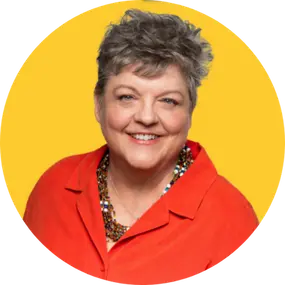
Brand Message & Positioning Strategist
Maggy Sterner teaches experienced entrepreneurs and professionals how to answer the question, "What do you do?" in one short sentence so they're remembered, referred, and hired.
She learned how to find the essence of complicated stories as a radio and TV reporter for CBS News. Maggy discovered her gift for finding precisely where something was broken - and diagnosing how to fix it - as the user experience analyst at NPR's website.
She uses those skills with her clients who struggle to articulate what they do by being their "decisiveness coach." Maggy believes choosing our target audience, the problem we solve, and simple words to describe it is the foundation for building a business that makes us happy and delivers da monies.